Feeds:
Posts
Comments

Archive for the ‘Shizuoka’ Category

As much as I dislike hospitals and mistrust doctors in real life (I’m grateful for them, but to me they are a necessary evil fighting for good) as much do I enjoy clinics and other health facilities when they are abandoned. Japan has not only plenty of them (I must have explored more than 50 over the years), but the variety is also amazing. Everything from *local doctors with a pharmacy in their wooden countryside mansions* to *large concrete monsters with modern machinery* – and except for a handful now vandalized or demolished ones, they are also among the hardest to find abandoned places; even Japanese explorers with no English skills whatsoever occasionally contact me for coordinates.

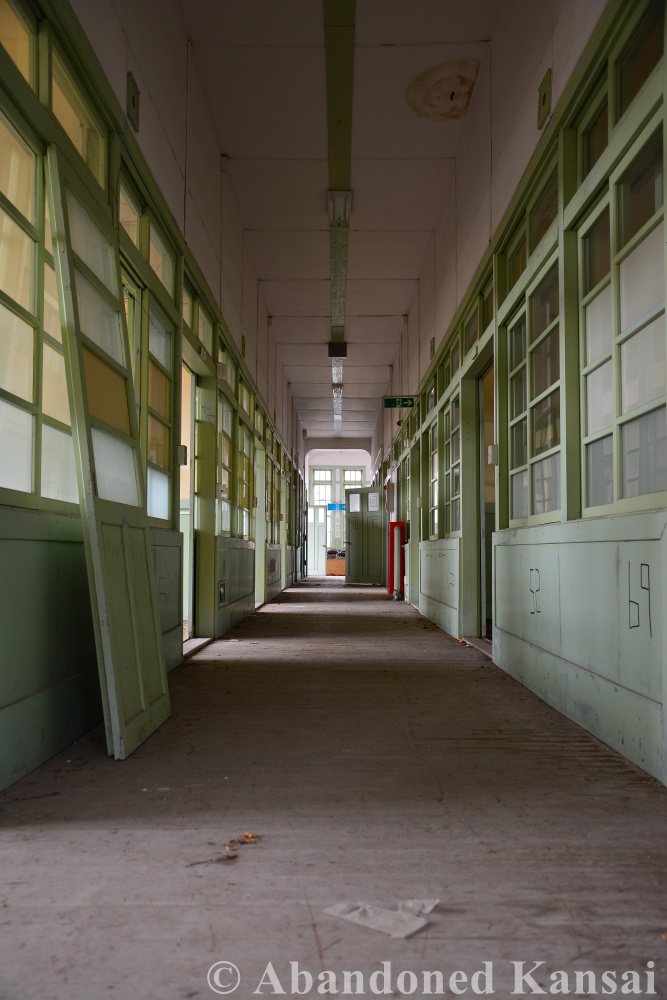
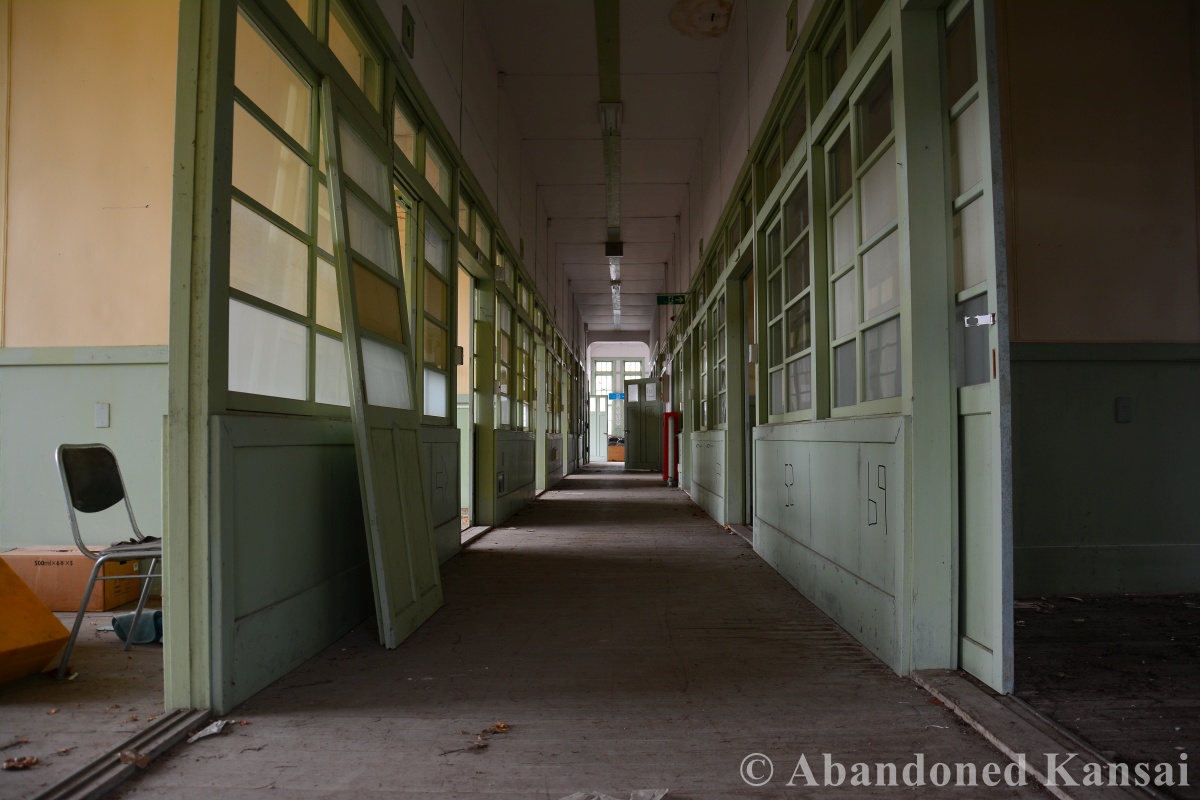
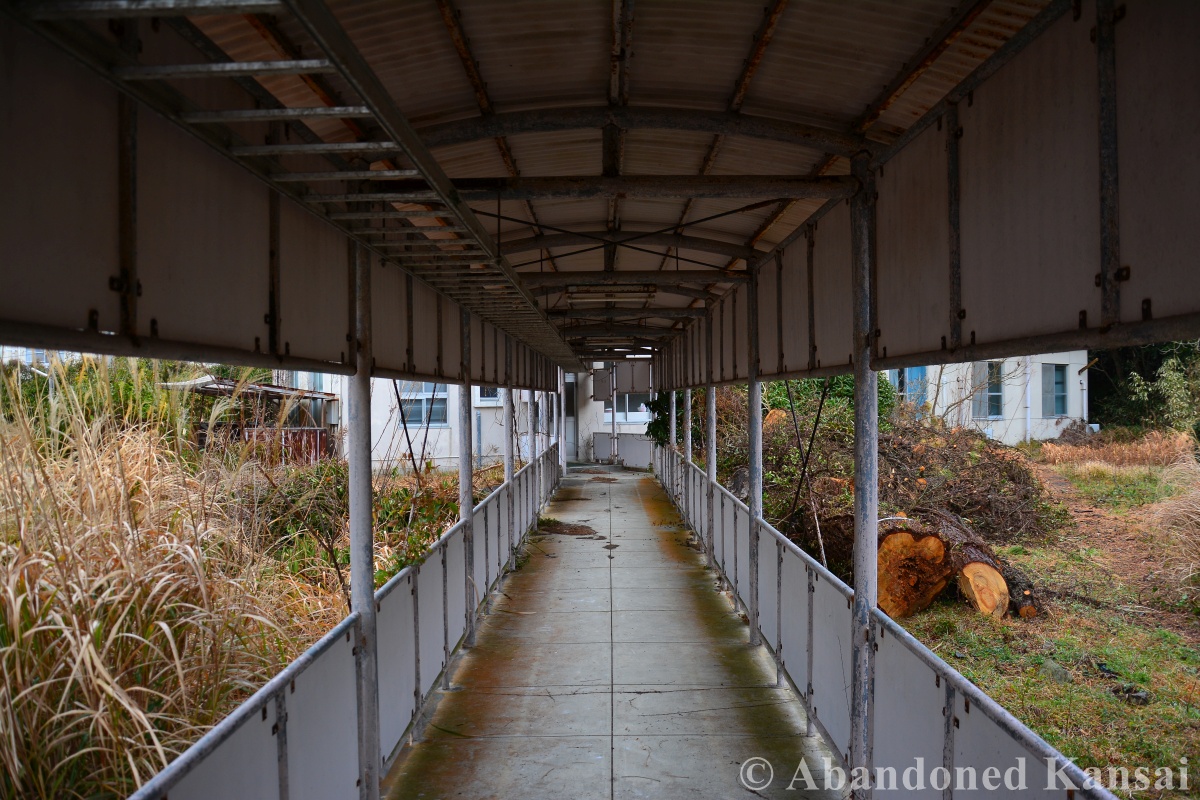
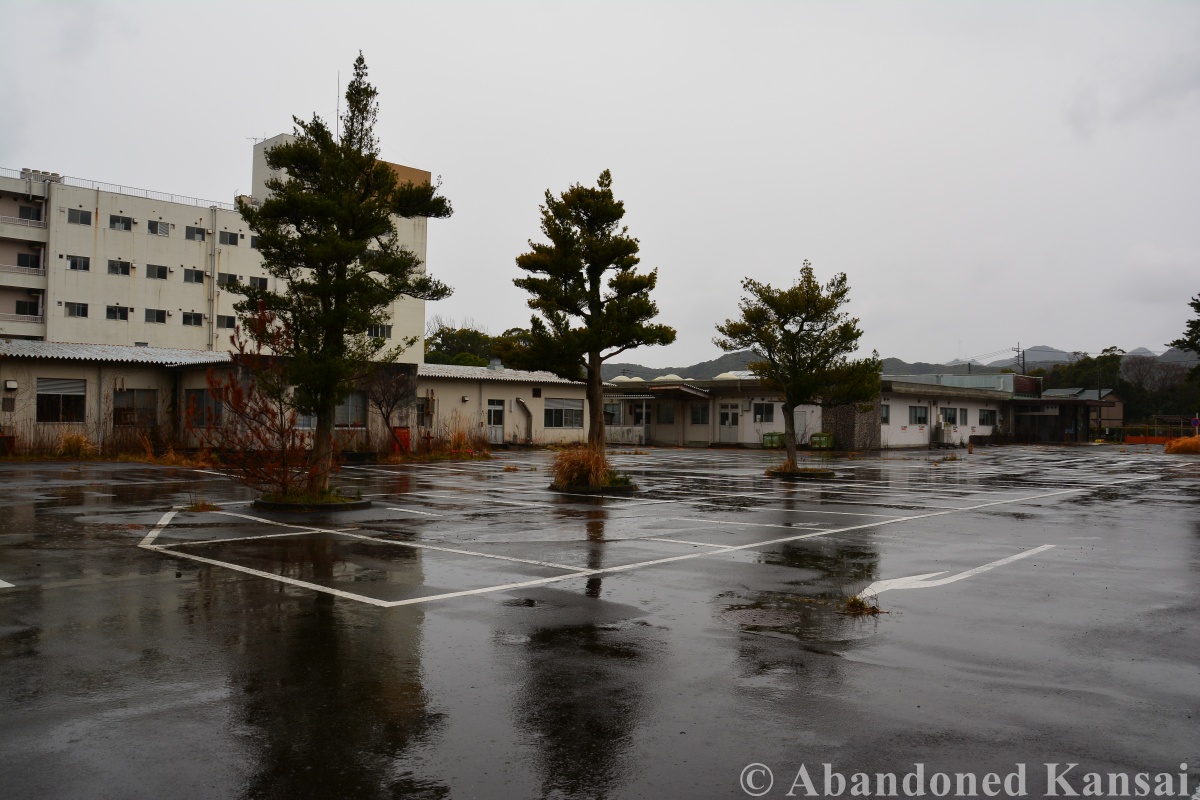
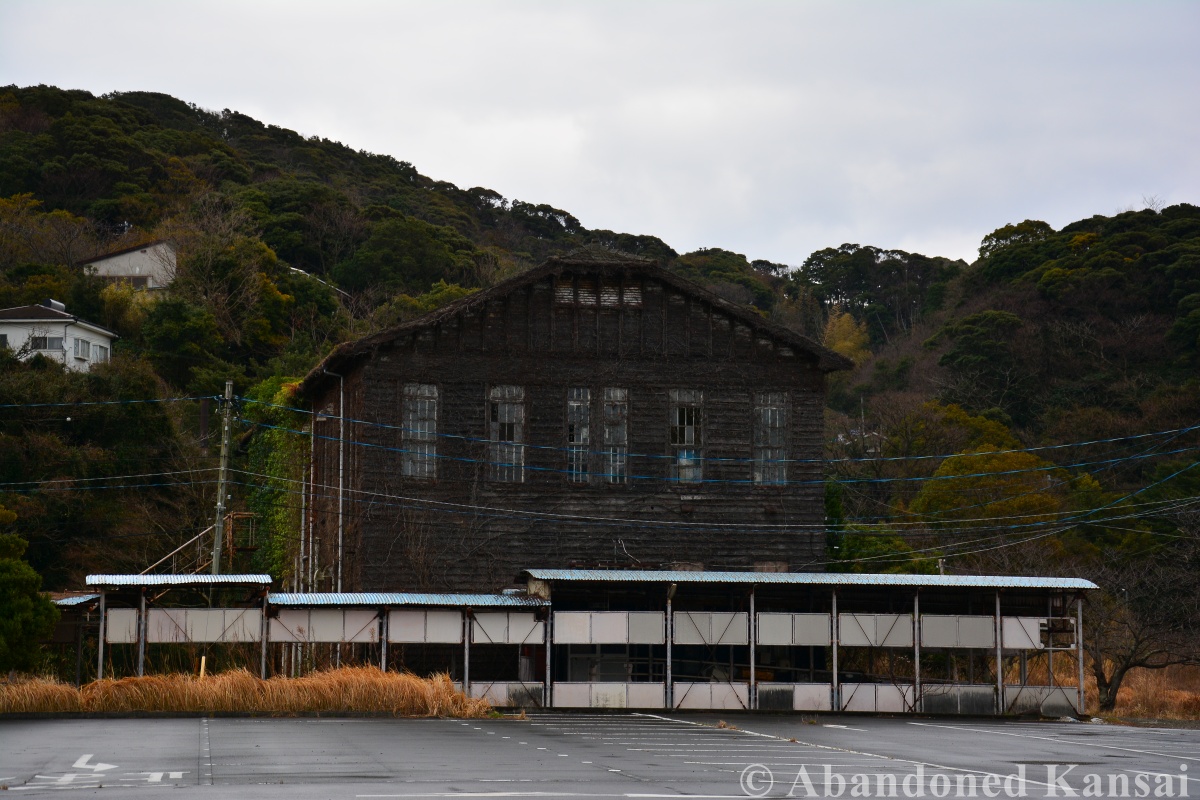
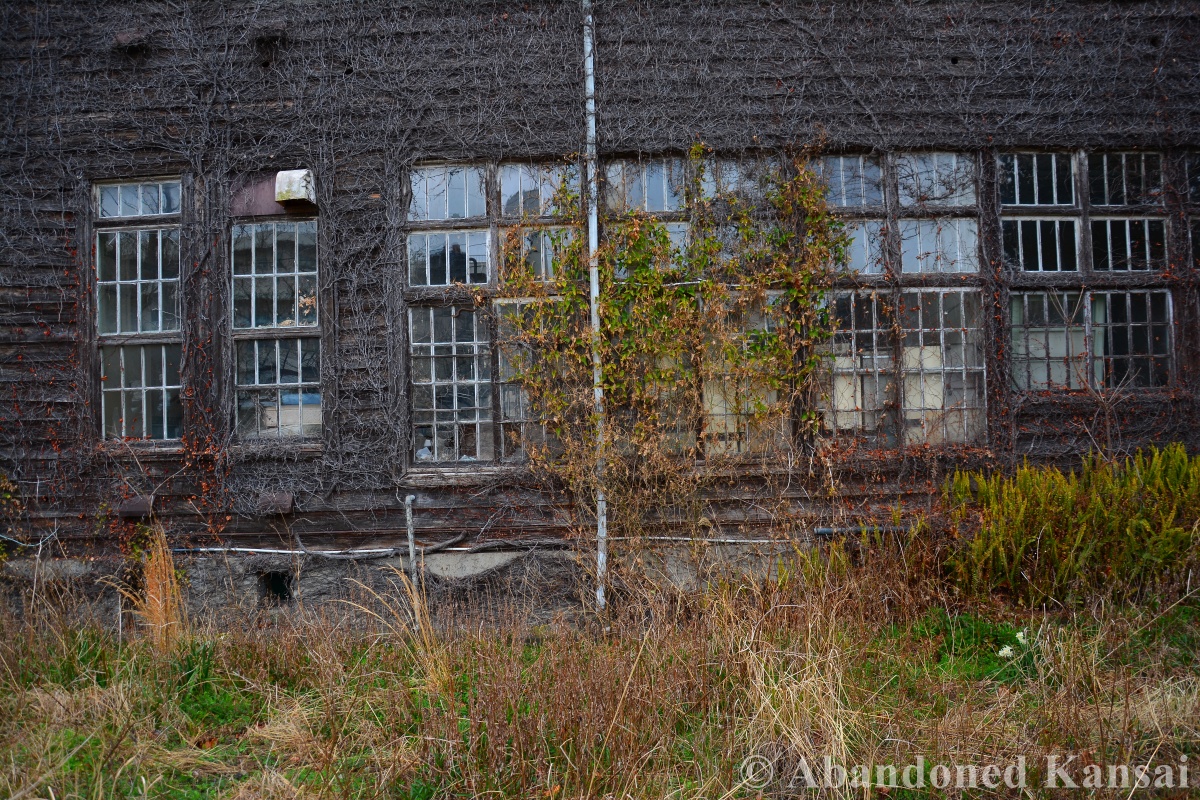
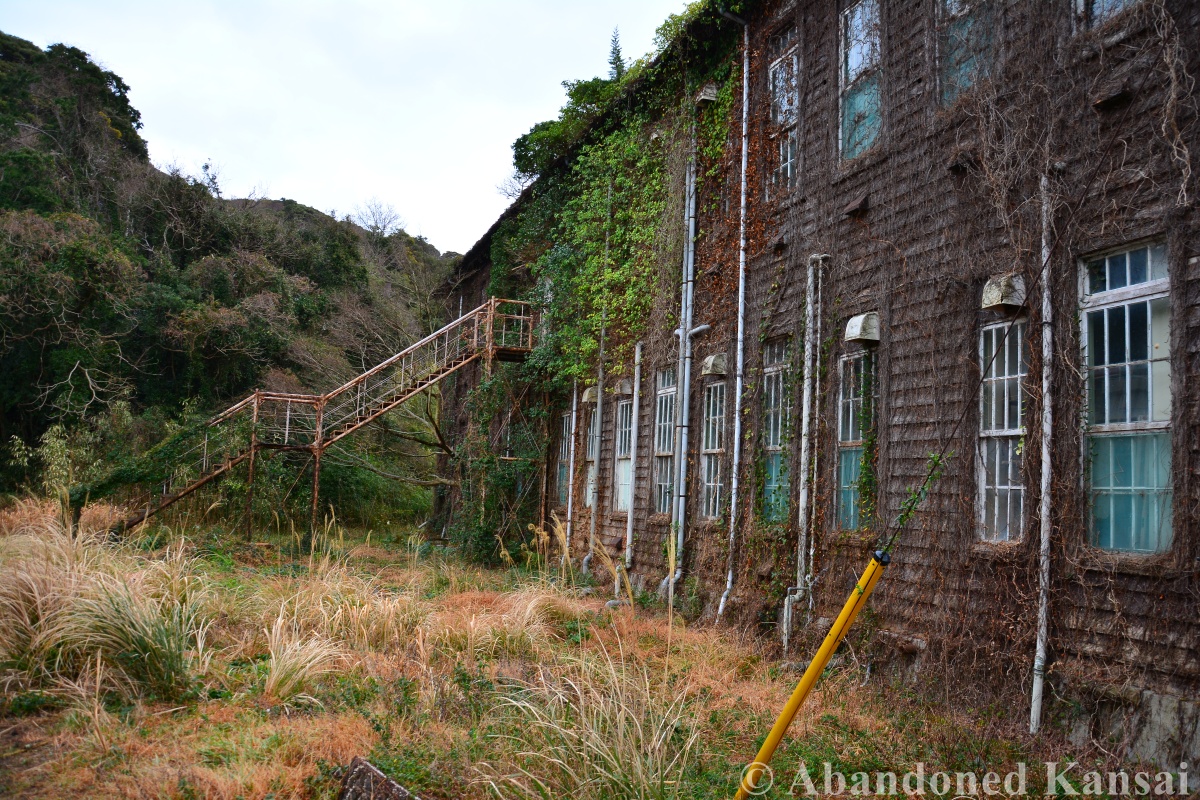
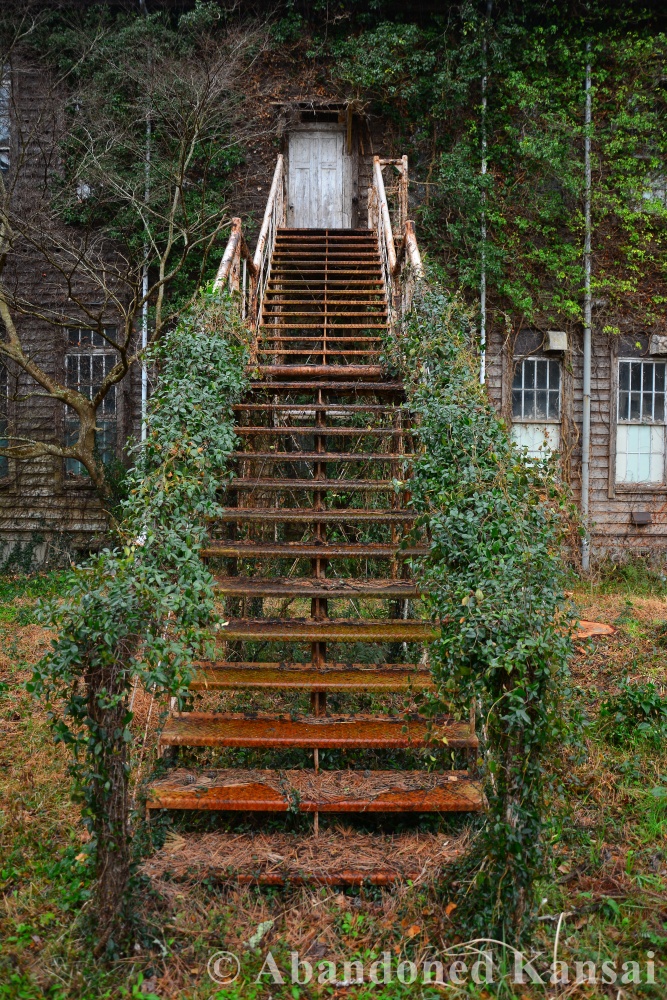
One of my favorite up till now unpublished abandoned medical facilities is the Minato Naval Hospital – an institution so old that the nearest modern JSDF base is about 60 kilometers away, the nearest JSDF naval base even 100 kilometers. The hospital was established in 1923, though the building featured in this article was constructed in 1932. 65 years later it was reorganized into another facility and probably closed as part of the restructuring of national hospitals. In 2012 the institution was renamed and moved to nearby Shimoda where it still exists as the Shimoda Medical Center.

I explored the Minato Naval Hospital back in 2015 on my way to the now demolished *Irozaki Jungle Park* – so I guess it sitting somewhat forgotten on my hard-drive for 10 years is long enough! The exploration was part of a weekend trip to the Izu Peninsula and I have to admit it would have been impossible to do without the help of a friend I was travelling with. The naval hospital was on the premises of a semi-abandoned hospital complex, part of which is still active to this very day… and the building of our interest was tightly locked. Fortunately there was a hole the size of maybe a tennis ball in the plastic part of the door, slightly off above the lock. Now, I’m a big guy with big arms and there was not a snowball’s chance in hell my hand let alone my arm would have fit through that hole – luckily my friend was a skinny woman who literally had a can of coffee and a cigarette for breakfast (guess which country she’s from!), so it took her about 5 seconds to unlock the door and get us into the building.

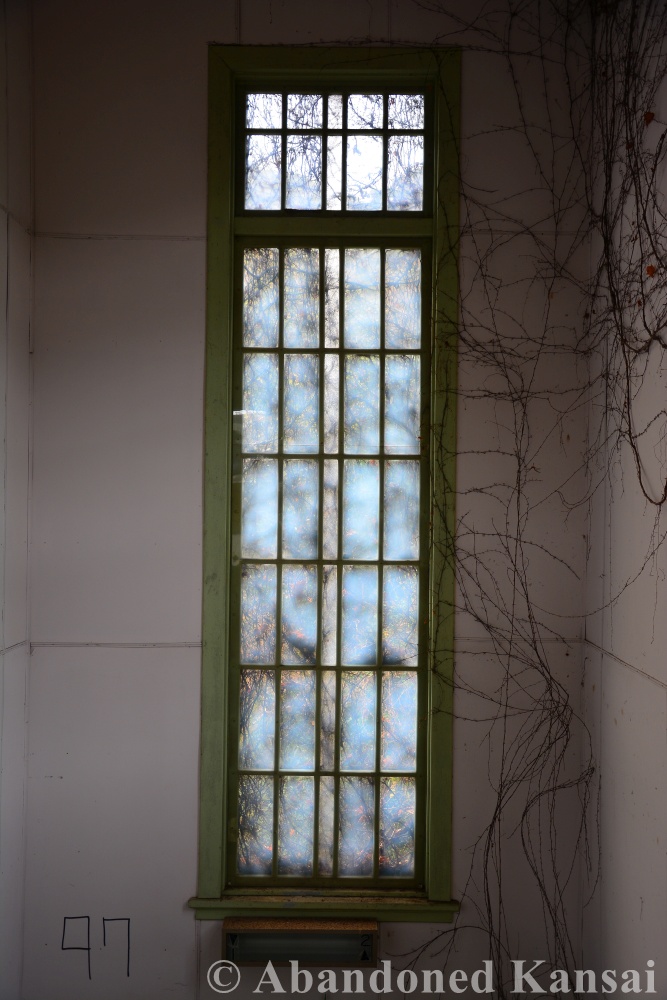
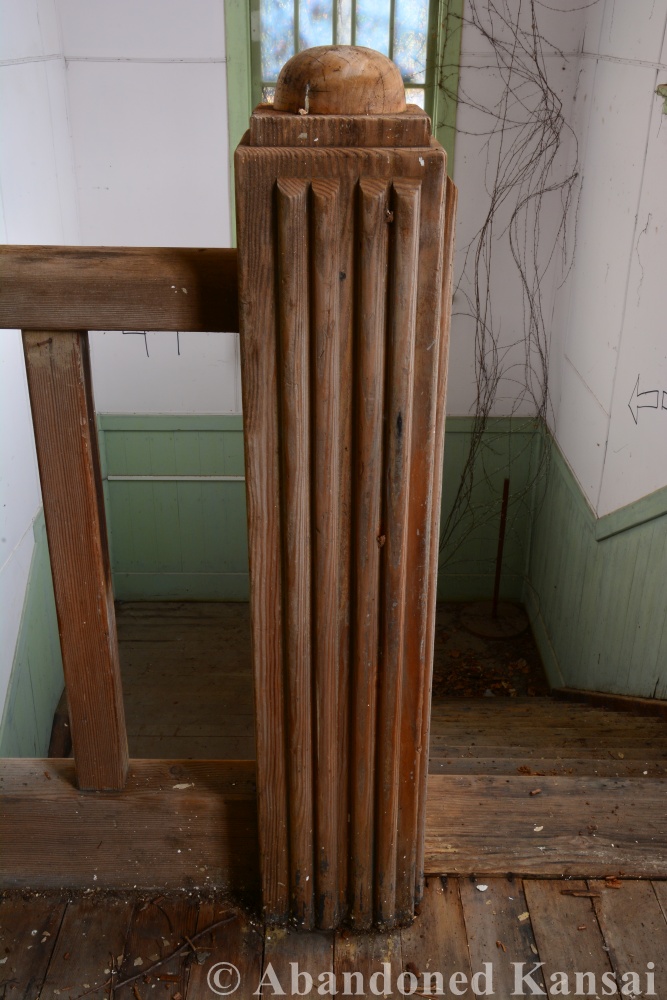
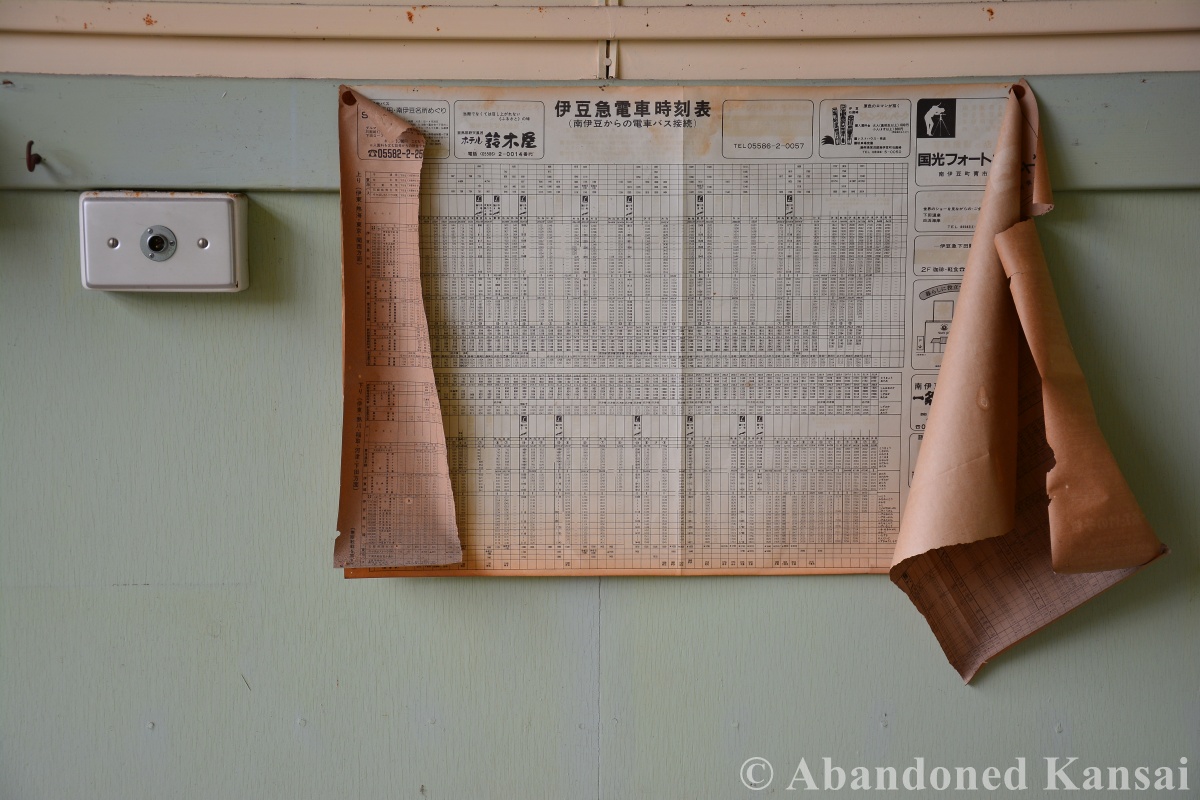
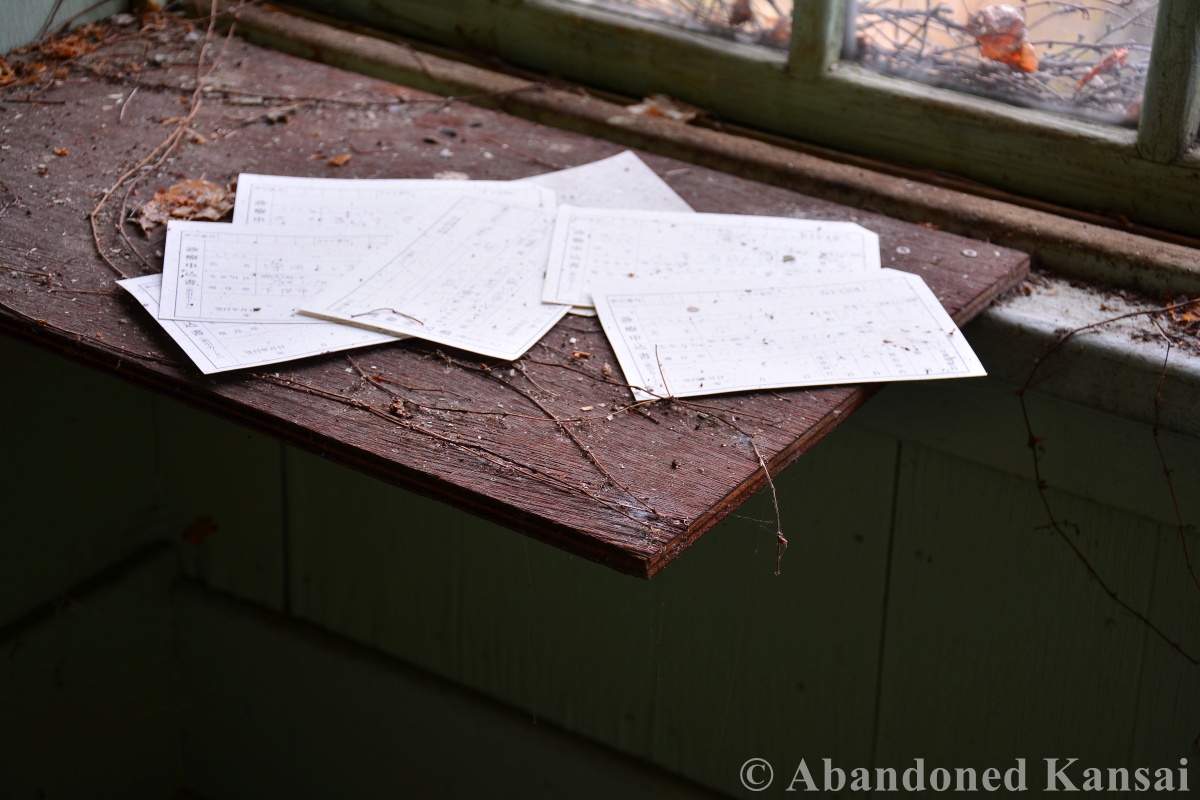
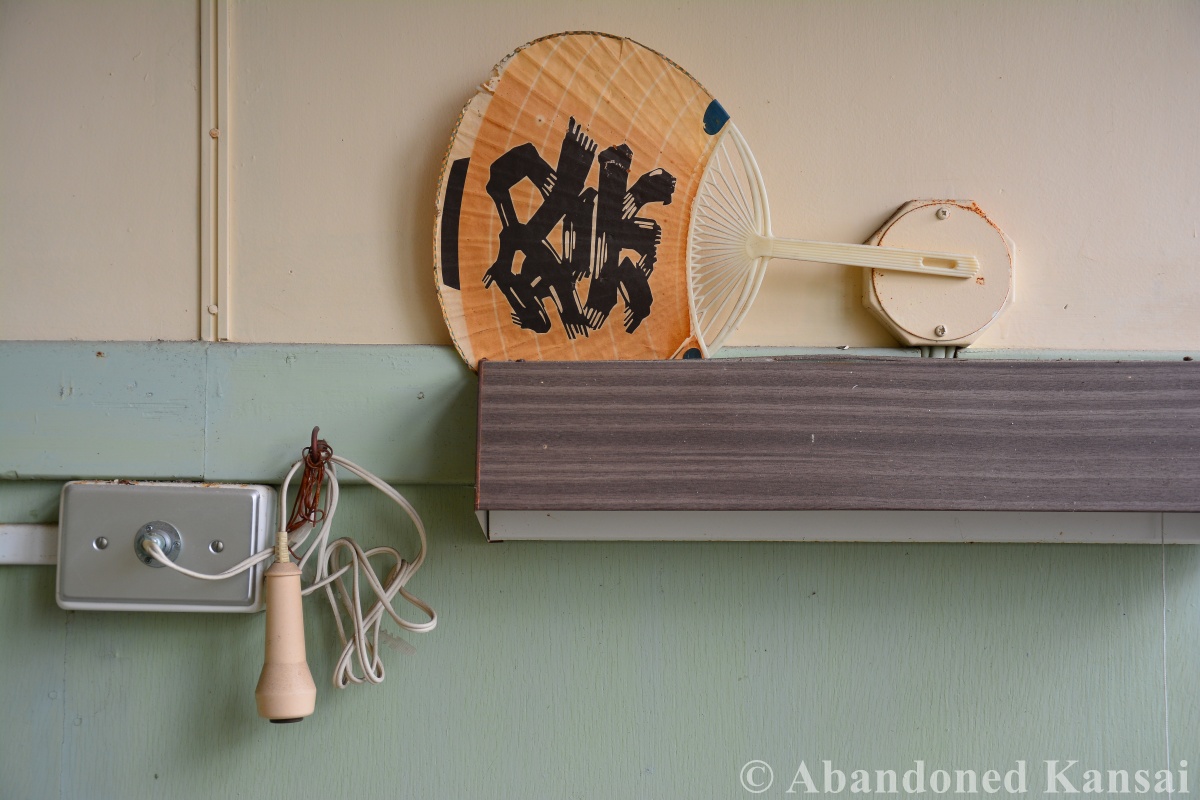
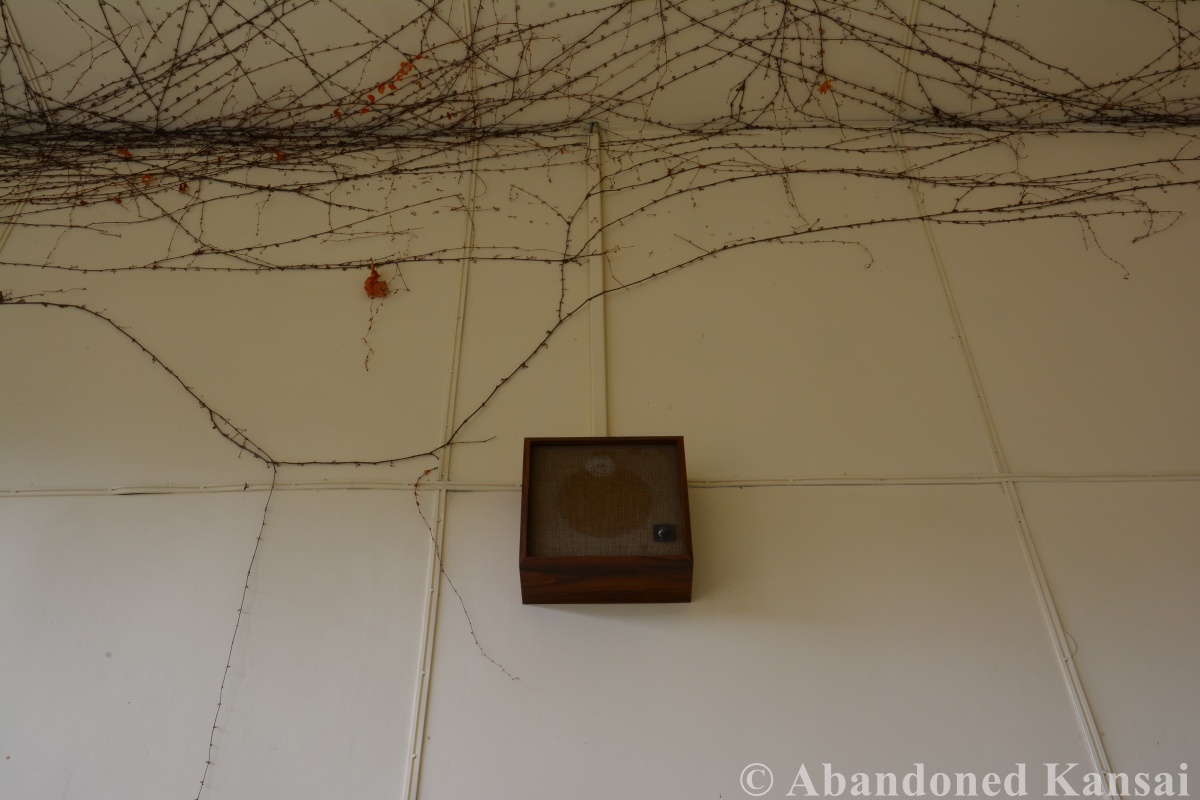
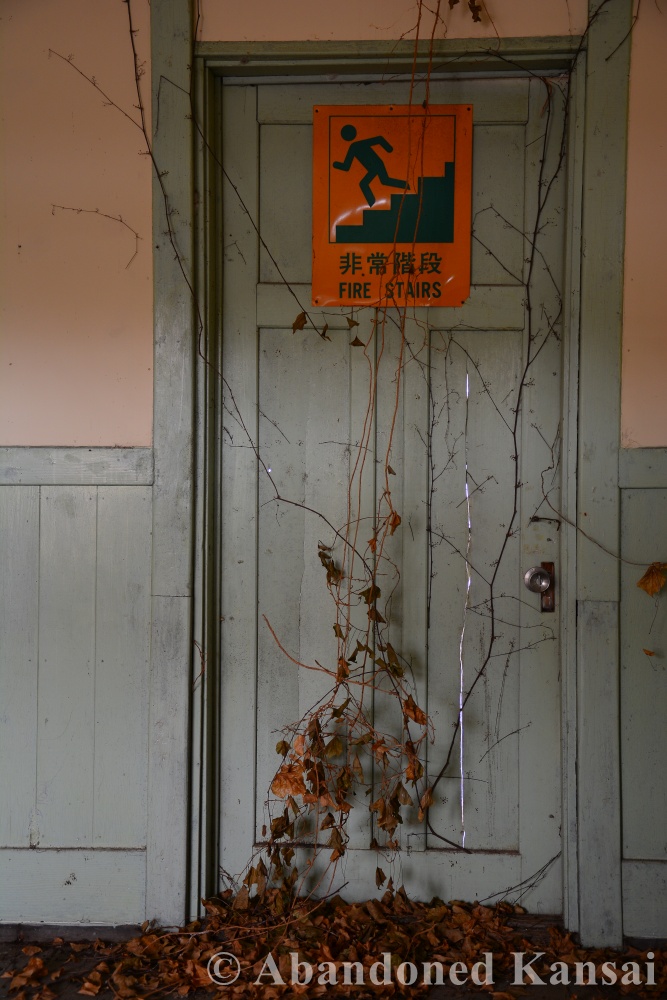
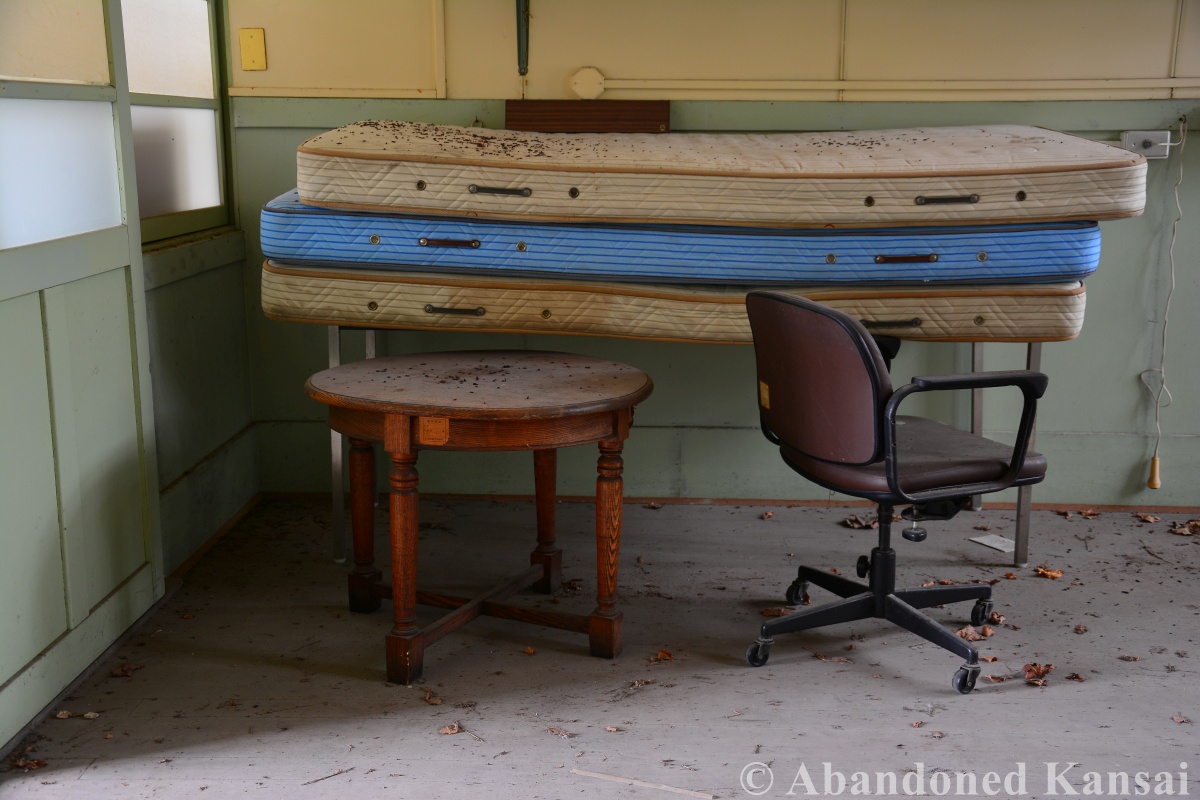
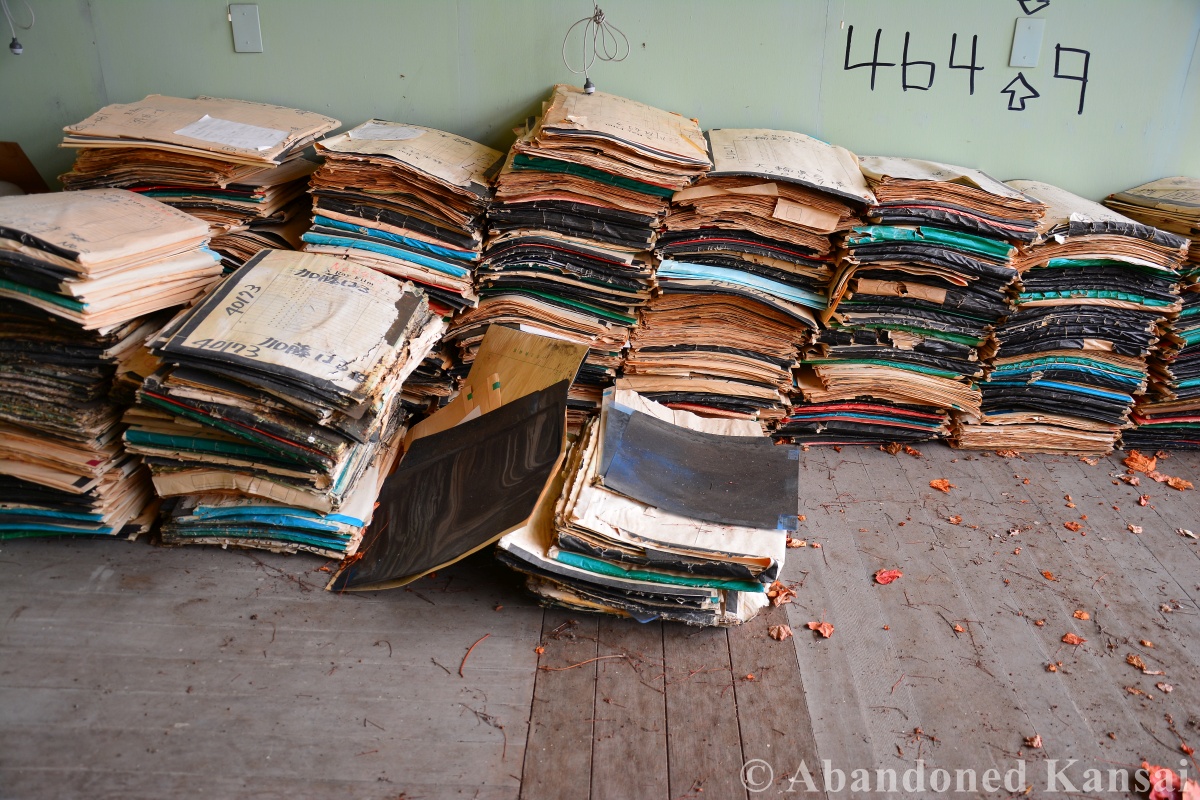
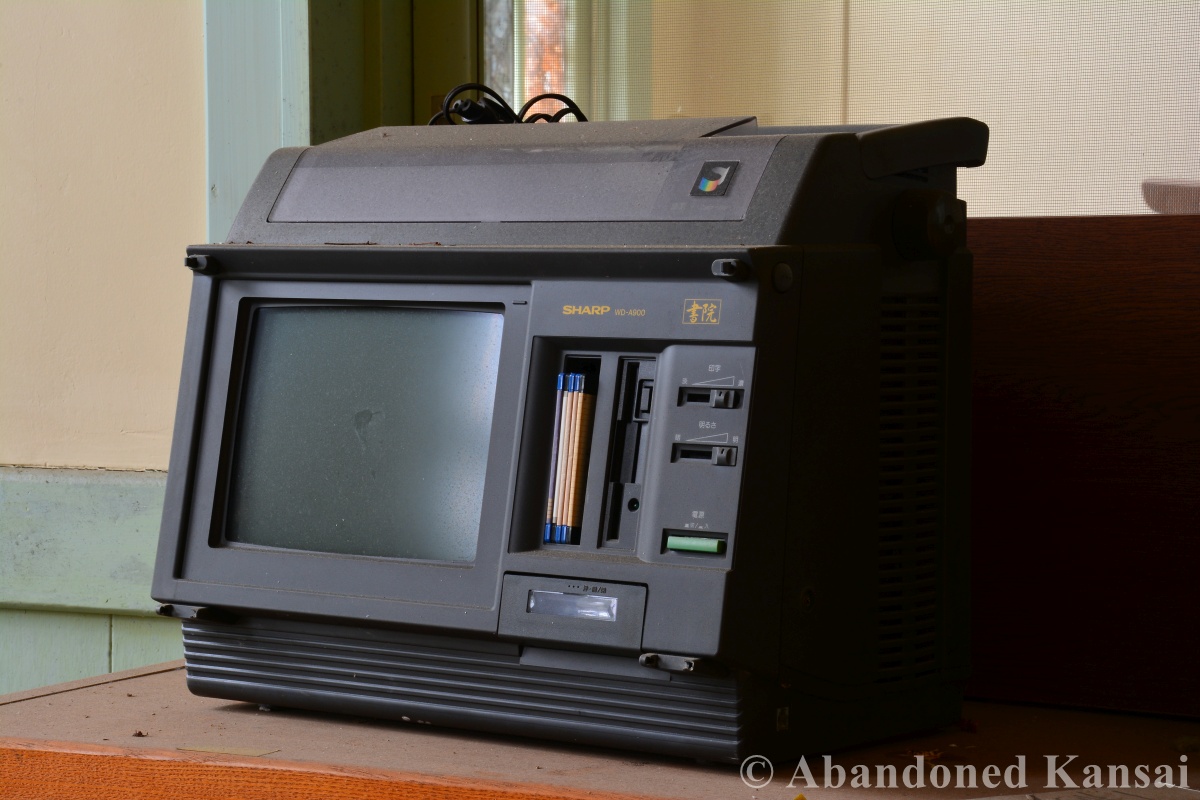
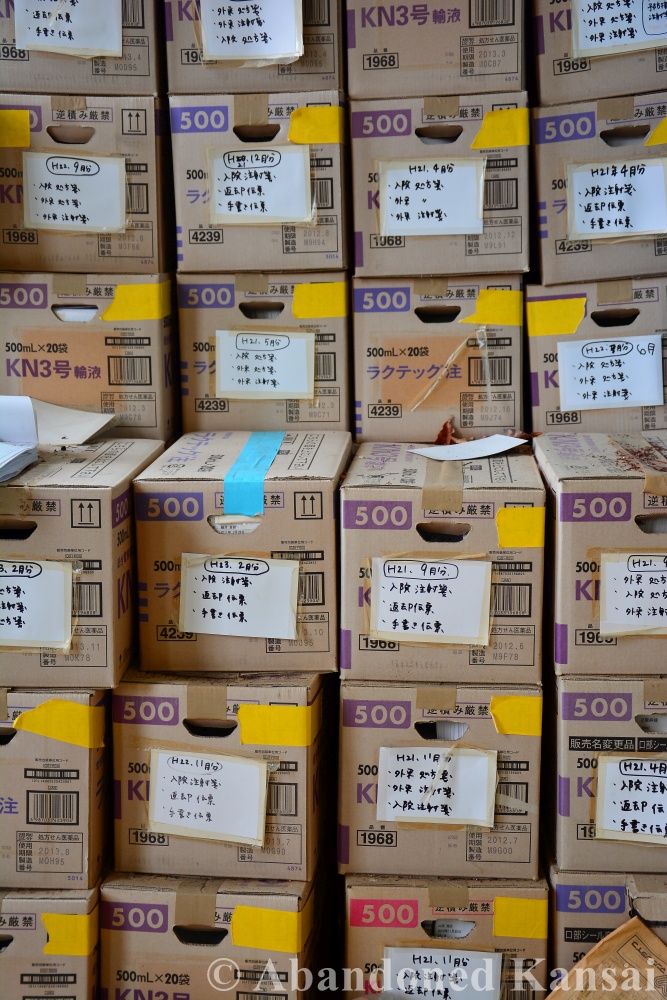
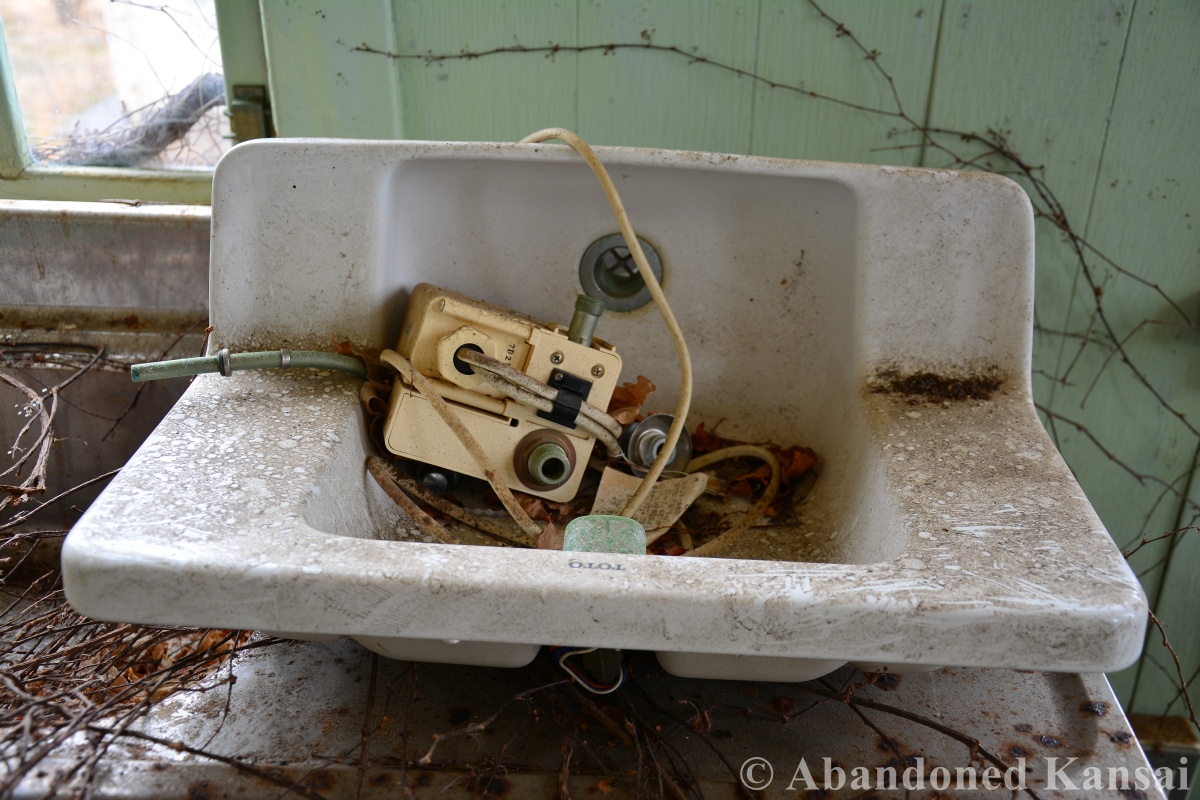
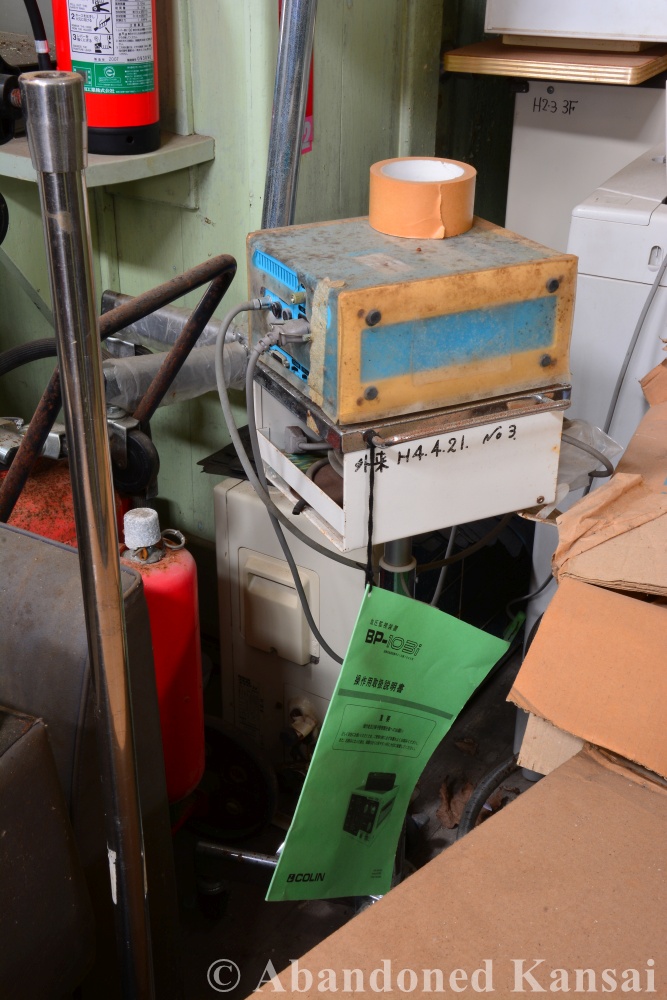
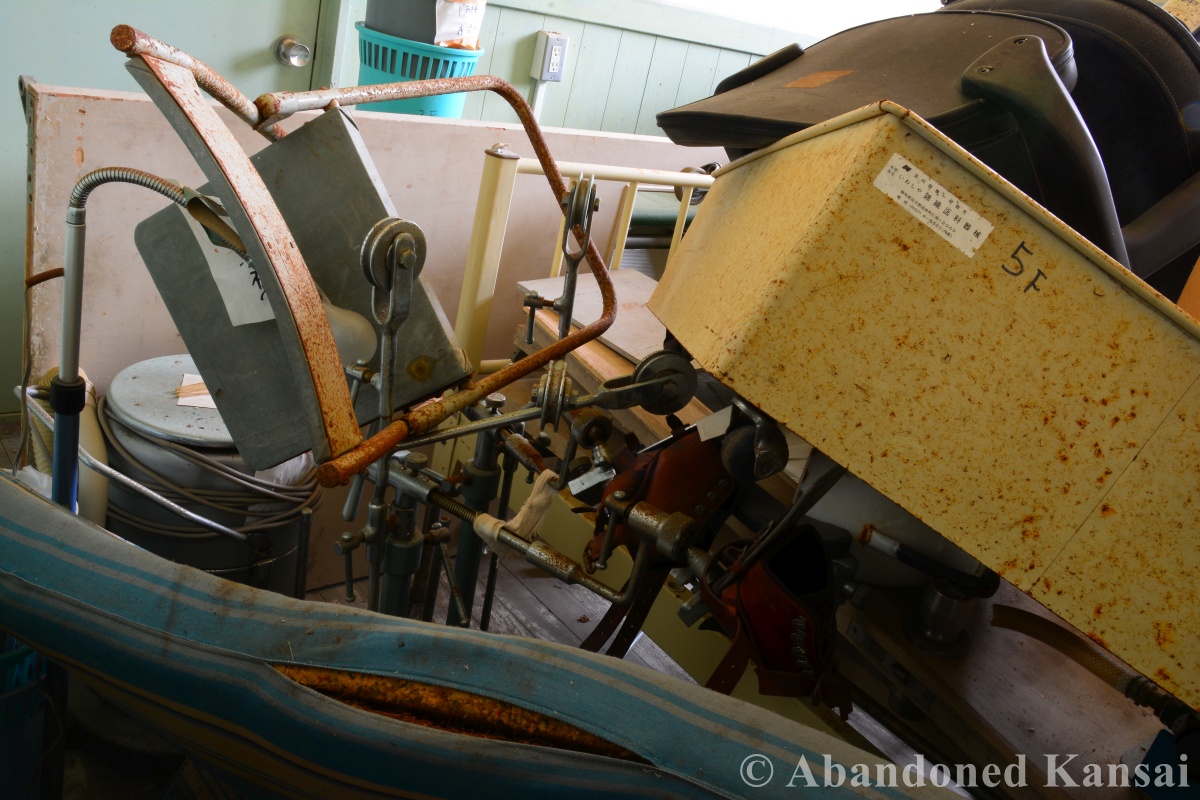
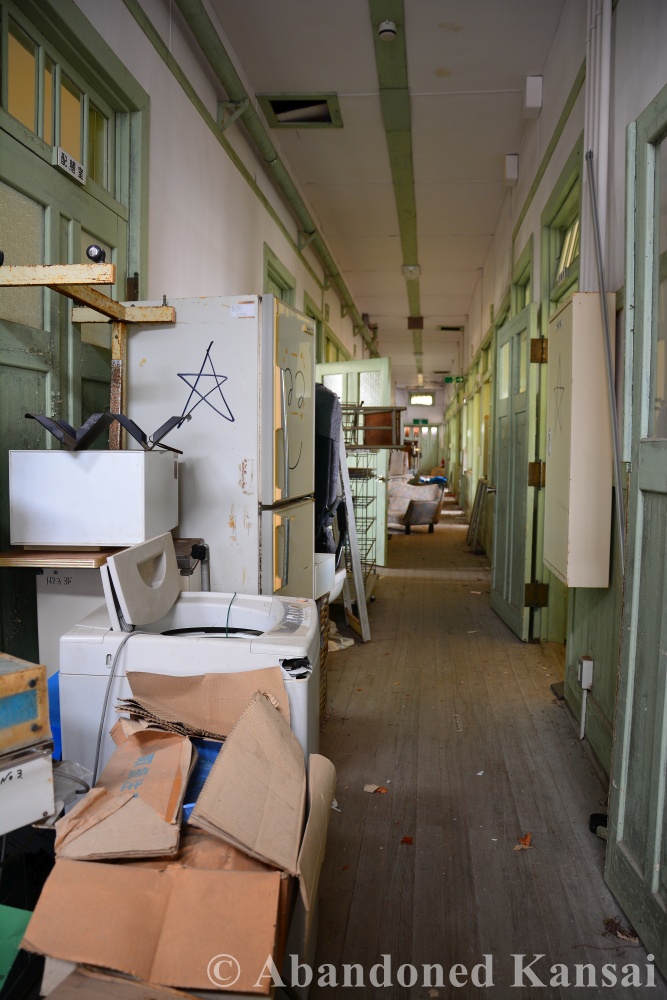
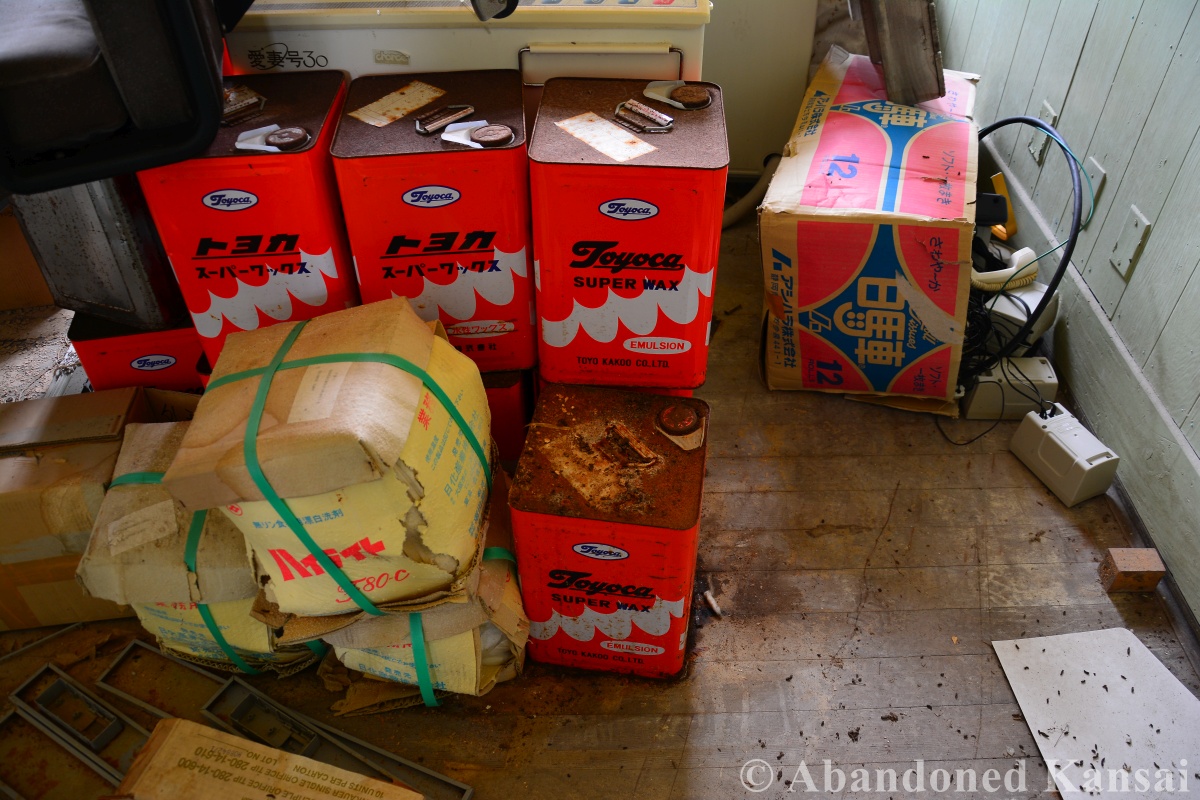
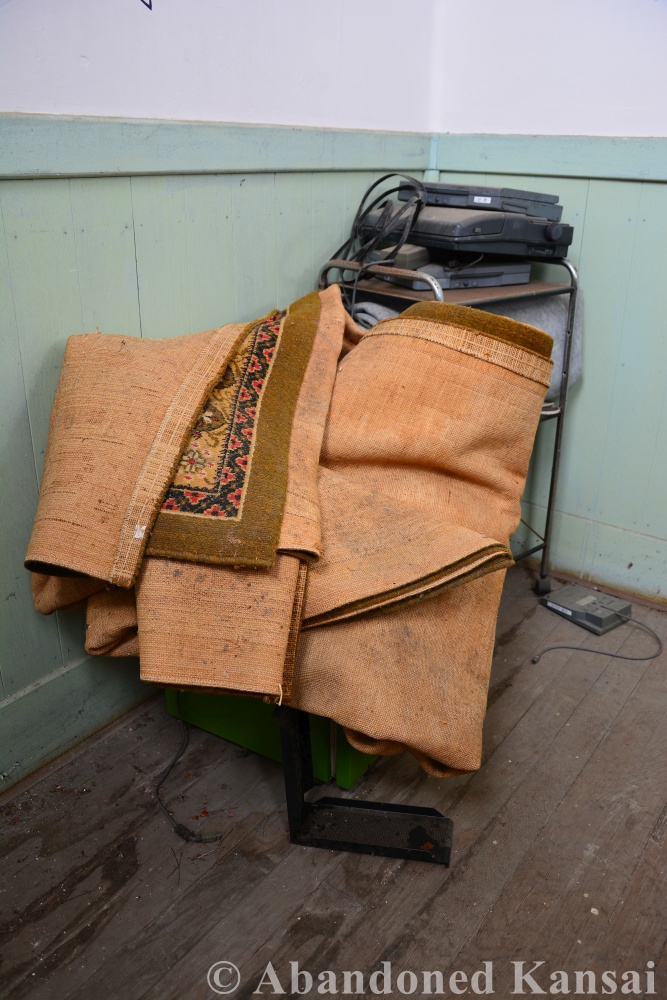
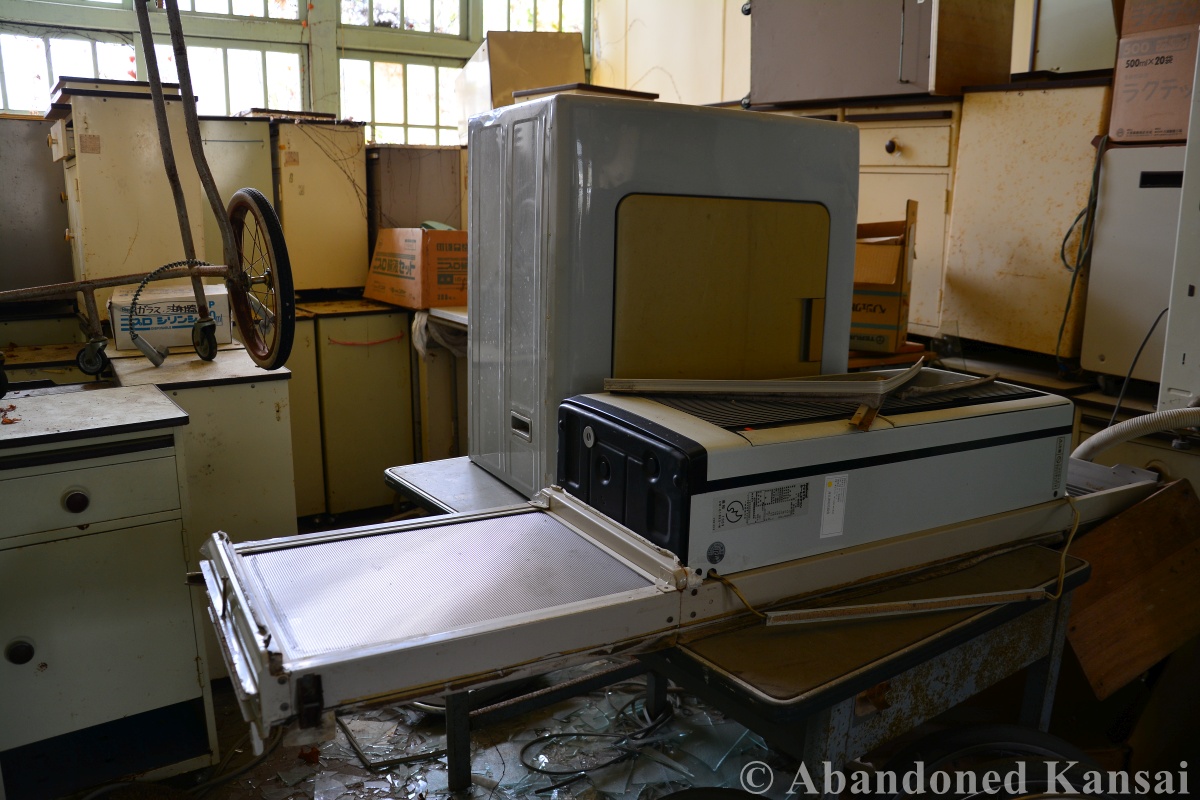
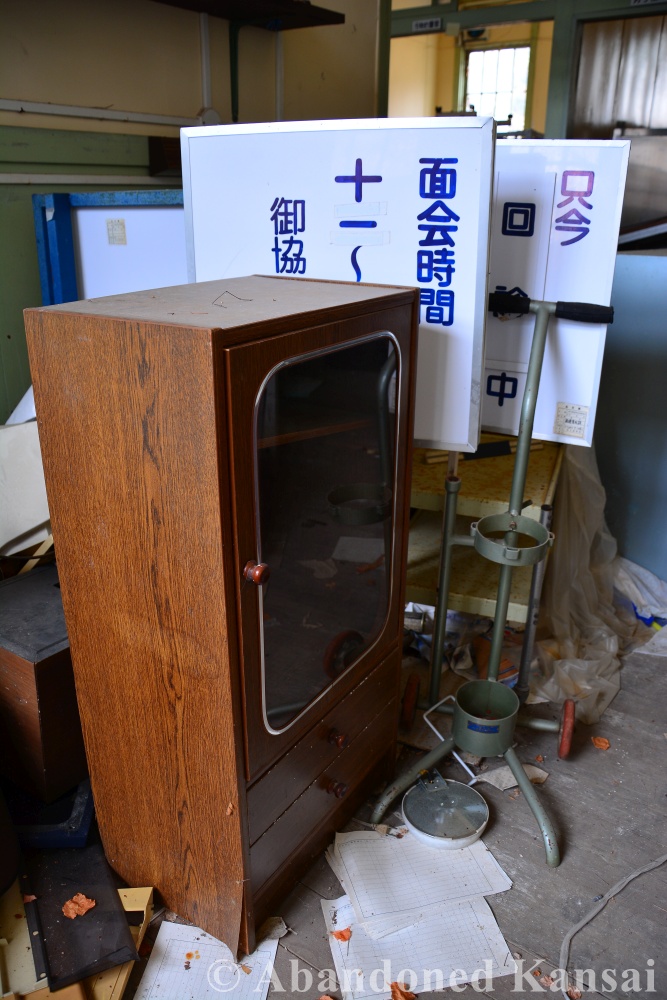
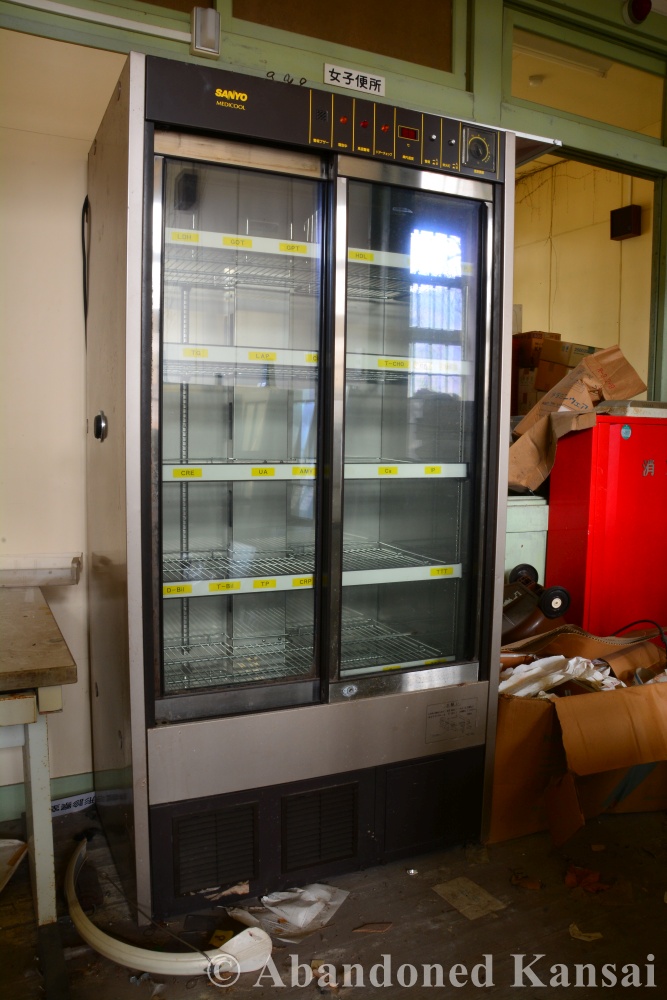
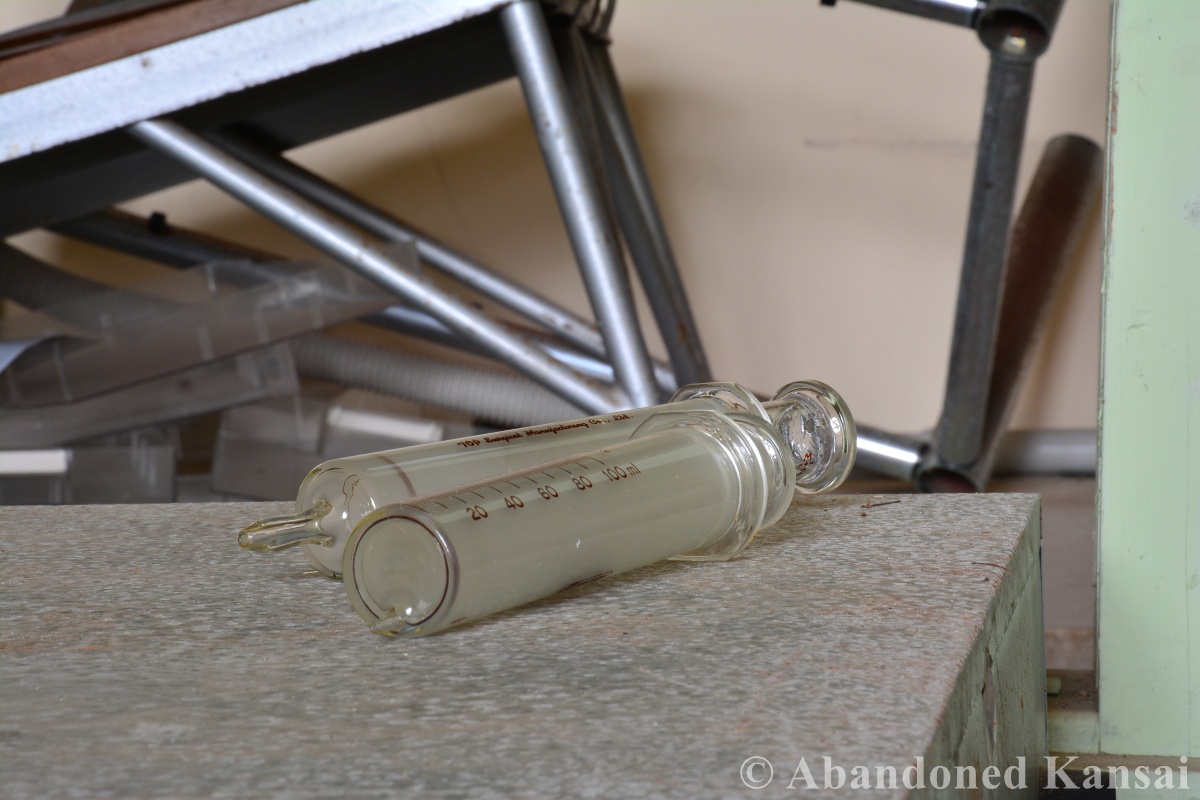
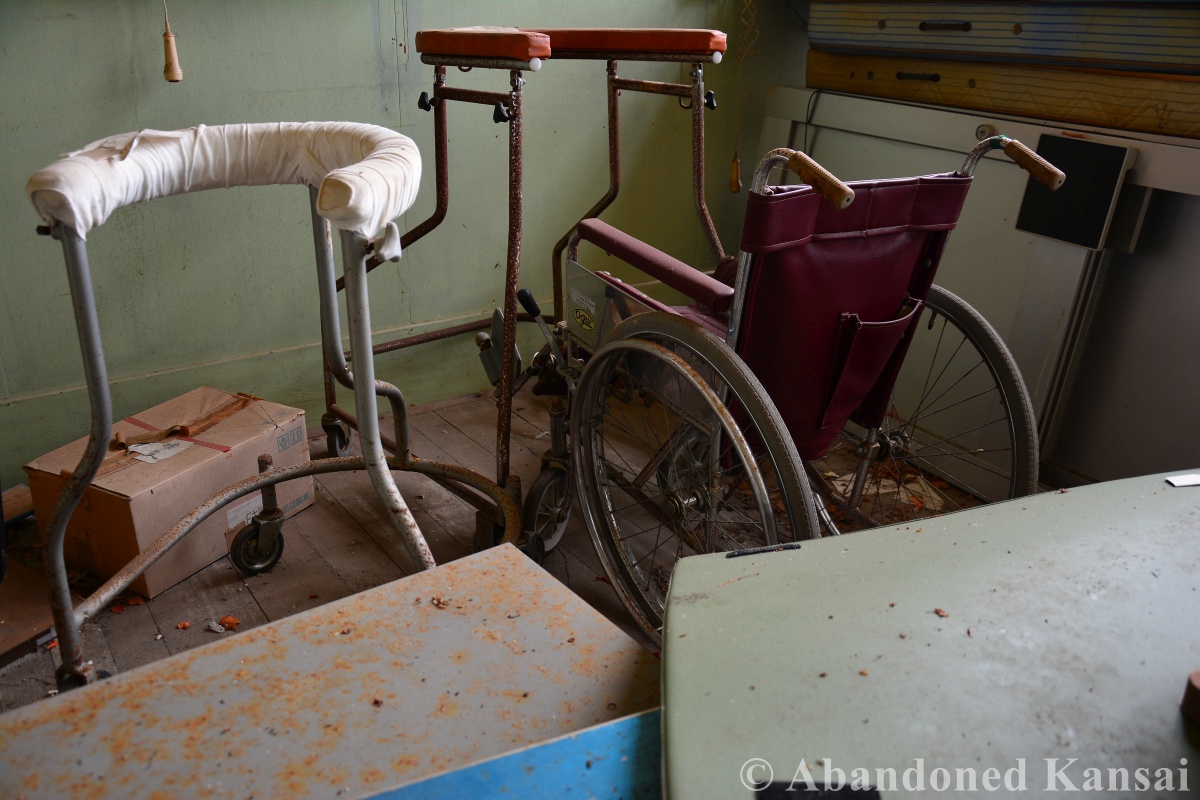
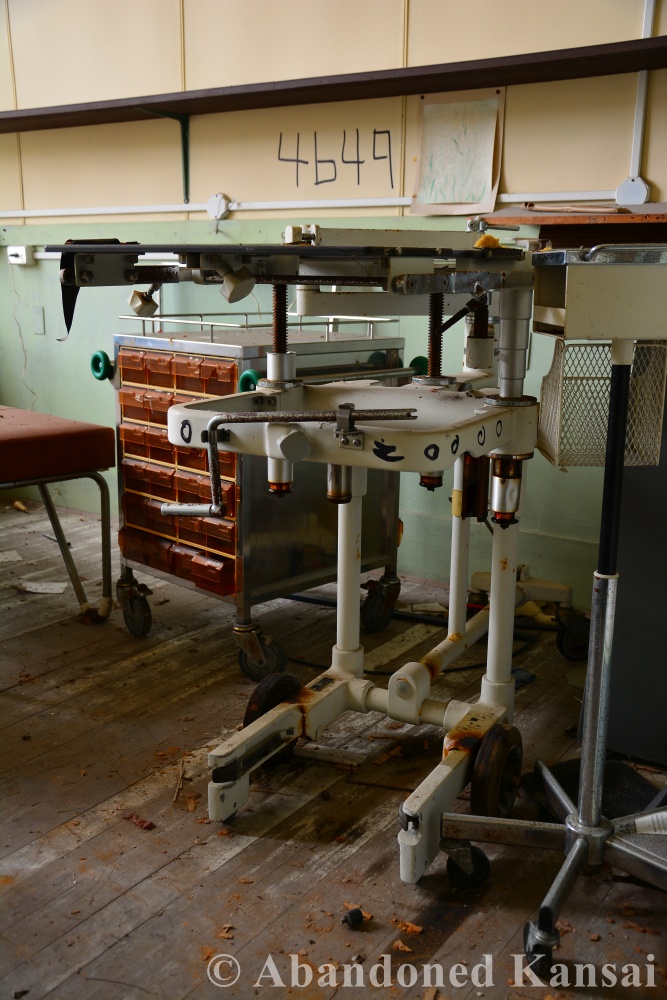
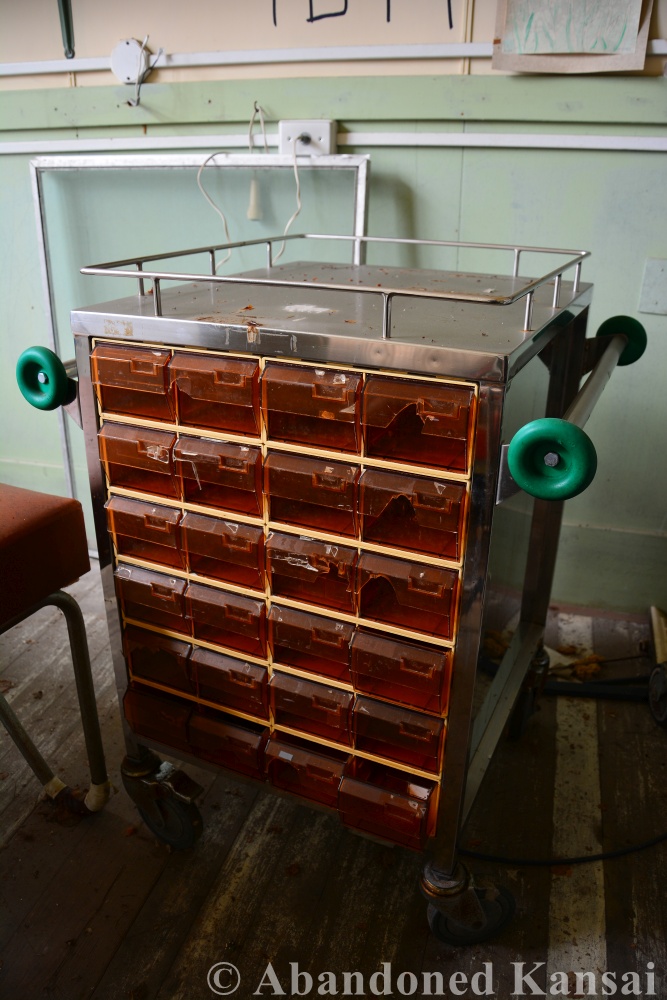
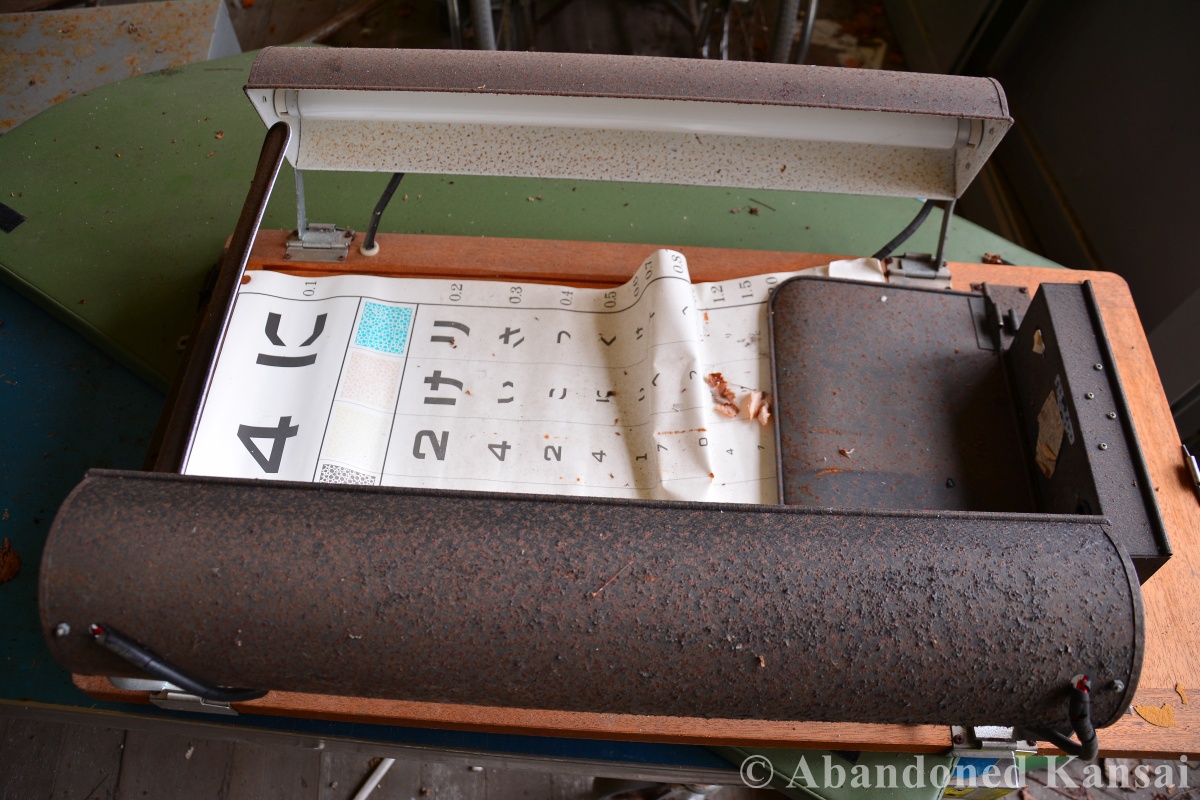
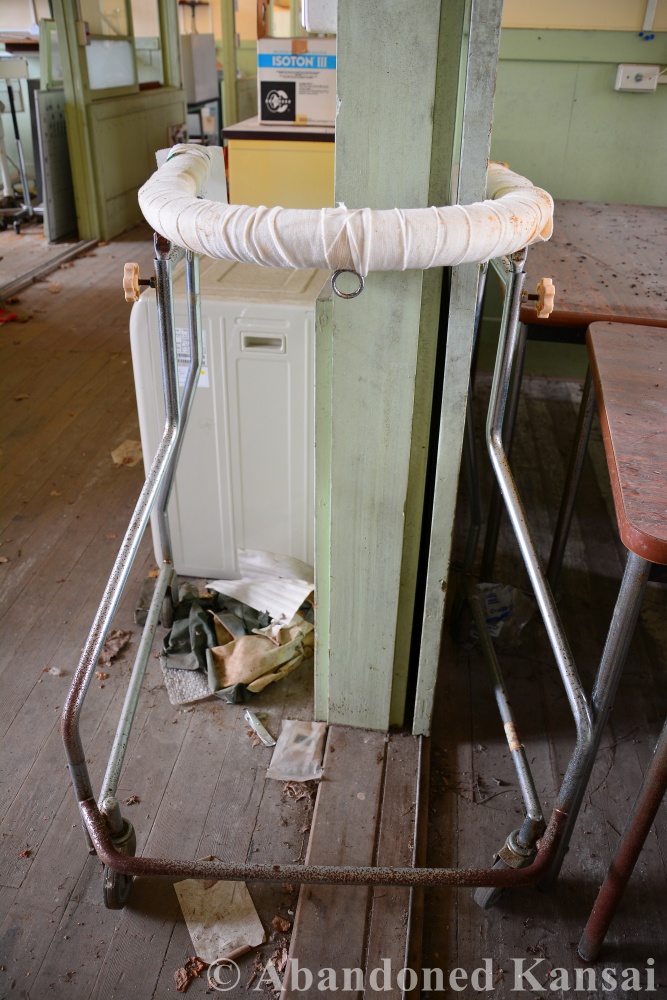
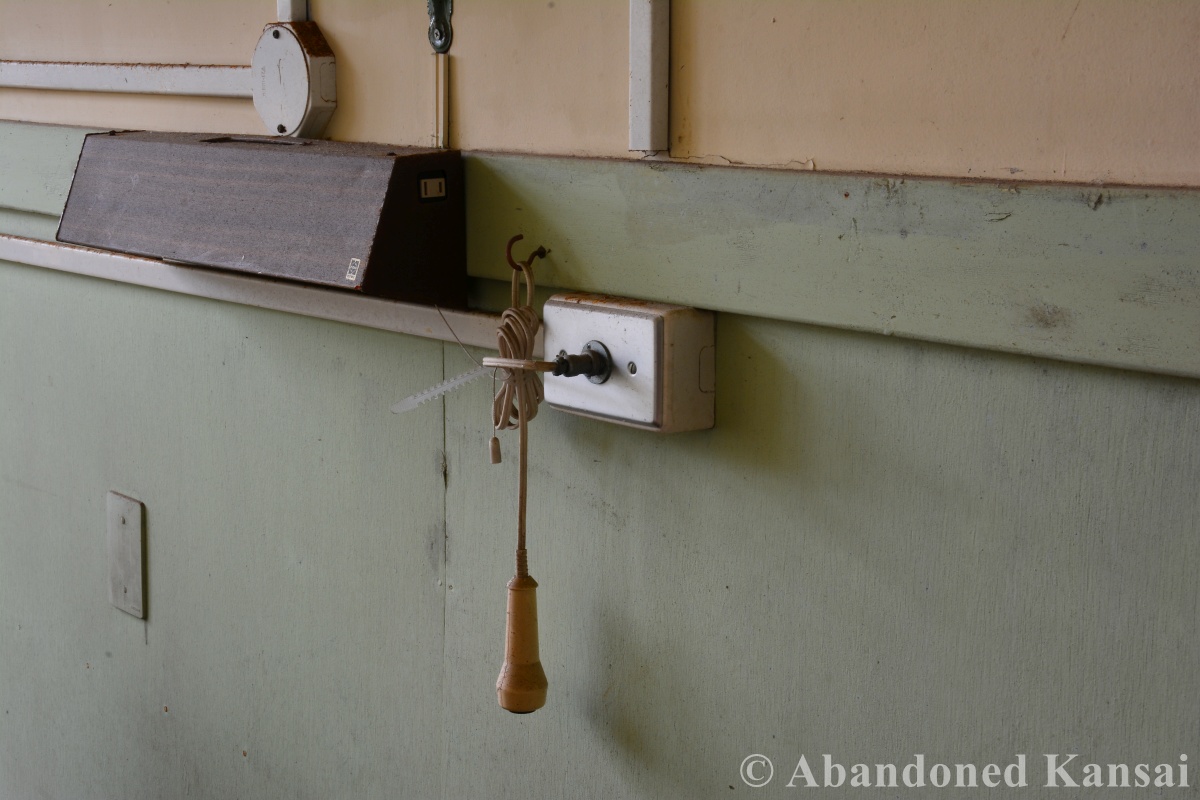
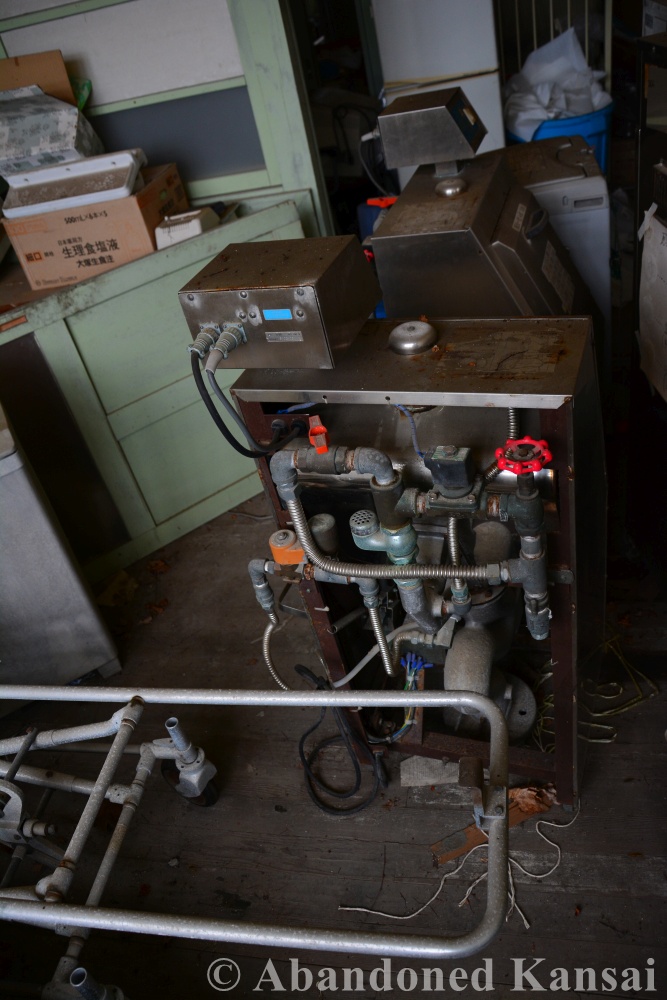
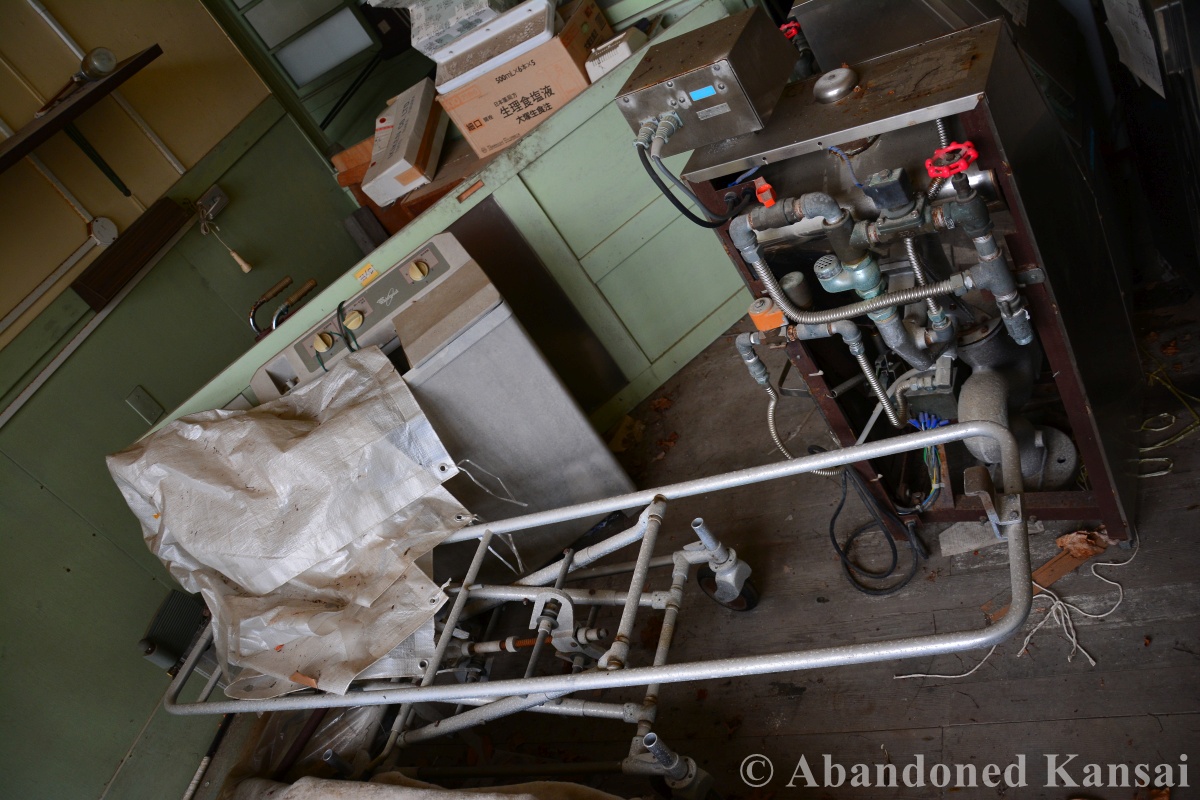
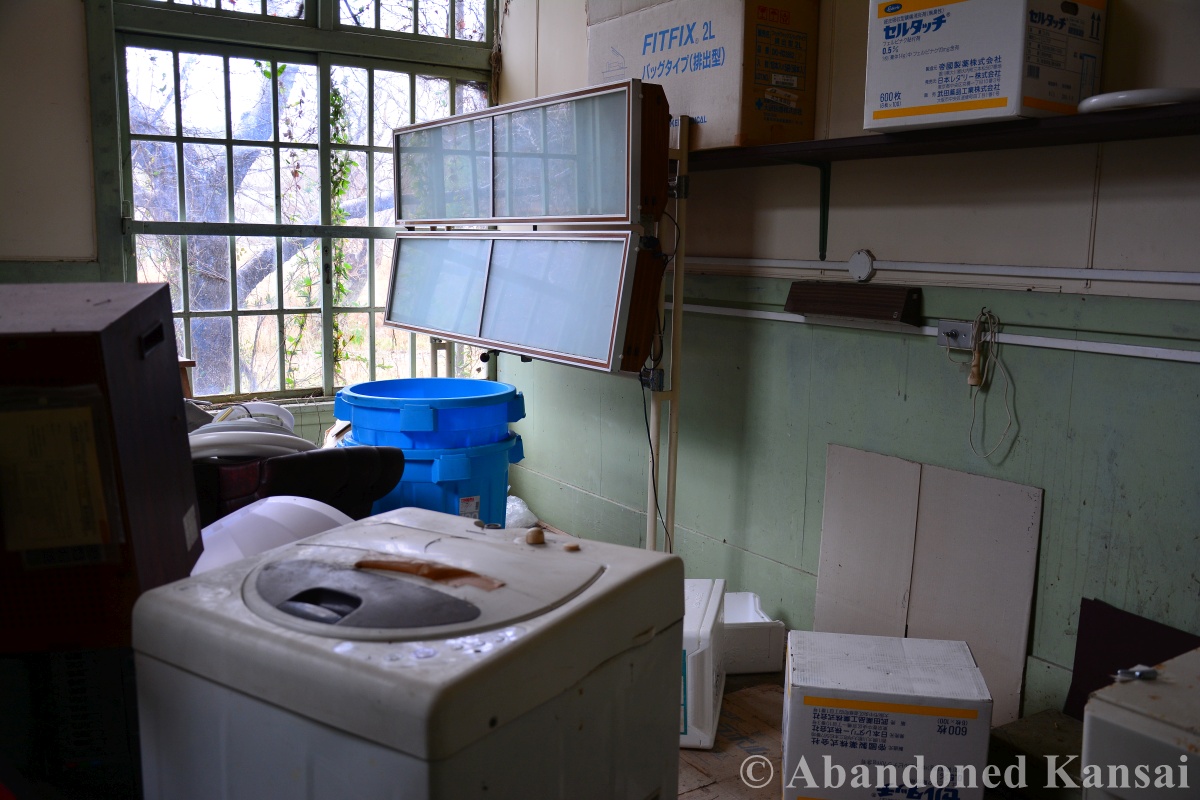
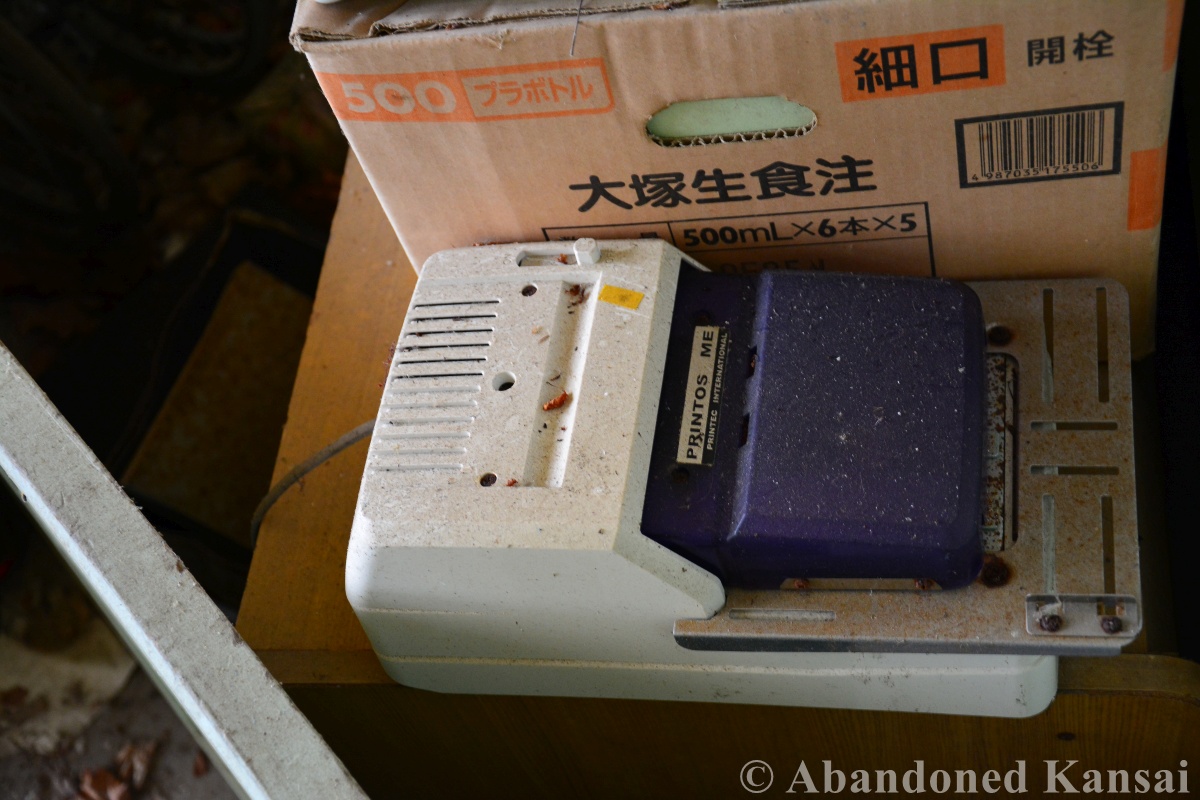
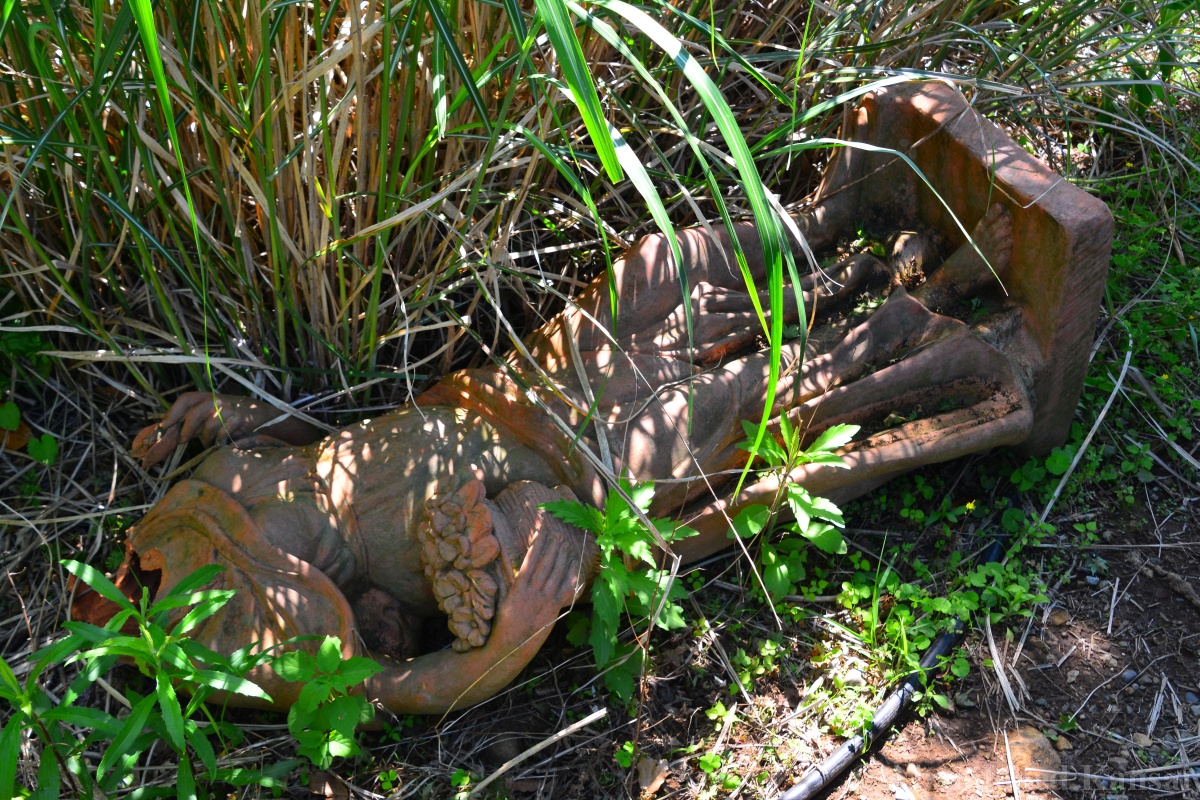
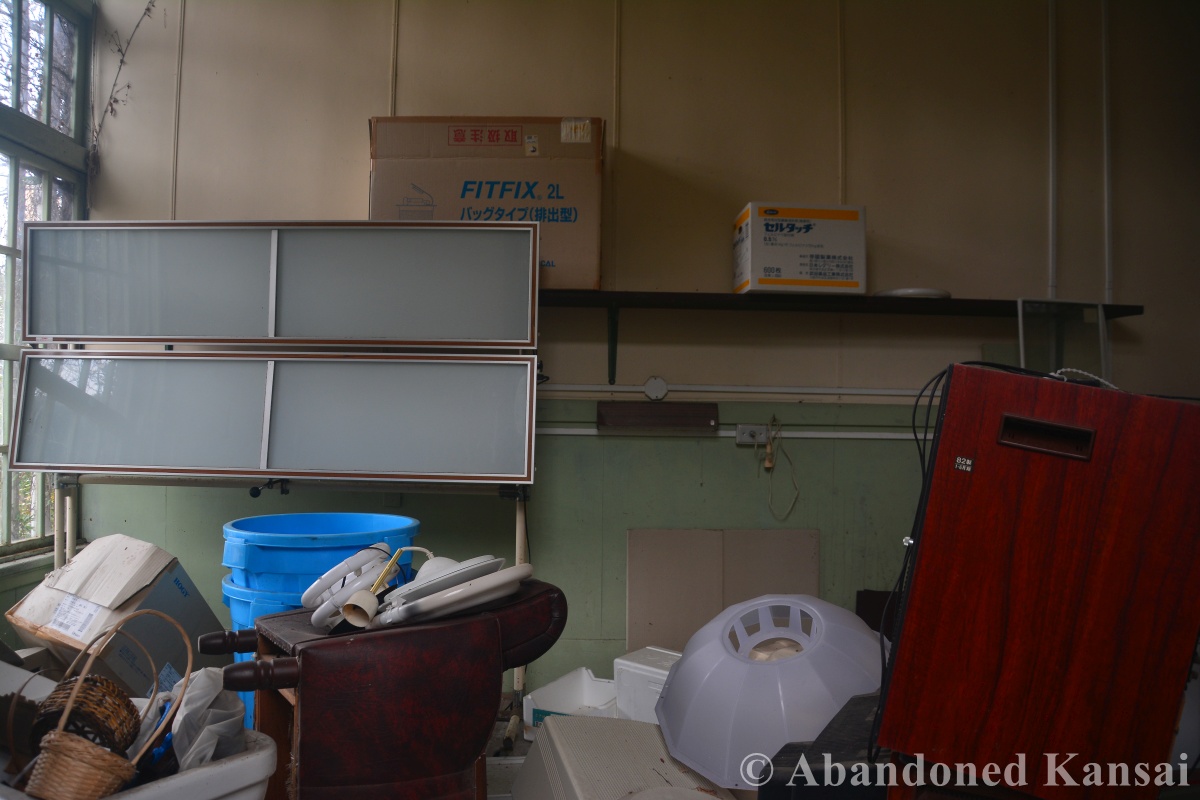
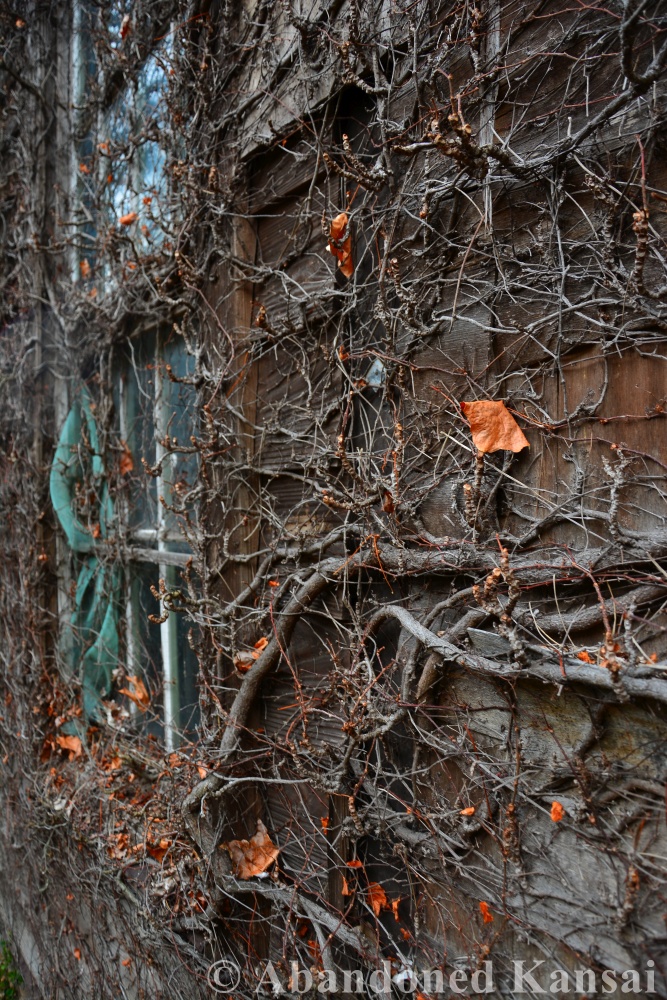
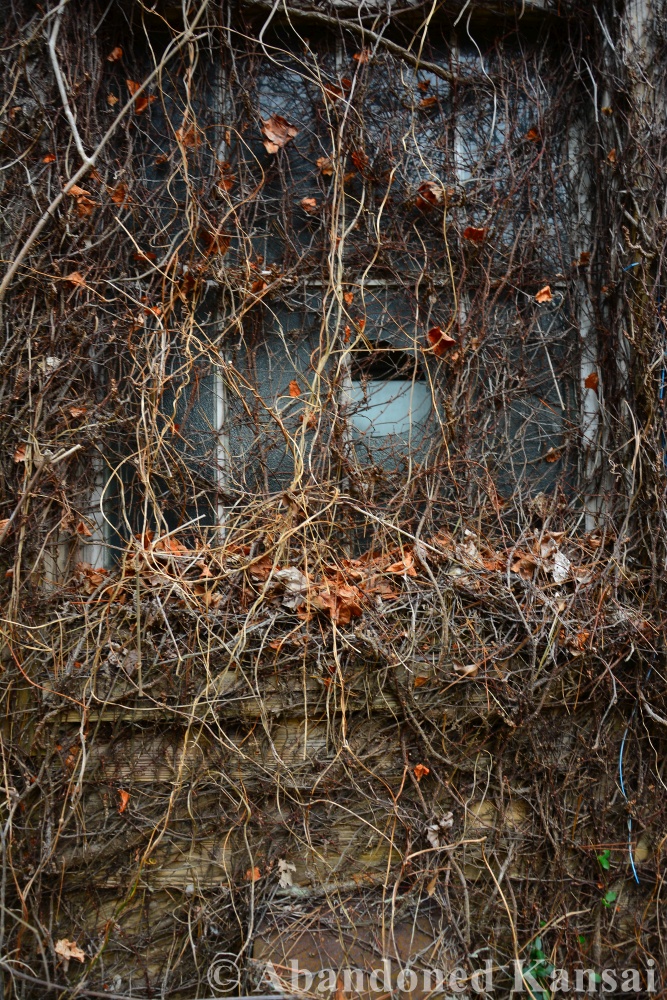
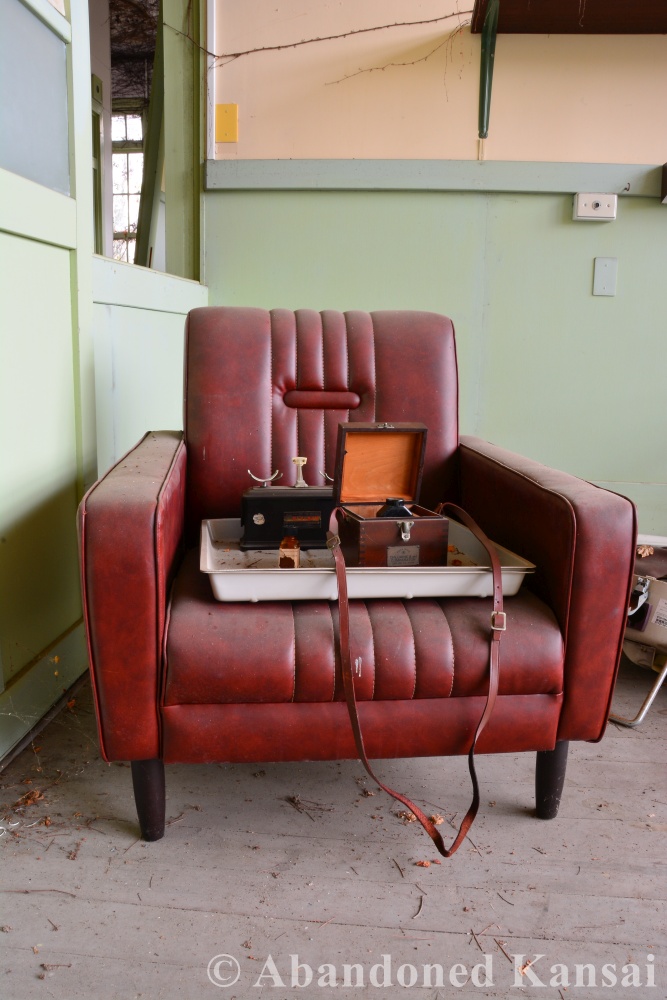
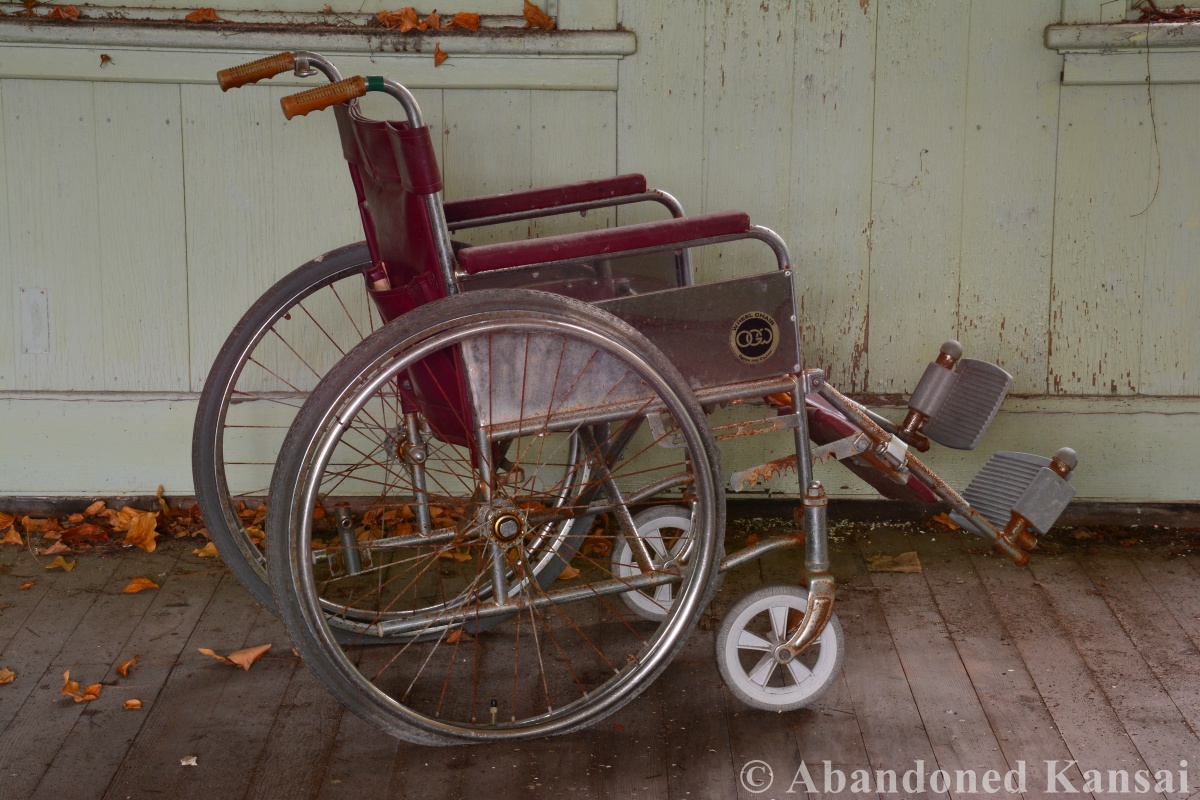
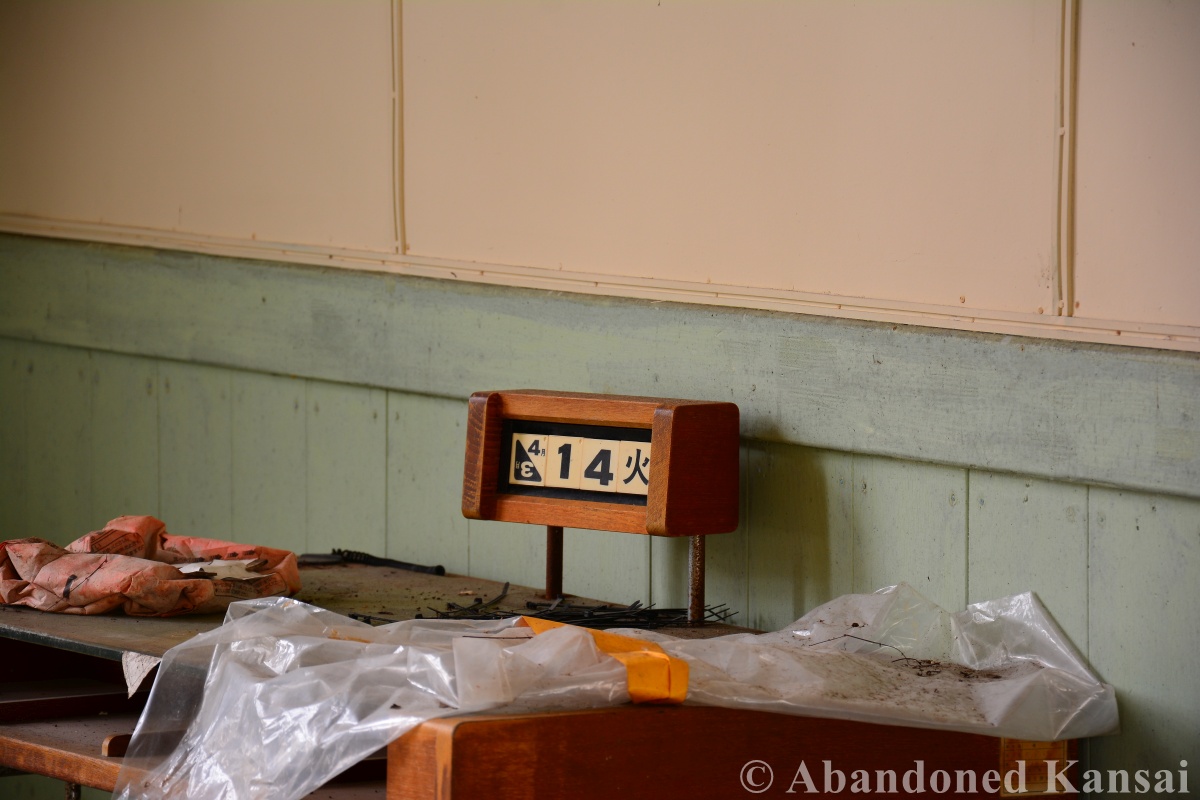
As beautiful as the semi-overgrown wooden structure was from the outside, the interior matched it – despite being rather cluttered, but not really vandalized. It clearly was an abandoned building used as a storage for medical devices and files no longer needed. Room after room there were items to discover and photos to capture – especially since I hadn’t seen any interior pictures before, so I had no idea what to expect. Old equipment, new equipment (some with screens!), and tons of stuff I had no clue what they were used for. After looking at the photos again, I have to admit that the exploration would have been much less exciting if I would have seen the same stuff in a regular abandoned warehouse – but we weren’t in an abandoned warehouse, we were in an abandoned 85 year old military hospital not a lot of people knew about! Upon leaving we made sure to lock the door again – the hole was later covered as I found out in 2023, when I was in the area again to have a look at the semi abandoned modern part of the hospital. Because back in 2015 we ran out of time and had to rush to the *Irozaki Jungle Park*, which was a unique exploration by itself.

(*Like Abandoned Kansai on Facebook* or *follow us on Twitter* if you don’t want to miss the latest articles and exclusive content – and subscribe to the *video channel on Youtube* to receive a message right after a new video is online…)

Read Full Post »
Japan has plenty of bizarre and quirky roadside attractions, but the Maboroshi Hakurankai, about 3 hours south of Tokyo, trumps them all.

The Izu Peninsula is famous for many things. Shimoda and the Black Ships. Kawazu and the first cherry blossoms of the year. The gorgeous train ride along the coast. Wasabi. Onsen. Seafood. Spectacular views of Mount Fuji. The Izu Peninsula has it all! And more…
One of the most underrated tourist attraction in all of Japan, at least among foreign visitors, is the Maboroshi Hakurankai, literally the “phantom exhibition” – an eclectic collection of real(ly) old items and bizarre art at the former site of a botanical garden called Izu Green Park along Route 135. The latter was sold in February 2011 to new owner Sailor-chan, who has become somewhat of a social media star due to their… unconventional outfits and photo sessions with visitors at the entrance. After three months of demolition and renovation the museum opened on July 16th 2011. The creepy-cute concept was fed by 100 truckloads of exhibits – some from its sister museum called Ayashi Shonen Shojo Hakubutsukan (“The Weird Museum for Boys and Girls”) just 3.5 kilometers down the road, other items came from many years of collecting, including auctions, antique stores, closed museums like a house of hidden treasures (a euphemism for the 70s sex museums Japan had in a lot of onsen towns) and a film museum. As of 2021 the Maboroshi Hakurankai displayed more than 20000 exhibits across several buildings and outdoors – pretty much everything from newspapers to books to toys to arcade machines to vehicles to uniforms to mannequins (with different levels of clothing) to more or less bizarre art; most of the exhibits are from the Showa Era (1926-1989), which currently has a revival in Japan nicknamed Showa Mania.

According to the Japanese Wikipedia page about the museum “many of the objects are traumatizing to children, and some local parents discipline their kids by telling them, “If you do anything bad, we will take you to Maboroshi” – which made the museum just the more interesting to me. (I studied Japanese History at university, focusing on social and technological history.) I finally had the opportunity to visit the Phantom Exhibition just before the pandemic and it was all that I expected… and much, much more! Usually I schedule between 15 and 60 minutes for a museum visit, this one I had to leave after more than two hours to catch a bus back home – and I hope I will be able to come back one day as parts of my time there felt a bit rushed. The large parking lot was disappointingly empty, maybe half a dozen cars, but I guess toward the end of a long weekend most Tokyoites and other visitors were already on their way home. Sailor-chan wasn’t there to greet me, so I made my way up a winding slope, past the first exhibits, to the entrance with a small pay booth (1200 Yen back then, 1400 Yen now). The first exhibition hall was one of the old gigantic greenhouses that now included a 12-meter-tall head with shoulders. No air-conditioning, so pleasantly warm in January, but probably barely bearable in summer. When I entered, a guy pushing a sex doll in a wheelchair just left and I thought “Oh, they must be redecorating!” – later that afternoon it turned out that the bloke wasn’t an employee and that the doll was his “girlfriend”. So, yeah, not just the owner and the exhibits at the Maboroshi Hakurankai are eccentric, some of the visitors are, too. From the greenhouse I went back to the main area, which turned out to be a maze of paths and buildings while you are slowly ascending an Izu peninsula hill. Even four and a half years later I am still unable to properly describe the things I’ve seen… and how this place wouldn’t survive a week in any other country as its exhibits have such a great variety that they probably offend 90% of people at one point or another for being too liberal (all the sex stuff…) or for being too conservative (plenty of WW2 memorabilia…) – or for being just too bizarre, like the sculptures from artists that were placed near the top. But not only the owner, the exhibits, and the visits were unusual, so was the presentation of everything. Some areas looked like a proper museum, others felt like people just dumped stuff. Not even by topic, just piles or collages of things – a surprising amount of it outdoors, exposed to nature. Which makes the whole place something like a piece of partly decomposing art that is composed of an ever-changing collection of art and discard.

If I would have to describe the Maboroshi Hakurankai in one word, it would be “mind-blowing”. Don’t get me wrong, it’s a bizarre and sometimes deeply disturbing place, parts are just random piles of stuff, some areas are narrow and dirty… and yet there is so much to look at. Things you have never seen before and will never see again. Things from your childhood that you have long forgotten about and never expected to see again. I’m not an artsy kind of person and my historian heart was bleeding half the time over how a lot of the exhibits were presented – but if you go with an open mind and accept the place for what it is, I’m sure that you will have an amazing time there. Just schedule at least three hours for your visit… and make backup plans in case you hate it there and leave after 5 minutes.

And now I hope you will enjoy the gallery, but please be aware that some of the photos are definitely not safe for work. Some of them are probably not safe for sane minds. But it’s also art and I think it should be presented uncensored. Just be aware that you are looking at the stuff at your own discretion. To give you a general idea: If you had no problem with my explorations of the *abandoned sex museums*, you should be fine with this photo series, too!

(*Like Abandoned Kansai on Facebook* or *follow us on Twitter* if you don’t want to miss the latest articles and exclusive content – and subscribe to the *video channel on Youtube* to receive a message right after a new video is online…)

Read Full Post »
I’ve been urbexing for almost 15 years. During that time I’ve never written any articles about equipment, despite being very happy with three different Nikon DSLRs, two Manfrotto tripods, and a Sanyo video camera – which broke in 2019 after almost 15 years of recording countless hours at hundreds of locations as well as places like Chernobyl and North Korea. Videos I always considered a bonus anyway… and I’m still having a hard time thinking of myself as a photographer, given that I have no formal education in that field and only do it as a hobby. A really time-consuming hobby, but nevertheless just a hobby. I also don’t have a background in technology, so what’s the point of reviewing camera equipment when I just have an opinion based on learning by doing? Well, that doesn’t keep countless “influencers” and Youtubers from churning out incompetent nonsense, but I wouldn’t want to be found dead with either label on me! And like my favorite professor at university once said in regards to papers we had to hand in: “Don’t claim anything you can’t proof!”

Fortunately there is no need to be technical or scientific about this Insta360 X4 article, because unfortunately we never got that far…
Like I said, I always considered video walkthroughs of the locations I explore a bonus. I started them pretty much right away, but at first I didn’t even publish them, because I only took them for myself. And even when I published them, I didn’t edit them. No cuts, no voice overs. Just me walking around breathing heavily into the silence. That all came to a sudden halt when my Sanyo stopped working after exploring the abandoned *Trump Hotel*, also wiping out the recordings of the whole day. At that point I was tired of doing the videos anyway – and my co-explorers were increasingly annoyed, because I added 10 to 30 minutes at the end of every exploration for the walkthrough. So I stopped doing them.
For the past 18 months I’ve been exploring solo again (don’t ask, it’s complicated and often quite frustrating, to be honest), but a few weeks ago a colleague of mine showed me an older model Insta360 video camera that a visiting cousin from the States forgot at his place in Japan. I was fascinated by the easy to use 360 photos and videos, so I did some research and decided to get one. I’ve read reviews, I’ve read product pages – I did my best to make an informed decision, because at first I considered buying the X2 or X3 as older models often are cheaper with only slightly fewer / worse features. The X2 was out of the race when I read in a review that it required a smartphone to be activated – something I didn’t read anywhere about the X3 and X4. I guess because it’s an idea that is so stupid that it probably was a one-time mistake by Insta360, facing so much backlash that they removed the requirement from following models. The price difference between the X3 and X4 wasn’t very big and since the latter was only four weeks old at the time, the price on Amazon and in brick and mortar stores was the same, so I decided to get it at my local Yodobashi Camera (street block sized electronics stores with hundreds of employees each, in case you are not familiar with the chain), where I’ve been a customer for almost 18 years – ever since I moved to Japan.
BIG MISTAKE!

Yodobashi Camera was extremely stingy, giving only 1% points on the video camera, despite a promotional campaign of giving 13% points for purchases over amount X – except for (small print)… But when you shell out 80k Yen on a new video camera you are looking forward to use, store points are the last thing you worry about anyway. Fortunately I still had some of those points, which I used to get a seriously overpriced MicroSD card, because without it the video camera would be useless and I wanted to try it out on the weekend before an upcoming urbex trip. 83500 Yen poorer, but with a big smile on my face I left Yodobashi Camera on a Friday evening after an otherwise pretty horrible week.

Saturday was supposed to be a great day, though it started with a rude awakening / realization…
After sleeping in and having a delicious breakfast, I enjoyed a nice unboxing. The first slight disappointment was when I realized that the included battery was dead. Well, not dead dead, but completely empty. Whatever, an hour or two wouldn’t make a difference. It would not dent my great mood for sure. That came a few hours later when the battery was fully charged. I booted the small brick for the first time, its screen came to life, asking me to choose a language – and then the screen showed what the camera was seeing… for about a second or so. Then some text popped up and my heart sank. You gotta be kidding me! What I was looking at was a screen telling me to download an app by Insta360 to a smartphone, iOS or Android, to unlock the video camera. What. The. Heck? I literally felt it in my fingers how my blood-pressure exploded, because unlike pretty much every person on the planet above the age of 6 years I don’t own a smartphone. Never have. In the late 90s I had a black and white Nokia for work (yes, I’m not the youngest anymore, though I started working full-time in my early 20s). When I moved to Japan I had a flip phone or two, but for the past 15 years or so I didn’t have any mobile phone at all, smart or not, because I don’t like them as they turn way too many people into dumb zombies. So here I had a brand-new, quite expensive video camera… that forced me to make it usable by using another device with cameras? Who comes up with stupid ideas like that?!
Certainly not Nikon! Their D7500 DSLR I bought just weeks prior worked with a partly charged battery and regular SD cards straight out of the box 5 minutes after purchase – without any charging or unlocking BS!
So I started to do some research… and didn’t find much. Like I said, I couldn’t care less about smartphones, apps and all that stuff, so I tried to find a solution to unlock the darn X4 via PC or MicroSD card. Of course I couldn’t find anything about that either, so I contacted Insta360 directly – who apparently didn’t read my message and instead sent me a standard reply. So I got back to them, apologized for not describing my problem properly (I’ve been in Japan too long…), and this time got an answer that at least implied that they understood the situation I was in – without being able to help, because though it seems to be nowhere stated on the box, the promo material or even on the X4 website (at least back in mid / late May, maybe they changed it by now)… you really need a smartphone and the Insta360 app to use a newly bought X4 video camera, that seems to work perfectly fine, but is made not usable on purpose by the manufacturer. Which absolutely blows my mind!
How is that even legal?
How can a company force you to use a completely unrelated piece of expensive technology that actually partly does the job of the product you just bought, to make your purchase usable? Without mentioning that essential detail with big warnings before purchase! And in addition, forces you to use an app, which does who knows what in the background without one knowing?
What’s next? You need an electric bike with WiFi to unlock your newly bought car? And if you don’t… sucks to be you, it’s completely useless!

Yodobashi Camera – (The Lack Of) Customer Service In Japan!
After some back and forth it was Monday and I came to the conclusion that I won’t be able to use the Insta360 X4, because it really needs a smartphone to unlock, which wasn’t properly communicated. So after work I went back to Yodobashi Camera, my go-to electronics store for the past almost 18 years. Never had a problem with them, because all the products I bought worked as intended right out of the box. So I went back to the cashier counter where I bought the video camera… and already ran into the first minor bump in the road – apparently I hadn’t paid for it in the camera department, but a neighboring one, which wasn’t a problem on Friday evening, but very well on Monday evening. So I went 20 meters over to the camera department and told them about my unfortunate situation: That I had bought this video camera three days prior, but couldn’t use it, because it doesn’t work without a smartphone, which wasn’t properly communicated by Insta360 or Yodobashi Camera. But I was very careful with everything, I didn’t even remove the protective film from either of the lenses. Some air through the teeth sucking, some going back behind the counter to talk to a superior and then something like the following conversation – it’s in quotation marks, but they are not really quotes, you know… just something like that, from memory:
“I can’t sell this anymore, you opened the box. You can’t return it.”
“But I can’t use the video camera.”
“I can’t sell this anymore, you opened the box. You can’t return it.”
“I don’t have a smartphone. The X4 is useless to me.”
“I can’t sell this anymore, you opened the box. You can’t return it.”
“I did proper research and I only found out about this after I opened the box and tried to use the X4.”
“I can’t sell this anymore, you opened the box. You can’t return it.”
“I bought a D7500 last month, it worked out of the box…”
“I can’t sell this anymore, you opened the box. You can’t return it.”
“Then take it back and ask Insta360 to exchange the X4 – you have dozens of them here, you probably have to return one once in a while anyway.”
“I can’t sell this anymore, you opened the box. You can’t return it.”
“Are you serious? I’ve been a customer here for almost 18 years, spent millions at your store and other ones in the building that has your name. Never had a problem – and the first time I have, you are stonewalling me?”
“I can’t sell this anymore, you opened the box. You can’t return it.”
“Really?”
“I can’t sell this anymore, you opened the box. You can’t return it.”

At this point I gave up and exchanged a few more e-mails with Insta360 (“You should try to return the X4 where you bought it!” No kidding…), but their responses quickly became as useless and repetitive as the one of the guy at Yodobashi Camera – who is just a small cog in a big machine, so I don’t blame him; he’s punished enough with the lighting in the store and the uniform he has to wear all day.
So here we are, after me falling for the usual misconception about (customer) service in Japan, because I rarely ever had a real problem anywhere. It’s great as long as everything is within procedures – if somebody has planned for it, it most likely will go smoothly. Service is great. When service becomes customer service though, i.e. an individual customer needs help that requires improvisation outside of the planned service… you’re basically on your own. The only thing flexible in Japan is bamboo.

Nevertheless I still have moments when I wonder: AITAH?
I’m a huge believer in personal responsibility. If I make a mistake, I stand by it. I find behavior like ordering 20 items of clothes in different sizes and colors with the intention of sending 18 of them back despicable. In fact I’ve never sent anything back that I’ve ordered online, except for two USB-HDDs – and only because they didn’t work. I don’t do fast fashion, I don’t buy garbage from questionable sites like Shein oder Temu, I don’t replace electronics unless they are broken. (RIP, Nikon D7100!) I did due diligence before buying the Insta360 X4 and to this day everything in that (opened…) box is in mint condition. If I would have known about the smartphone requirement, I wouldn’t have bought the X4. It’s the reason why I didn’t buy the X2.
This is actually only the second time that I tell this story to anybody, because part of me is a bit ashamed that this series of unfortunate events happened – despite all the research before buying. But spending more than 80k on a useless brick of tech isn’t exactly something to be proud of. I don’t regret much in my life, but buying the Insta360 X4 I regret. And buying it at Yodobashi Camera is something I regret, too. Maybe Amazon would have been more accommodating with returns…
But I guess it is what it is – only money in the end. And no videos for Abandoned Kansai in the future. Heck, even if I would get the currently useless X4 to work, I would always be reminded of this story. Screw video cameras! Never was a fan, now I dislike them almost as much as smartphones. Which kind of closes the circle. But I’ll make sure to never ever even consider buying anything from Insta360 again – I still don’t understand how it’s even legal that they can do this. What’s next to unlock their cameras? Having to send them a voice message, swearing loyalty to Winnie the Xi(thead)? Apparently they can do anything without people questioning it…
I went back to Yodobashi Camera once more though, two days ago. I spent the remaining shop points I had on presents for my nephews without having to pay a single sen – my goal was it to hit +/- 20 points/Yen, but going to exactly 0 was priceless – and so I left the Yodobashi Camera building one last time with a big smile on my face. Upon arriving back home I cut up my loyalty card after almost 18 years. It probably doesn’t mean much to a large store chain like that. But it meant a lot to me!

Thank you for reading till the end and… What has your worst experience with Japanese (customer) service been? Write it in the comments!

(*Like Abandoned Kansai on Facebook* or *follow us on Twitter* if you don’t want to miss the latest articles and exclusive content – and subscribe to the *video channel on Youtube* to receive a message right after a new video is online…)

Read Full Post »
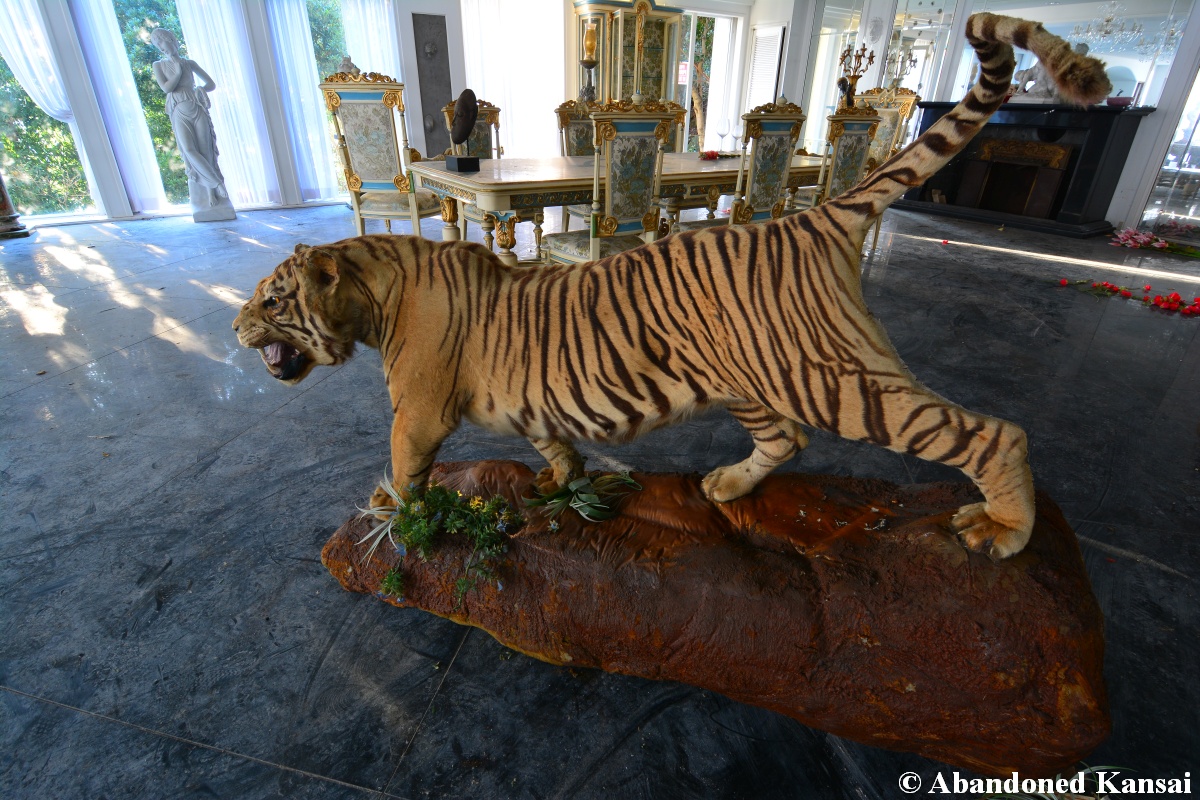
This is my third and final article about the abandoned villas owned by Japanese real estate mogul Genshiro Kawamoto. I’m sure the place will continue to pop up regularly on the interwebs, but I’m done with it…
Not only am I done with the mansions after repeatedly documenting them between 2016 and 2020, my final visit in spring of 2023 actually made me question once more what I’m doing here with Abandoned Kansai.

After tremendously enjoying traveling domestically all over Japan during the pandemic, it was tough to experience how mass tourism (after opening the floodgates again in October of 2022) altered the perception of places… or even the way to work. (Fun fact: Japan didn’t have a hard lockdown, freedom of movement was never limited, because pretty much everybody started wearing masks for more than three years from February of 2020 on; including kids. Meanwhile people were dying like flies all over the world as some morons claimed wearing a mask would take their freedom… while it turned out that not wearing one would take their lives.) Me being a history buff, I always wanted to go Shimoda. Expecting a significant rise in overseas tourist again in the years to come I took a chance in spring of 2023 and finally went there. I had been to the Izu Peninsula before, but with no time to spare, so it was very nice to spend a relaxing day on the southern tip. I made some stops in other areas of Shizuoka on the way to Shimoda, but on the last day I originally planned to go straight back to Osaka. A night in Atami though reminded me of the *Kanemochi Mansions* and how much I enjoyed them in the past. It had been more than three years since my previous visit, so I spontaneously decided to add a night in Atami, visit the mansions in the morning and return on less crowded trains in the afternoon. (Well, I thought the trains would be less crowded in the afternoon… they were during the pandemic… but not anymore!)
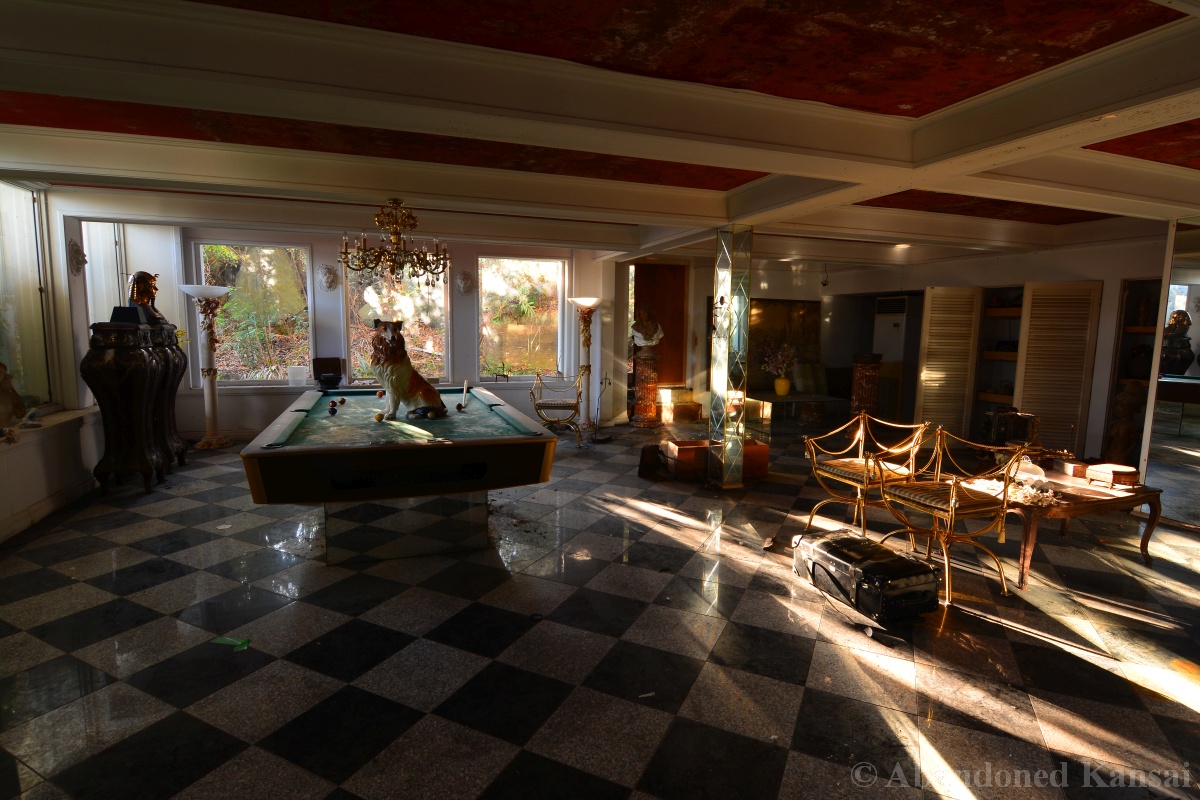
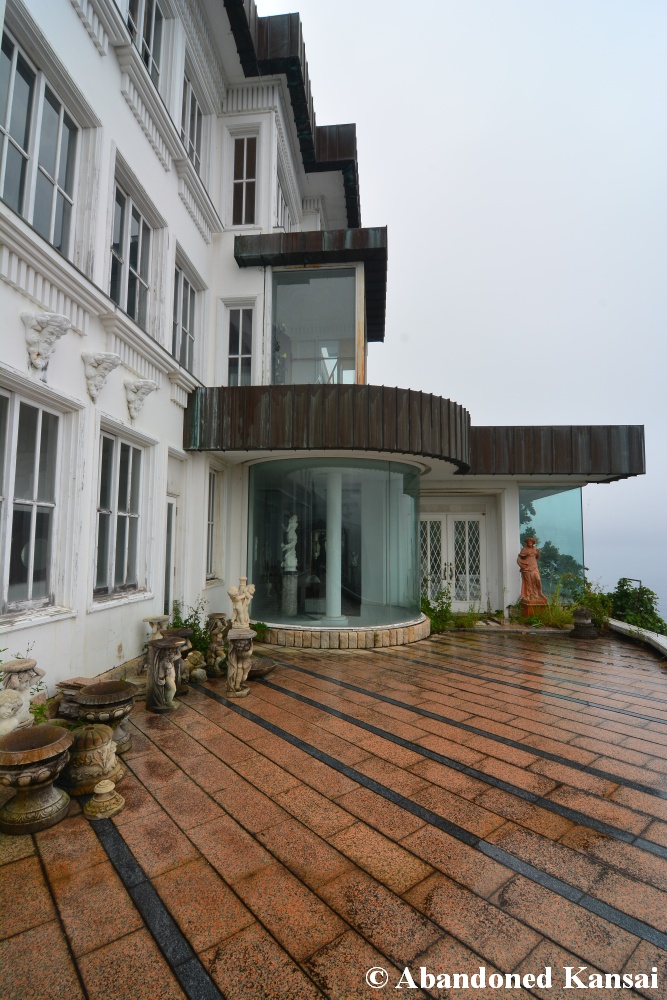
Since I was on a recreational vacation and not on a creative one, I was not prepared for this exploration at all – I even had to look up the bus to the mansions. Even worse: I didn’t bring my tripod as I only expected to take some daylight snapshots for family and friends back home of the place where Commander Matthew Perry (not the Friends guy!) “opened” Japan in the 19th century. Arriving at the Kanemochi Mansions in Atami (not Shimoda!) I was surprised by how much overgrown everything was… except for the now quite beaten path leading up to the main mansion; damaged furniture by the roadside where the short trail started. My excitement was instantly replaced by a queasy feeling. It had become rather quiet about the most famous abandoned villas in Japan over the last three years, hardly any photo, next to no articles (at least not in my social media sphere…). Word on the street was that Kawamoto (or at least his company) took control over the mansions again, installing security systems… which couldn’t have been further from the truth.
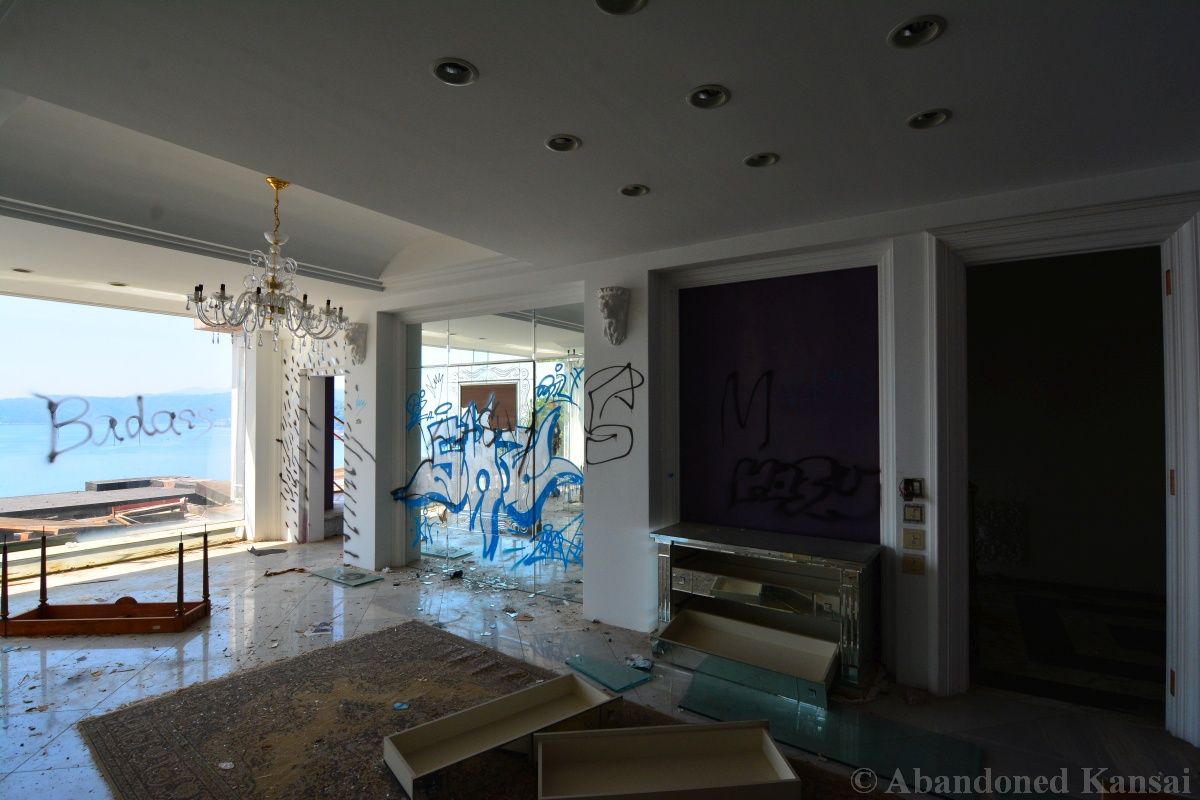
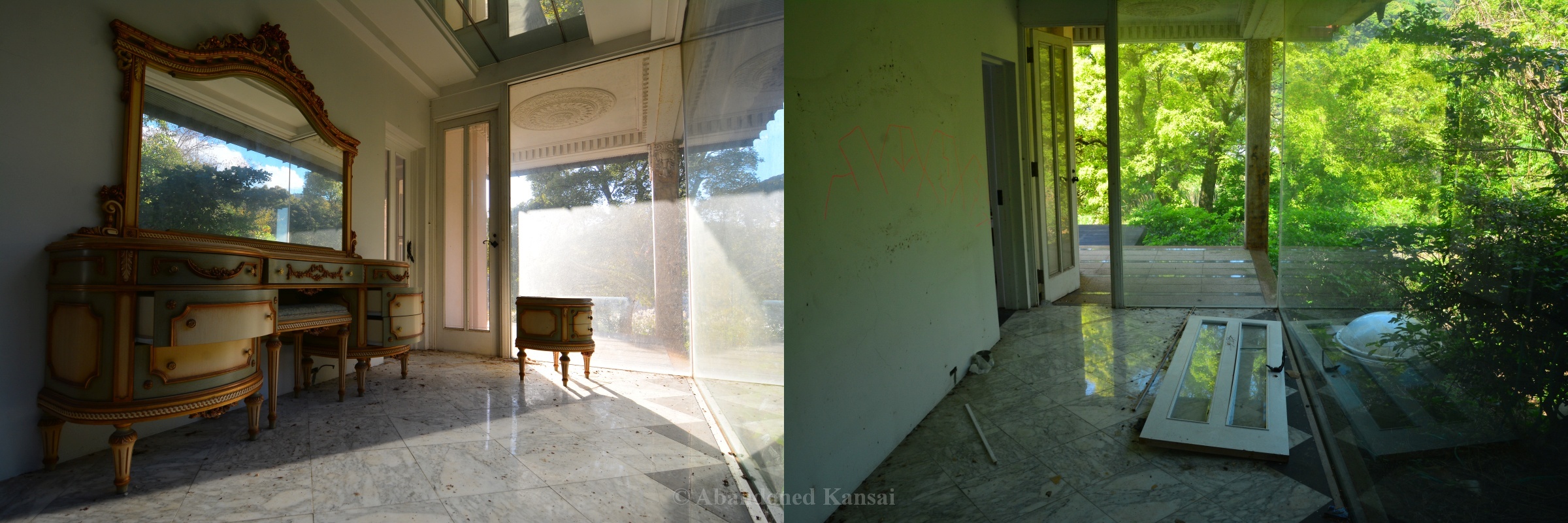
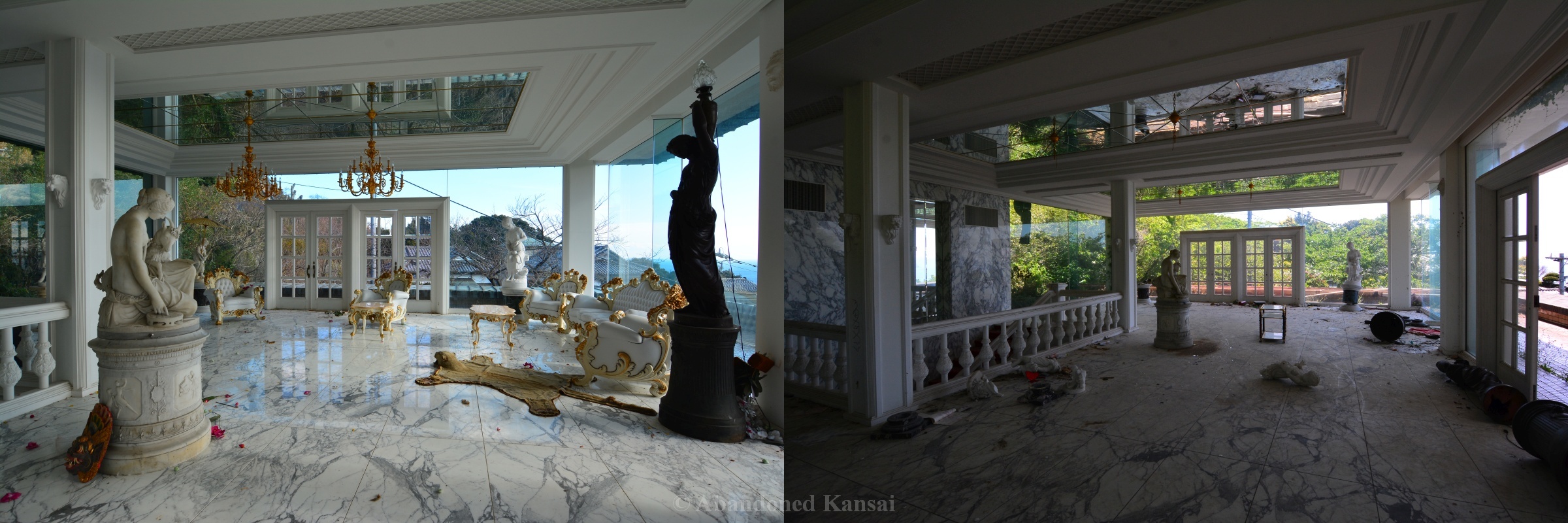
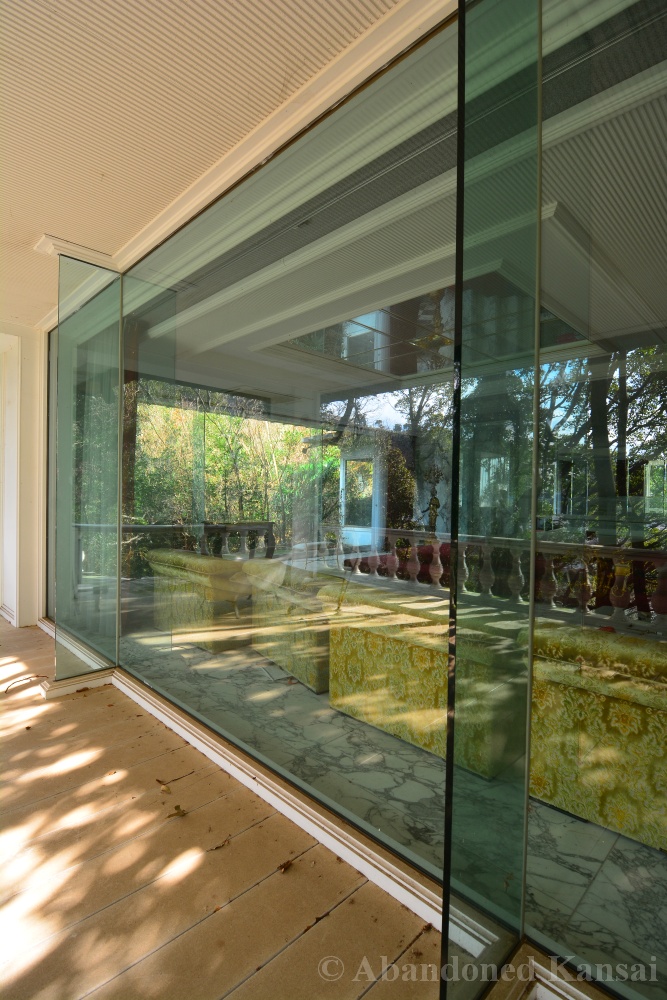
Just a few meters after the damaged desk, barely past the trampled barbed wire fence, I saw the first toppled and broken statue. The glass front of the villa, facing the pond, had some graffiti on, the windows on the second floor were completely gone. Access to the building had become gradually easier in the past, now I was able to just walk in as the massive glass pane facing the waterfront was partly smashed, too. And that was just the beginning…
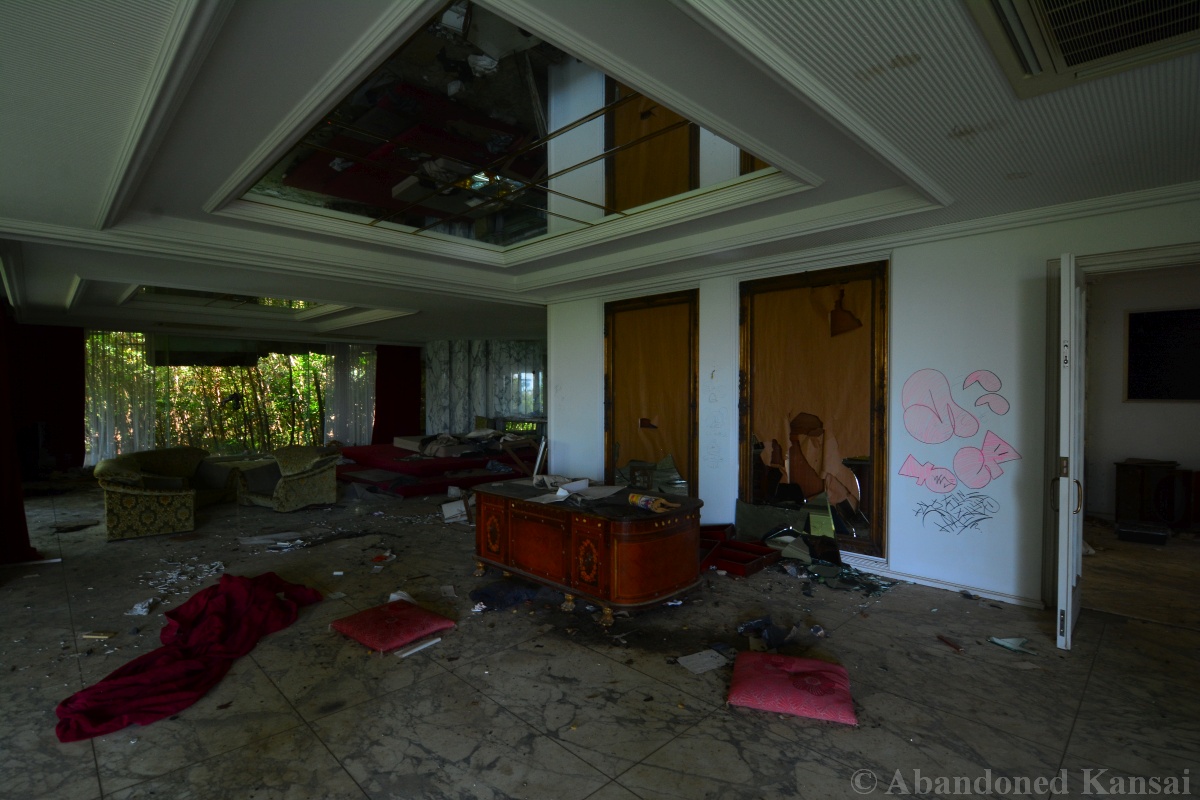
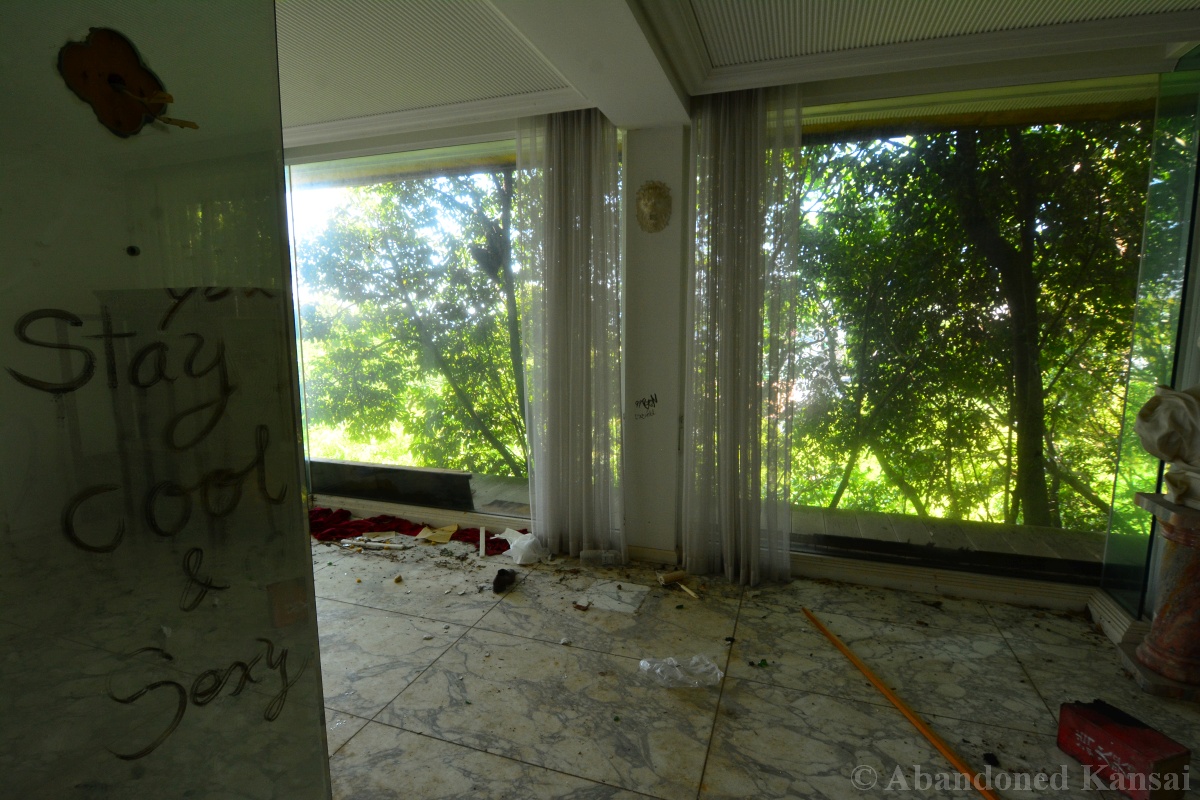
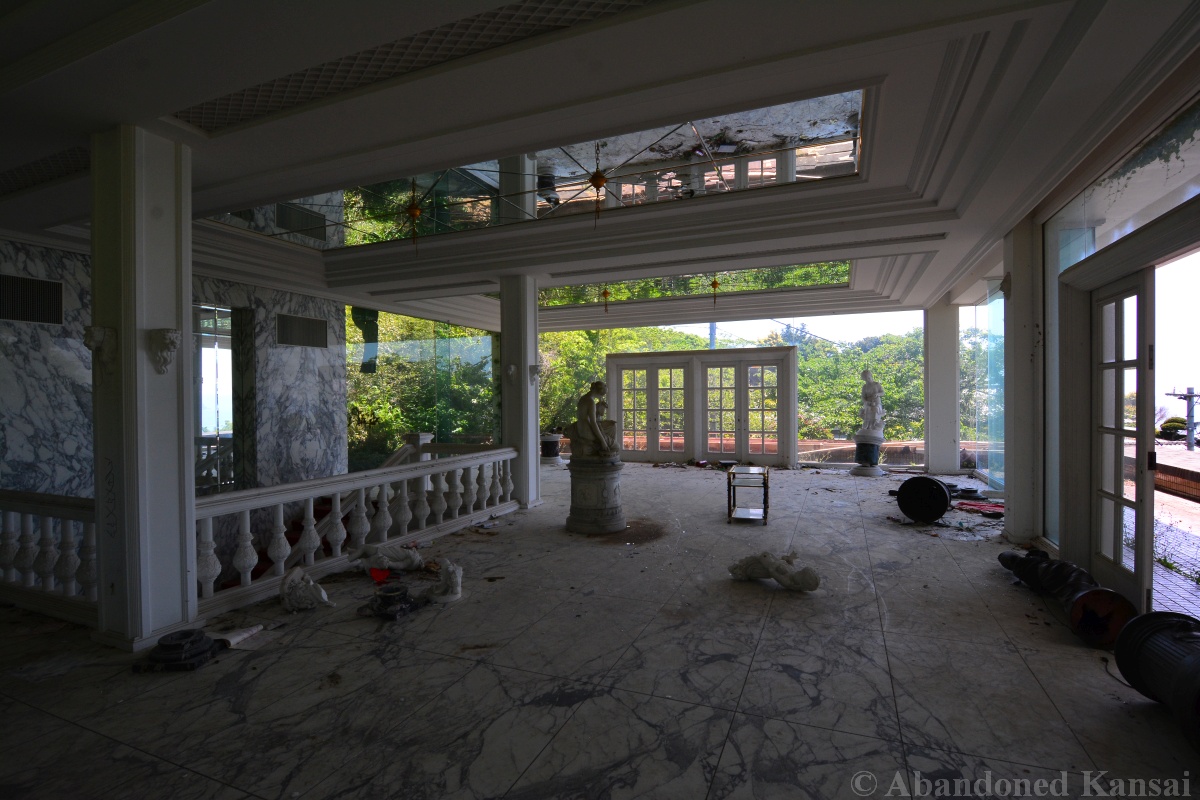
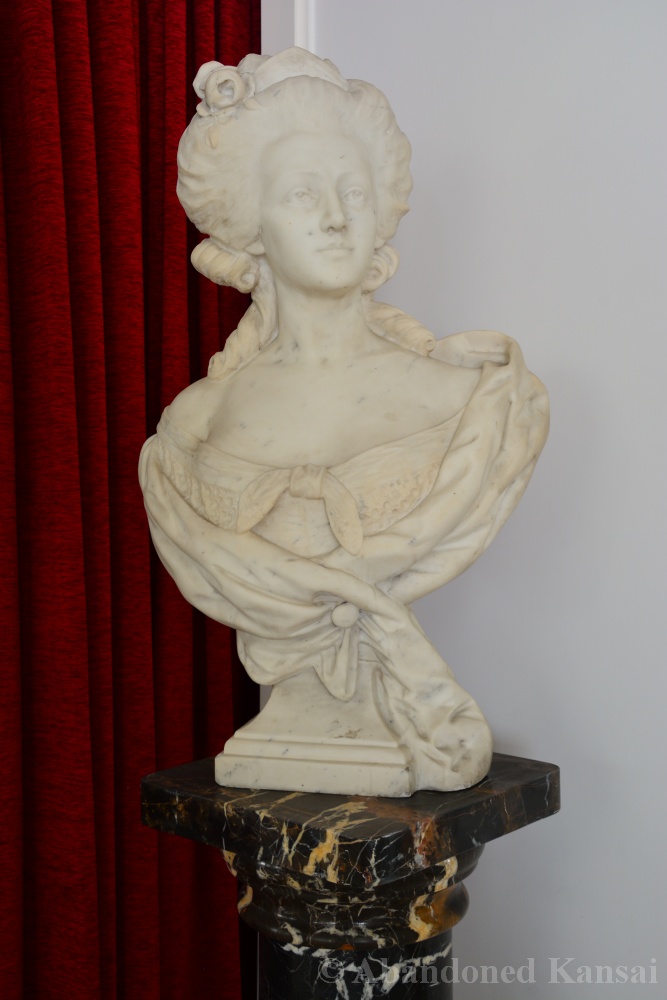
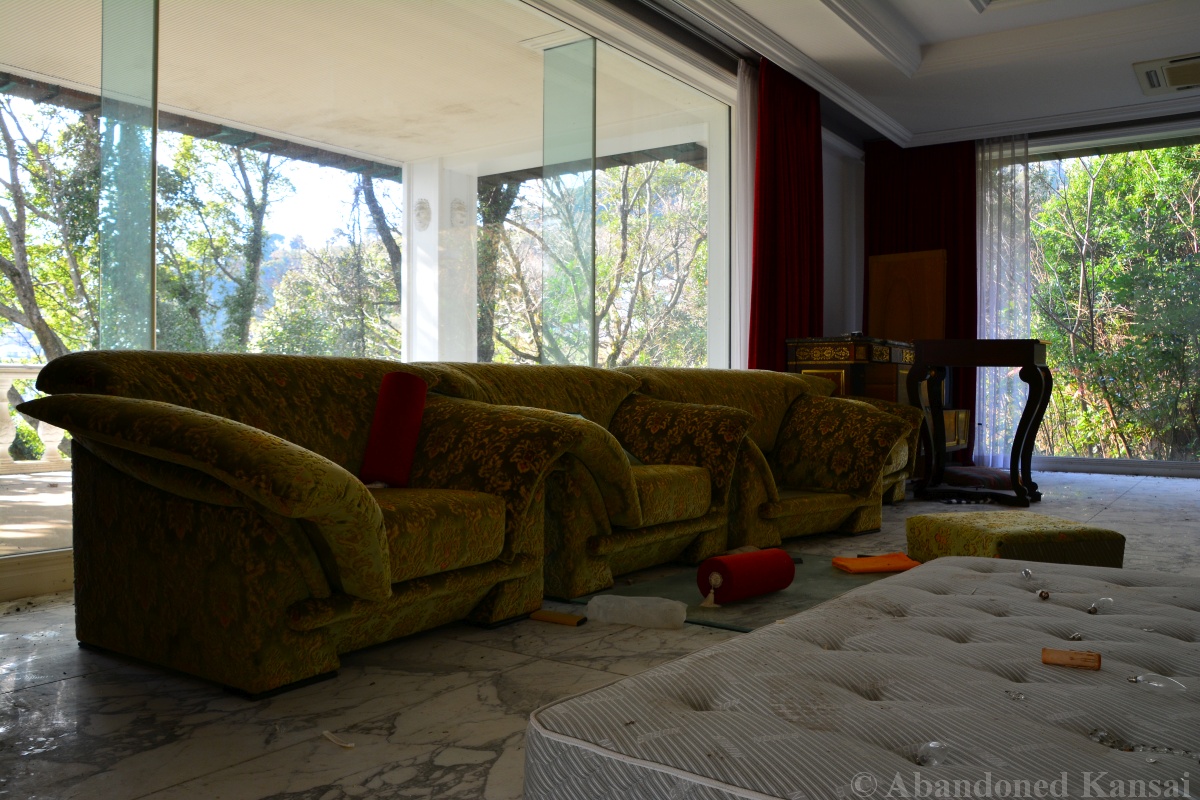
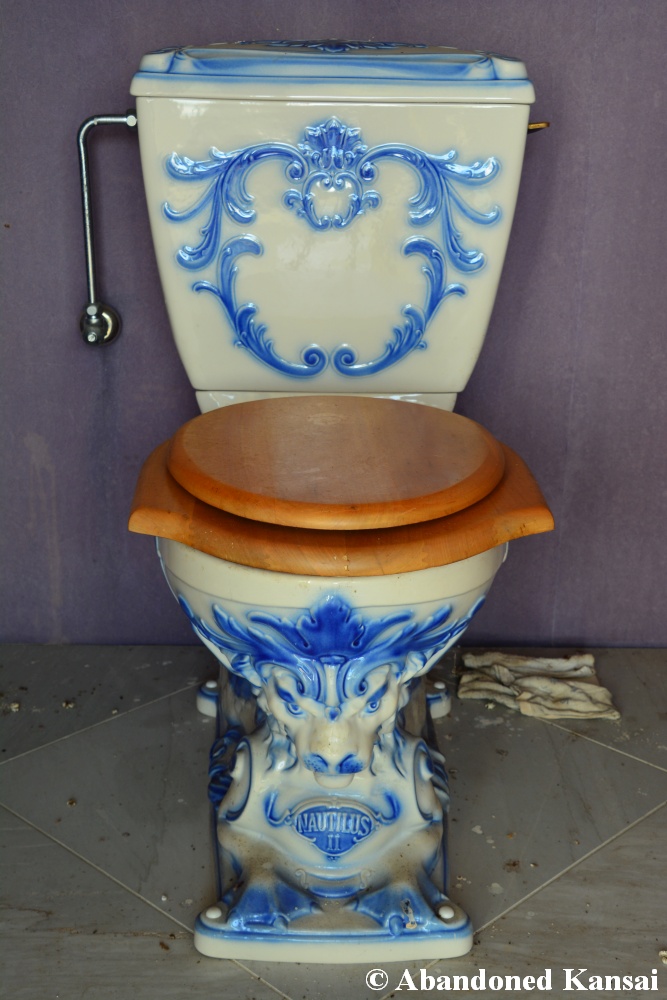
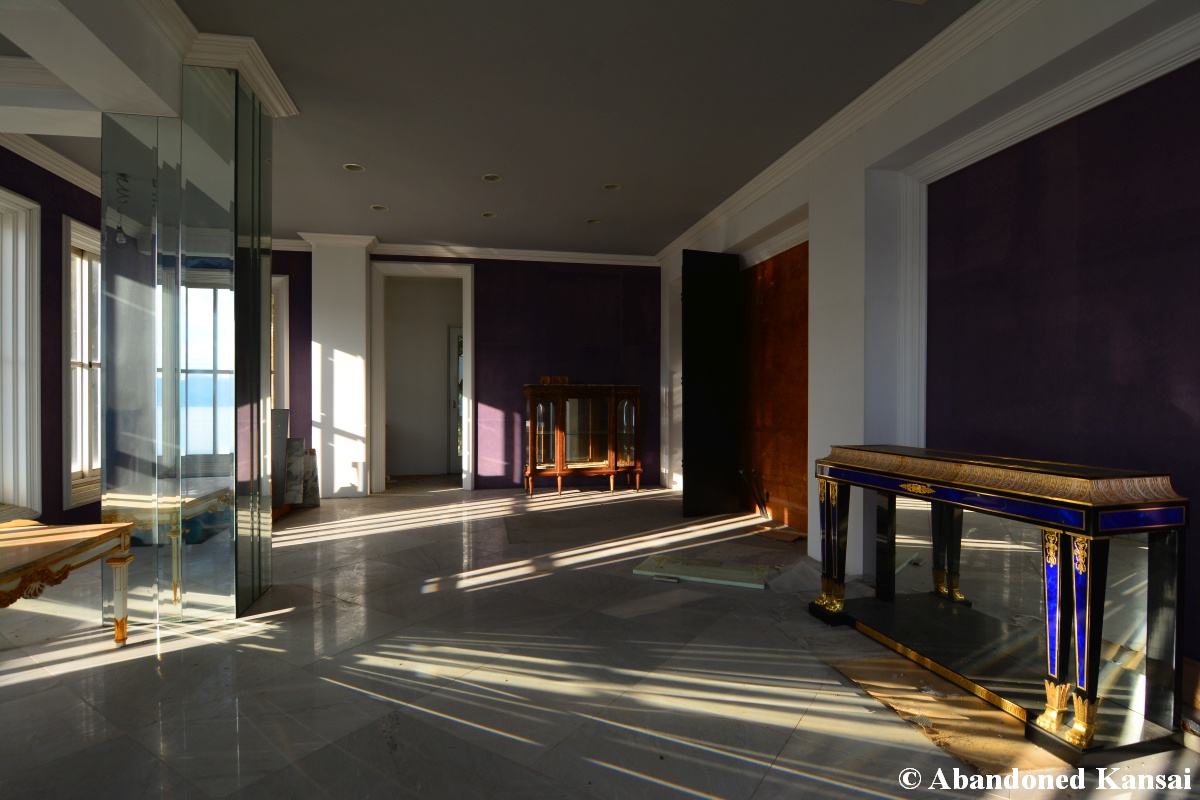
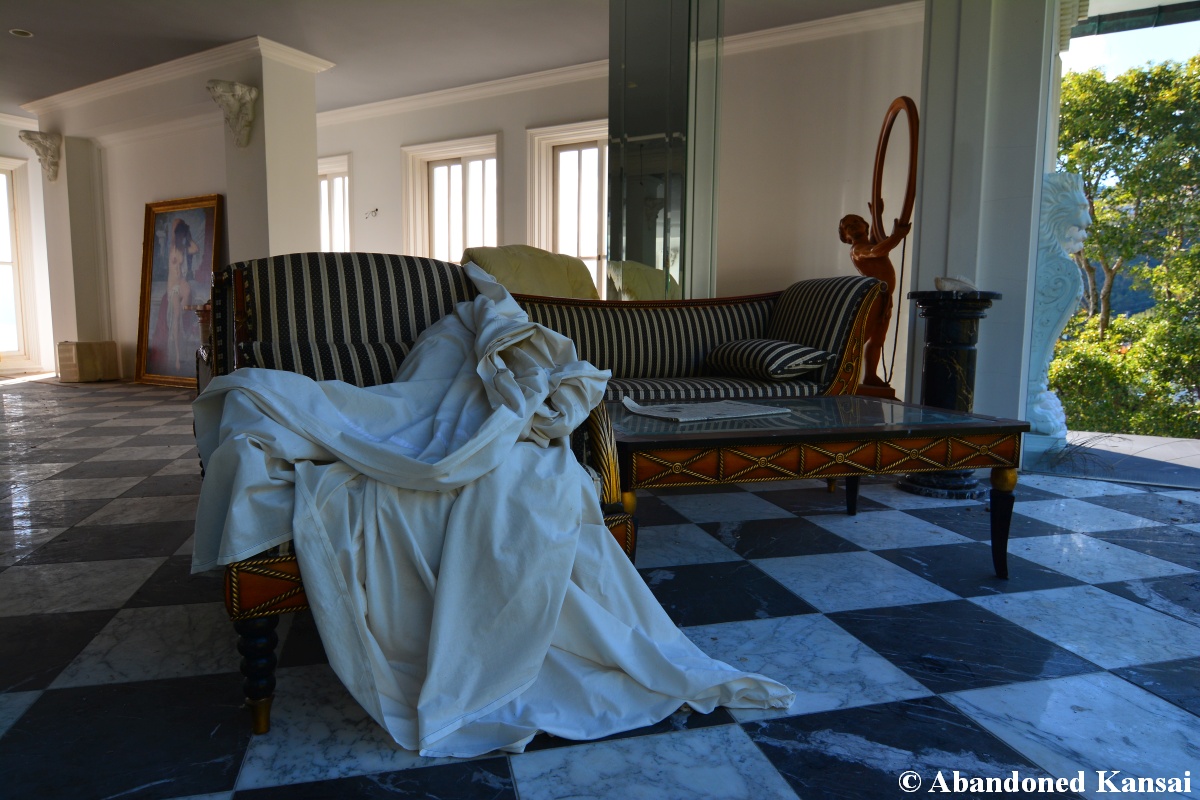
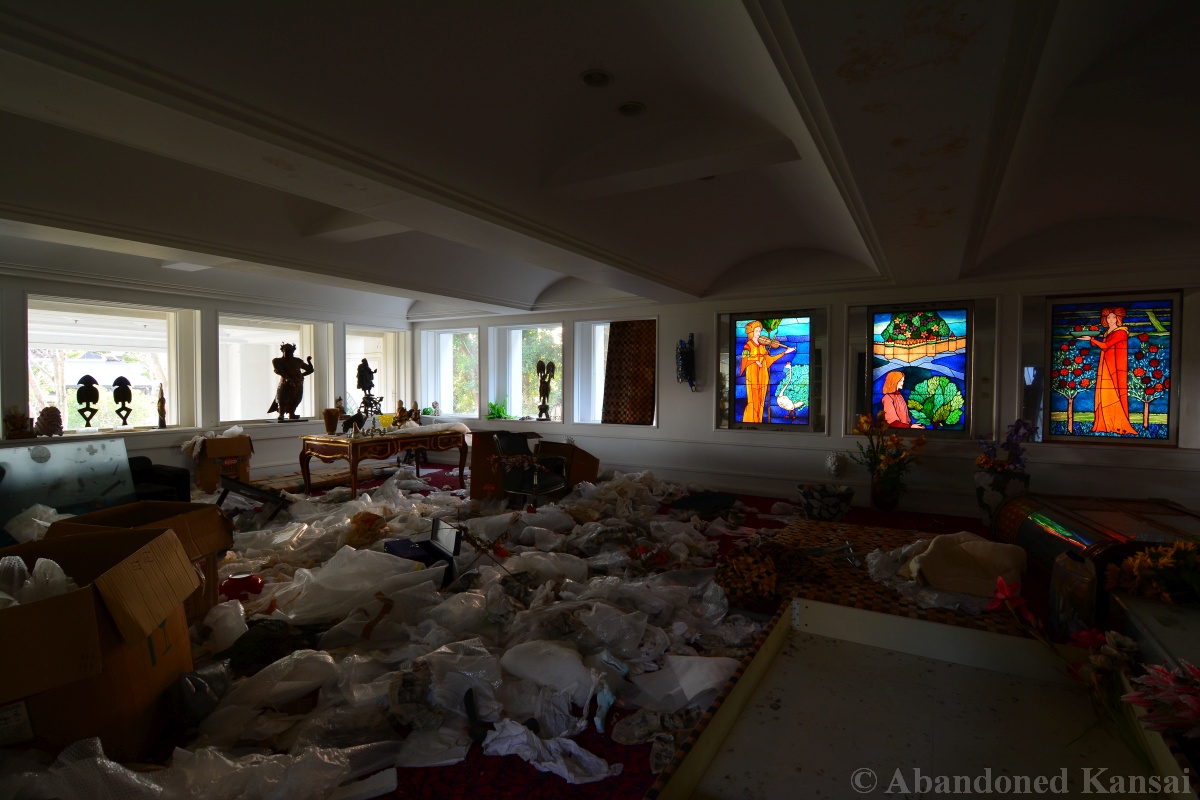
To make a not so long story even shorter: The villa had been ransacked. I guess about half of the interior had been stolen (including a large paining and the Nautilus II toilet!), the other half had been vandalized in one form or another. People always commented on Kawamoto’s questionable level of taste, but at least there was some consistency and weird charm to the mansion. Now the building was just another couple of graffitied walls with broken stuff scattered around – Western urbex. But so much for “there is no vandalism in Japan”, which I already knew wasn’t true, but now you have photographic proof with some comparison photos at the end of the gallery. Not good comparison photos, because like I said, my final visit lacked preparation and equipment, but you’ll get an idea. Another “Japan is so superior in every regard” myth debunked…
The mix of fond memories, security rumors, and the disgusting amount of vandalism made this one of the worst urbex experience in my more than 13 years of enjoying this hobby. I basically only did a quick walkthrough, taking some snapshots here and there, leaving as fast as possible… to check out the second villa with the open space bedroom / office and the beautiful upper floor.
Same situation there – smashed mirrors, missing interior, massive glass front broken. BTW: We are not talking regular window glass here… that stuff was like 1.5-cm-/0.6-inch-thick glass, maybe more, probably some kind of security glass. We are still talking about the villa of a billionaire after all – not every schmock with a rock was supposed to gain access!
The thing is: For four years I absolutely loved the *billionaire’s villas*. Every trip there was exciting, I had the feeling that I found a very special place, easily in my personal Top 5; which isn’t easy considering that I logged more than 1000 explorations. Was it tough to keep the mansions a secret? YES, because if you take photos like that, you want to show them around – and NO, because I explore mainly for myself and I’m not the slightest interested in exposing abandoned places… I prefer to revisit them, which I actually barely ever do.
But then some idiots selfishly dragged the villas into the public eye to make Google (which owns Youtube) a fortune and to pick up some crumbs themselves. Other lowlifes quickly jumped onto the attention-whoring bandwagon and doxed the place – vandals did the rest. For four years I genuinely enjoyed this location every time I stopped by. Now this has been taken from me and the handful of other serious explorers. Can secrecy like ours stop places from getting vandalized? Obviously not, as long as there are careless assholes out there – but that doesn’t mean that we should contribute to that. Just because more and more people act like entitled trolls on the internet doesn’t mean that the remaining individuals can change that bad behavior – but this also doesn’t mean that they should pile onto the word vomit. Just be a decent person online and offline. And please don’t support large channels / groups / social media accounts with the focus on urban exploration – they are killing the hobby! If not actively, then at least indirectly… 😦

(*Like Abandoned Kansai on Facebook* or *follow us on Twitter* if you don’t want to miss the latest articles and exclusive content – and subscribe to the *video channel on Youtube* to receive a message right after a new video is online…)

Read Full Post »
Welcome to the sequel article about the *Kanemochi Mansions*! Sorry that it took me a while…

In 1993 Ginza’s property king Genshiro Kawamoto, age 61 at the time, was at the height of his power and wealth – worth about 2.6 billion USD, he was the 72th richest person on the planet, owning 60 buildings in Japan (almost all named Marugen) and about 700 houses in the States. He already had a somewhat questionable reputation but furthered it even more in the 2000s when he rented multi-million dollar mansions to native Hawaiian families for next to nothing to drive down property values in the area, after evicting hundreds of families in California just a few years earlier to benefit from rising real estate prices. In the 2010s (and well into his own 80s) Kawamoto predominantly made news for tax evasion when his Marugen Group “forgot” to pay more than 1 billion Yen in taxes. In 2013 he was first arrested and in November of 2018 he was sentenced to four years in prison… and disappeared from the news; no word whether Kawamoto is (still) in prison or if he is on the run.

Back in 2019 a few adventure tourists from overseas somehow made it to Kawamoto’s abandoned cluster of private mansions in Atami, at the time a location hardly known even amongst Japanese urban explorers. Unfortunately the mix of unusual interior and lurid headlines generated millions of views, a new “must see” location in Japan was born, after *Nara Dreamland* was torn down in late 2016.
I had been documenting the natural decay of the villas since early 2016, but kept the material to myself, because I knew what could happen to locations when you drag them into the public eye – something the Youtube locusts obviously don’t care about…
In February of 2020, when the initial damage was done and Covid was about to prevent urbex tourists from entering Japan, I finally posted about the Kawamoto villas here on Abandoned Kansai under the name *Kanemochi Mansions* – my largest photo set with one of the shortest articles, containing much less information than your average video description. (In case you wonder why kanemochi – 金持ち means rich person in Japanese and was a good way to avoid Kawamoto’s real name without calling the location something really obscure. 🙂 )

So… Why now? Why this article with all the detailed information now? Well, the information here actually is not really new, other people have spread it long before me. I just wanted to show you this amazing location one more time with beautiful photos from back in the day, before the unwanted attention and questionable fame… with different weather, at different times of the year, at different times of the day. I truly love(d) the Kawamoto mansions, so I came back several times, despite the long way from Osaka. And if you know Abandoned Kansai longer than a recent Google search, you are probably aware that me writing an article like that doesn’t mean good news…
To be continued!

(*Like Abandoned Kansai on Facebook* or *follow us on Twitter* if you don’t want to miss the latest articles and exclusive content – and subscribe to the *video channel on Youtube* to receive a message right after a new video is online…)

Read Full Post »
Gulliver’s Kingdom, based on Jonathan Swift’s Gulliver’s Travels, has been the most famous deserted theme park in Japan… once upon a time, before *Nara Dreamland* was even abandoned. Closed in 2001 after only four years of business and two years after the financing Niigata Chuo Bank collapsed (which also ran the *Niigata Russian Village*), it was mostly demolished in 2007 – ten years ago and two years before I started exploring. And yet I receive e-mails asking about Gulliver’s Kingdom on a regular basis; where it is / was, if it is still there, whether or not I’ve been there. Time to answer all those questions publicly: Sadly I’ve never been to Gulliver’s Kingdom as it has been demolished two years before I started exploring myself – so it’s not there anymore, but it has been located at the NW foot of Mount Fuji, only 14 kilometers away from Fuji-Q Highland and in sight of the Fujiten Ski Resort.
Another famous abandoned place in sight of Mount Fuji? The Kurodake Drive-In a.k.a. Global Environment and Energy Museum!

An abandoned environment and energy museum in Japan? What a friggin surprise! Man, I would have loved to write a rant about how fake eco Japan is, but I am running out of time and I haven’t written yet a single line about the history and exploration of this strangely wonderful location. Just don’t buy into the eco bullshit, Japan is everything but; with a few exceptions of course. Whether it’s winter illuminations, individually wrapped cookies, electronic waste along countryside roads, sun-blinds to block daylight all year long yet at the same time lights inside on, the insane amount of plastic bags / bottles / containers handed out every day, apartment buildings lit up like Christmas trees – and don’t get me started rambling about the lack of insulation and ACs set to 28°C in winter… (In summer you can’t go below 28°C during the humid 33°C heat that is punishing everybody all day and all night, because we all have to work together and save electricity. But in winter it’s absolutely no problem to go from 0° to 28° because… heating apparently doesn’t require electricity and the warmth comes from the positive energy we created when saving electricity in summer!)
Please don’t buy the fairy tale of eco Japan, just because some garden in Kyoto has put up a crotch so a tree can grow a branch the way it wants instead of pruning it. (I’m not saying Japan is worse than most countries, but if you promote a certain image you better live up to it… or deal with the criticism.)
Construction of the Kurodake Drive-In started in 1965 as part of the Atami Highland project on a mountain ridge above the famous onsen town Atami, in the 1950s by far the most popular spa town in all of Japan with more than 11 million visitors per year – the new attraction featured a gorgeous, unobstructed view at Mount Fuji along the Izu Skyline, some hiking trails, a nearby pond with a boat rental, and the Kurodake Drive-In, which opened as a miso shop, restaurant for up to 300 guests at the same time (up to 1000 cars and 300 high-capacity busses stopped there per day!), and upper terminus of the Atami Highland Ropeway (or Atami Cactus Park Ropeway), connected by said ropeway to Atami and the Atami Cactus Park – with the largest gondolas in the world at the time, for up to 121 people (!). The grand-opening of this 1.3 billion Yen investment was on October 1st 1967. Less than three years later, in summer of 1970, the owner of the miso shop went bankrupt and caused a financial earthquake in the area, which lead to the suspension of the ropeway for about three weeks in June 1970. In July the Atami Highland Ropeway resumed operation, only to be shut down for good in December, barely three years after it was built.
Strangely enough there is not much information about what happened after that. It seems like the ropeway remained idle but intact and somewhat operational until 1983, when it was finally dismantled. The cactus park? I’m not sure… I think it closed for good in 1973. The Kurodake Drive-In definitely survived the longest, but I don’t know in detail what happened exactly after the miso shop went bankrupt. It probably was turned into a general souvenir shop, before somebody shoved the Global Environment and Energy Museum into the crown-shaped building. The last account of somebody being there I found was from April 2002 – strangely enough their photo didn’t feature the museum signage on the roof nor did the (Japanese) article mention it. Since I also read that the State seized the property in 2002 (much like *Nara Dreamland* and the *Arai Mountain And Spa*) I guess it’s safe to assume that the museum was installed after that – but before the building was finally closed and abandoned in November 2008. (Last second addition: Apparently the museum was run by an NPO called “Forever Green”; if I ever revisit the place, I’ll try to find out more, but that’s it for now as time is up…)

I absolutely loved exploring the Kurodake Drive-In, despite the fact that it was little more than a vandalized restaurant. I loved the scenery upon arrival, I loved the exterior of the building, I loved the lighting in some areas (especially the lamps in the office), I loved the items left behind (like the Lotte Chewing Gum vending machine or the three animal shaped bottles), I loved the interior staircases – I just loved being there. It could have been an empty building, instead in revealed itself little by little, step by step. I instantly connected with the Kurodake Drive-In and the feeling held on till I was yanked out of there by my impatient co-explorers. Other places I explored in the past might have been more interesting objectively, but I never really felt them; like the *Japanese Strip Club*. The Kurodake Drive-In on the other hand I really enjoyed – to me it’s one of the most underrated abandoned places in Japan…

(Please *like Abandoned Kansai on Facebook* if you don’t want to miss the latest articles and exclusive content – and subscribe to the *video channel on Youtube* to receive a message right after a new video is online…)

Read Full Post »
The Izu Sports World (or officially „Izu Nagaoka Sports World“) was a huge vacation destination (480000㎡ including vast parking lots!) for sporty people in the northern part of the Izu Peninsula – the main attractions were several pools with gigantic water slides, but the resort also featured tennis courts, a gym, and a golf course as well as a hot spring and several restaurants. Opened in July of 1988 it was a prime example for Japan’s gigantomaniac real estate bubble, especially since Izu Sports World went bankrupt less than five years later in February 1993, accumulating almost 10 billion Yen in debt – back then and nowadays more or less 80 million USD. In the early 2000s it became one of the most famous abandoned places in all of Japan and the urbex world was shocked when it was demolished in 2010 – right around the time I planned to visit it.

About three years later I first found out about the Izu Water Park, kind of a smaller version of Izu Sports World on the same peninsula – but unlike in the case of the big cousin, Izu Water Park is a fake name, so it took me another 20 months to find its exact location as the darn thing popped up only twice on Japanese blogs so far (to the best of my knowledge). So almost 5 years after Izu Nagaoka Sports World was gone, I finally went to explore an aquatic theme park on the Izu Peninsula… not the real deal, but as good as it gets these days.
Spring is the most beautiful time of the year in Japan as it combines rising temperatures on sunny days with the awakening flora and fauna that makes explorations in summer and autumn so difficult when in full bloom. Despite Mother Nature still more or less dormant in late February, it took me a while to enter the IWP, because after years of abandonment the surrounding vegetation was thick enough to keep (some) unwanted visitors out. The entrance building, locked at the front, was open from the back, but didn’t have much to offer, except old equipment and some lockers. The main building in the center was only partly accessible – some storage rooms and the toilets, but it also featured a now locked restaurant / kiosk to supply guests with food and drinks. The water park itself was tiny in comparison to Izu Sports World, covering maybe 2000 square meters (no vast parking lot, no accommodations!), but it still consisted of two levels: three sets of two water slides ending in a lower pool plus an oval pool on the upper level, about one quarter with very shallow water for toddlers, the rest probably deeper. How deep? I have no idea as the “water” was pretty much a green mess.
So, why did the Izu Water Park go bankrupt? Probably because the Japanese outdoor water fun seasons are generally extremely short, despite the long, hot, humid summers that follow already warm springs. The temperatures in my hometown are about 5°C lower than those in Osaka, yet the local public bath back home is open from May till September, making the best of the situation by using solar power to heat the water when it’s too cold outside for the sun to do the job without support. In Japan on the other hand, at least on the main islands, you go swimming in July and August. Already 30 degrees for weeks in June? Nobody will open the water park. Still 35 degrees in September? Empty beaches, even at locally famous party spots like Suma Beach near Kobe – buzzing for two months like a Mediterranean island or a spring break location. Why is the season so short? Because it is that way. Shoga-friggin-nai – deal with it! 🙂

Exploring the Izu Water Park was a great experience, though I have to admit that is was smaller and less… impressive… than I hoped it would be; sometimes size matters, especially in the case of water parks! Thinking of it, even the one that it is part of *Nara Dreamland* might be bigger – but it’s also photographed to death, while the Izu Water Park is virtually unknown. I had only seen a dozen photos beforehand, so my image of the park was quite different from reality. As a result this was urban exploration at its core. Finding the place, finding a way in and out, finding good angles for photos, finding ways into the buildings without damaging anything… all while avoiding being seen by people from the outside; an almost constant stream of cars and some pedestrians made this quite a challenge. It was a very rewarding exploration on many different levels though, one I wanted to tell you about for several months now, but I thought I should wait for a proper occasion – the beginning of outdoor bathing season tomorrow, July 1st!

(*Like Abandoned Kansai on Facebook* if you don’t want to miss the latest articles and exclusive content – and subscribe to the *video channel on Youtube* to receive a message right after a new video is online…)

Read Full Post »
The Higashi-Izu Isolation Hospital (official name) a.k.a. Smallpox Isolation Ward (made up name) is a real urbex classic in Japan. It has been featured in many books and countless articles, but its days might be numbered – after more than 30 years of decay the mostly wooden complex is on the verge of complete collapse…

There is a lot of wrong information out there about this Japanese Isolation Hospital. First of all – it was neither a ward, nor was it exclusively for smallpox patients. Like the official name implies, it was a standalone hospital for several diseases that needed patients to be isolated. And though the hospital looks really, really old, it began operation in 1958 / 1959, reportedly first as a regular clinic and from 1959 on as an isolation hospital.
Why somebody came up with the name Smallpox Isolation Ward is beyond me, because in the 1950s smallpox was already more or less under control. During World War II the infamous Japanese biological warfare *Unit 731*, feared for their experiments on living humans (including vivisections), researched production of biological weapons based on the smallpox virus, but discarded the idea due to the wide-scale ability of a vaccine – and if a vaccine was available during war times, it surely was 20 years later. While I am sure a few smallpox cases were hospitalized at the Higashi-Izu Isolation Hospital, most of the inpatients actually suffered from tuberculosis, which was a much bigger problem, especially in Japan. (If you missed it, check out my exploration of the *Tuberculosis Hospital For Children*, closed in 1992.)
The isolation hospital basically is the brainchild of two towns on the Izu Peninsula just south of Mount Fuji, Higashi-Izu and Inatori. In the late 1950s they were about to merge and both interested in an isolation hospital (which seems a bit odd to me, but that’s how the story goes), so they decided to put together the money they’ll save from the merger and just go for it. It opened for public in 1958 and turned into an experimental isolation hospital the following year.
The hospital complex consisted of several buildings, separating just infected patients from those showing symptoms or worse… Yes, people died there, a fact that didn’t add to the fun of exploring the really desolate buildings. To enter the hospital, you had to pass through a disinfection area and change all the clothes you were wearing, though nothing of that was apparent during my exploration – the decay of the complex had already been progressed too far and I only saw the lower two of three levels. (Not floors, levels – single storey buildings on a slope.) The town-run hospital was treating patients with operations and medication until 1978, when an earthquake hit the nearby Izu Oshima Island and caused massive damages on the Izu peninsula, too – most likely including the *Red Bridge*. It seems like the hospital technically received some funds till 1982, but effectively stopped operation in 1979 as the earthquake destroyed the road along the coast and caused a nearby tunnel to collapse. With that, access to the hospital was rather difficult as the powers that be decided to dig a new tunnel and build a new road instead of repairing the old existing ones. Additional damage was cause reportedly in 1984, when a typhoon cause a mudslide, but after more than 30 years there weren’t any signs of that visible anymore.

Upon arrival in the area, my buddy Julien and I checked out the now overgrown earthquake damaged road and tunnel. Not much to see, an abandoned tunnel with a “skylight” and tons of dirt. We found a parking spot along the super busy new main road and walked a few hundred meters back towards the new tunnel. Quite a risky endeavor, because in Japan pedestrians and cars are not meant to co-exist outside of towns. Even in the countryside most roads connecting settlements with each other are wide enough for a car, but don’t have much green or even a separate lane for pedestrians and / or bikes. Walking along those roads can be incredibly dangerous! But after a few minutes we reached our destination and walked down a few manmade steps on the slope in surprisingly good condition. I actually didn’t realize upon arrival that the first building was completely clad in bamboo strips, originally not much more than a big office room, probably for non-medical personnel to avoid sending them through the disinfection area.
Exploring the abandoned Higashi-Izu Isolation Hospital was actually quite underwhelming. I’ve seen rundown buildings like that plenty of time and usually ignore them – what made this one different was its history. And some amazing scenes, like rusty metal bedframes covered with straw. Gosh, I really hope that this was staged and that the real patients didn’t have to spend their last days like that. Most of the complex was fading away – the wooden floor was gone, walls were missing, staircases collapsed. It was late in the afternoon on a sunny day, but the fact that the hospital was in a tiny valley opening to the east while the sun was setting in the west didn’t help. It was getting darker quickly and the combination of fading light and known background story made this one quite an eerie exploration.

(*Like Abandoned Kansai on Facebook* if you don’t want to miss the latest articles and exclusive content – and subscribe to the *video channel on Youtube* to receive a message right after a new video is online…)

Read Full Post »
On the Izu Peninsula south of Tokyo you can hardly throw a stone without hitting an abandoned place – though I doubt that it was a simple rock that brought down this bright red loop bridge…

There are actually several stories / story elements why this iconic *haikyo* became a modern ruin:
– One part of the bridge collapsed during an earthquake in the 1970s and the bridge was then abandoned.
– Somebody planned a spa resort on top of the mountain, but the plans fell through and construction of the bridge stopped.
– Somebody planned dozens of holiday homes and company retreats on top of the mountain in the 1970s, finished building the bridge and opened it to the public, but then went bankrupt without constructing anything else – so the bridge fell into disrepair and the road leading up to the bridge was dismantled for security reasons.
– The bridge was built in the 1970s, but didn’t collapse until 1993.
– The bridge was built in the 1970s, collapsed in the 1980s, but city officials didn’t admit to that fact until 1993.

40 years later and without access to a local historian or some kind of city archive it’s pretty much impossible to say what happened here. You should think that building bridges is the responsibility of the State, but there are plenty of private roads and bridges in Japan, so having a private investor being responsible for this modern ruin is by all means a possibility. Given that there are no solid roads beyond the bridge, I doubt that it was ever finished and opened to the public; that’s supported by the surroundings, which looked like an unfinished construction site abandoned decades ago. On the other hand it is very likely that somebody wanted to build something on top of the mountain, given that there is another “colony” with dozens of holiday homes and company retreats in walking distance. The Izu Peninsula was indeed hit by three serious earthquakes in the 1970s (1974, 1976 & 1978), but there is no way to say that one of them caused the bridge to partly collapse – though I think it is likely that the bridge was finished in the 70s, then whoever was in charge went bankrupt / stopped caring about the construction, it fell into disrepair and finally came down in the 1980s or 90s. The current position looks very, very instable, too – the massive rocks the nosedived bridge element is resting on now shows huge cracks from the pressure and I wouldn’t be surprised if we will see more movement in the not so far future…

The Partly Collapsed Red Bridge is actually quite a famous abandoned place in Japan, first reports date back to 2004, when hardly anybody did urbex in Japan, and I was never really eager to see it – photographed to death, potentially instable, fences around, rather remote location… and just boring. An abandoned bridge with a collapsed element, come on, how interesting can that be?
EXTREMELY interesting, probably one of the coolest places ever! Yeah, there were large construction fences where the bridge was planned to connect with a regular street, but a few dozen meters down the road was a flat parking area to the right and partly overgrown steps lead up the hill directly to where the bridge begins now, past auxiliary structures to support the construction workers, now more looking like a dump. (And probably used as a dump by locals these days as getting rid of electronics and bigger furniture can be really expensive in Japan…) So I climbed these fading steps with little to no expectations, but then I left the shadow of the forest and stepped into the light, literally and figuratively – I know it sounds cheesy, but it was like a choir of angels started singing. Holy shit – there was a partly collapsed bridge right in front of me, its damaged element pointing almost vertically to the sky, and one step to the left the asphalted loop started! Before I went to see the bridge myself I had seen dozens, maybe hundreds of photos… of quite a rather simple and not very elaborate (failed) construction, yet none of those pictures came even close to capture what I felt like standing there, all of a sudden feeling very small and vulnerable. So cool, so damn cool!
Although I swore to myself that I would not get even close to where the final bridge element slipped off the huge pillar, all of a sudden I realized how my feet were walking towards the metal fence once put in the middle of the road to keep nosy people with bad sense of balance from killing themselves accidentally or on purpose. The lower part of the wire netting had been long gone, so it was easy to get past this now rather symbolic obstacle. In the main corner of the uphill loop I took a photo (now the wallpaper of my computer) and all I could think of was: “This would be an awesome Mario Kart 9 track!” The bridge was actually quite wide, perfect for sliding karts, especially in a video game environment as the crash barrier wasn’t very high and the width of the road varied. I’ve seen my share of amazing yet weird bridges in Japan (including one coming out of a mountain tunnel and looping back in a few meters lower, all of that several hundred meters above the ground!), but this one didn’t look like it fulfilled any modern safety standards!
The very top of the bridge was every little bit as vertigo-inducing as you would it expect it to be – what an awesome sight! Sadly not for me, so I took a few quick shots and filmed some video material on my way back to the “barricade”. From there I headed over to the element that had fallen off at least 20 years prior to my visit, not without a bad feeling in my stomach – the massive piece of dented metal, plastic and asphalt was resting on massive rocks with huge cracks in them, and despite weighing tons, the setup looked very fragile. A few more shots and a quick video from underneath the slipped off part and back to safety I went… still not really believing how cool this location was, especially on a sunny spring day!

(*Like Abandoned Kansai on Facebook* if you don’t want to miss the latest articles and exclusive content – and subscribe to the *video channel on Youtube* to receive a message right after a new video is online…)

Read Full Post »
After more than 400 explorations only a few things wow me anymore. The Irozaki Jungle Park did, more than once; continually actually!
The first thing that wowed me was the extremely bad weather upon arrival: March 1st, but heavy rain like in late June / early July. Urbex isn’t fun like that, especially when the first things you find are the former gift shop and another building boarded up! A few minutes later we reached the main entrance, patched up, too. Wow, damn, no easy access! I decided to have a look outside first, only to realize that the buildings of the Irozaki Jungle Park stretched across an area of about 200 by 400 meters (wow!), while my friends decided to find a way in closer to the main entrance. The back of the gigantic botanical theme park was roped off, the main building complex sealed tight, a car with license plates parked on the premises. Wow, this former urbex paradise definitely had been more welcoming before the city of Minamiizu took over to re-develop the area about two years ago.

The Irozaki Jungle Park opened in 1969 on 12,000 square meters, developed and run by the Iwasaki group, a conglomerate of about 50 companies, dealing with communications, transportation and tourism; hotels and resorts as well as artificial sightseeing spots like this humongous botanical garden. The park was an instant success, peaking at about 750,000 visitors in 1973. But instant success is rather easy to achieve in Japan, where everybody is on the hunt for the newest, the shiniest, the trendiest – long term success on the other hand is a real challenge, one that the IJP lost. The numbers of visitors went down significantly as the buildings aged. When less than 100,000 people visited the park within a year, Iwasaki pulled the plug and closed the Irozaki Jungle Park on September 30th 2003. Interestingly enough the JNTO (Japanese National Travel Organization) is mentioning / recommending the IJP in an old version of their official tourist guide to the Izu Peninsula, which is still available online. WOW, that’s a whole new level of expert fail! (According to the guide it is “containing well over 3000 species of tropical plants. Open daily: 8:30 – 16:50. Admission: \900.”)

Upon my return to the main entrance I found my friends were able to gain access to the first huge structure without breaking anything, so I joined them to have a look inside. About 15 meters wide, 50 meters long and maybe 7 meters high, this first greenhouse made quite an impression on me (wow!), though that doesn’t mean a lot given that I am not exactly a regular visitor of botanical gardens… Despite the park being closed a dozen years ago, some of the plants inside of the conservatory were in pretty good condition. There was plenty of foliage on the ground, so I had to choose my steps wisely, especially since the greenhouse was located on a gentle slope. The path split and reunited several times before leading into a pitch black and pretty much empty area, connecting the first greenhouse with a slightly wider one of almost the same length, followed by a 15 meter long Rainforest Zone, connecting the middle part with a third greenhouse; about 20 meters wide and 60 meters long. The height inside the halls varied between maybe 4 meters and probably 7 or 8 meters, before we finally reached the end of the tube like biosphere looking complex. There we found some restrooms, a rest area and lots of pamphlets of other nearby tourist attractions. Wow, I knew that the Irozaki Jungle Park was big, but this was much larger than I expected, even though I had already seen the entire place from the outside! The park’s mascots apparently were two slightly dumb looking white “jungle explorers” equipped with helmets, guns and binoculars as well as a dark skinned “jungle dweller” wearing rings around his ankles, his neck, through his ears and through his nose (!) – the three interacted in “funny” ways, for example when the jungle man was drumming, he used the white guys’ helmets, too. I guess you don’t have to be overly sensitive to find this at least slightly racist, and of course we were cracking jokes that the only plywood cutout scene missing was the black guy boiling the white guys in a big cauldron.
And so we headed through a pair of sliding doors – not the exit, but the connection to a huge last greenhouse, a rectangle of about 50 by 70 meters, probably 10 meters high. WOW, WOW, WOW! This gigantic hall featured several ponds of various sizes, several food stands, sculptures made from different materials, and two large glass containers with specimen; the kind you’ve seen in several of my articles about *abandoned schools* before – a ray and some kind of eel, maybe. Wow! Some of the ceiling panels were broken… pretty much in all halls, but especially in this one, so the vegetation here was especially lush. We could even see and hear a couple of birds inside the greenhouse. This place would be amazing to film a 1970s style science fiction movie or some kind of horror flick – gosh, I bet you could scare urban explorers shitless by playing John Barry’s The Black Hole theme when they enter the last gigantic greenhouse! 🙂
Overall the Irozaki Jungle Park was a really mind-blowing location! There was so much to see, so many paths to explore. Sadly we had to leave around lunch time already as we had to return our car before 5 p.m. in Mishima, with traffic being unpredictable due to nearby hanami festivals, the first in all of Japan this year – and we also lost quite some time finding a way inside the gargantuan structure, so taking photos was kind of a rushed job, nevertheless I enjoyed my visit to the Irozaki Jungle Park tremendously. The last thing I did, as always, was filming the walkthrough, and for that we looked for the official former exit of the park. And guess what… There it was, the plywood cutout of the black guy boiling a white guy in a large cauldron, tasting the “soup” with a scoop! WOW…

(*Like Abandoned Kansai on Facebook* if you don’t want to miss the latest articles and exclusive content – and subscribe to the *video channel on Youtube* to receive a message right after a new video is online…)

Read Full Post »
Older Posts »