All abandoned: Chernobyl / Pripyat, Nara Dreamland, Anti-Zombie Fortress, Japanese Sex Museum – and many, many more! Plus: North Korea Special – 2 trips, 16 days / 14 nights! As seen on CNN…
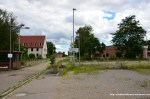
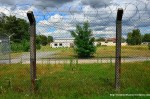
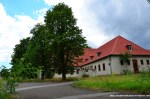
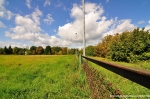
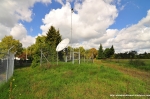
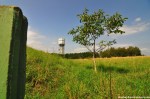
Sometimes you just gotta be lucky. Like my friend Nina and I were when we were walking up to the former Ammunition Depot Achern in the southern part of Germany. We didn’t know anything about the location except that it was there – and when we tried the handle of the gate it opened to our surprise. Right next to the entrance we found a small building in excellent condition, locked, a bicycle inside, the logo of the Technisches Hilfswerk (THW) on the side. In case you are not familiar with German institutions – the THW is a Federal Office, the official English name is Federal Agency for Technical Relief; the THW helps in cases of floods, earthquakes and other disasters. So the depot wasn’t part of the Bundeswehr (Federal Armed Forces) anymore, but now belonged to the THW… interesting, from military to civil protection. Right next to the building the road split 3 ways and we walked down the most southern one, towards the 17 former ammunition bunkers of different sizes and an abandoned train used for training missions. We took a couple of photos and then we heard voices… Damn! When we reached the end of the road we headed north to the middle road and saw a couple of guys on a training mission. Since they didn’t see us and we didn’t want to cause any trouble we took the most northern road and headed back to the entrance, continuing to take photos as we made a strange discovery in that area: A huge aviary inhabited by dozens of exotic birds. The former ammunition depot really wasn’t that abandoned…
I forgot how we knew, but when we came back to the entrance we realized that somebody must have had entered or left since we got inside. Maybe the gate was not fully closed anymore or we left it open and it was closed now. Maybe there was another bike… I forgot, but I remember that we knew that people were still coming / going. Being back to safety I got gutsier again while Nina decided to wait at the entrance just in case somebody would show up and lock the gate without us knowing; which would have been bad, because the place once was a restricted military area and still is in the possession of the German state – if we would have gotten caught we most likely would have been in trouble; but if we would have gotten locked in, there most likely wouldn’t have been a way out due to lots of barbed wire everywhere… and probably motion detectors on the fences. Nevertheless I went back inside to take a quick video before we finally left after about half an hour altogether.
I mentioned it before and I’ll stick with it: I don’t like infiltration and this was (hopefully…) the last time I did it; mainly because I misjudged the situation – I actually wasn’t aware that the THW is a Federal Agency, I thought it was a private NGO / NPO like the Red Cross, probably because 99% of its members are volunteers… So I guess I dodged at bullet at the abandoned ammunition depot! 🙂
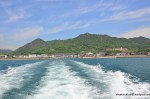
Okunoshima is urban exploration for beginners. Actually it’s more like a vacation day than urbex – with an inglorious past, probably one of the darkest chapters in Japan’s history. And it’s an island with many names. In Japan Okunoshima (大久野島) is famous as usagi shima (ウサギ島), Rabbit Island. People with a more twisted look at life call it Poison Gas Island, though the Japanese term doku gas shima (毒ガス島) is way less common – but I doubt that this is the result of a more positive Japanese mindset…
Located in the Seto Inland Sea about 50 kilometers east of Hiroshima Okunoshima disappeared before if became famous. Back in the 1920s Japan signed the Geneva Protocol of 1925 that banned the use of chemical and biological weapons – but it didn’t say anything about development, production, storage or transfer. At the time being up to no good and started making trouble in the neighborhood, Japan immediately began to take advantage of that loophole. And with that Japan became the only country to use chemical weapons in World War II, killing an estimated 80.000 Chinese soldiers and civilians according to historian Chi Hsueh-jen! (Not only with the knowledge, but with the permission of Emperor Hirohito… which probably should have lead to his prosecution as a war criminal. Sadly, hard evidence was found only decades later by Yoshiaki Yoshimi, a professor of modern Japanese history at the prestigious Chuo University and a founding member of the “Center for Research and Documentation on Japan’s War Responsibility”. My deep respect for the man, I’m sure his research made him more enemies than friends…)
The location of choice was the small and barely known island of Okunoshima, off the beaten tracks in case of a major accident, but still close enough to the important military city Hiroshima. From 1927 to 1929 an existing fish cannery on Okunoshima was “modernized” with a desalination plant, a refrigeration system and a power plant – and at the same time all foxes, martens, cats and rats were systematically eradicated. Okunoshima was erased from maps and Japan did everything to keep its existence a secret. Shipping routes were changed and trains along the coast had to close their window shutters, so did ferries passing the island. Plain-clothed members of the infamous Japanese military police kempeitai made sure everybody followed those rules and didn’t dare to sneak a peek. To avoid any activity on Okunoshima being seen from mainland Japan the old fish cannery was blown up, keeping the new installations intact – and the old pier in the west was replaced by a new one further south, closer to the research and production facilities. Huge storages for gigantic tanks were carved into the mountain and the soil was used to create ramparts as visual covers. In 1929 production began with high secrecy and under horrible conditions.
Since most of Japan’s leading scientists were under the supervision of western secret services they couldn’t be involved directly in the top secret base on Okunoshima. Production had to be executed by educated amateurs. Most of them were Korean forced laborers who worked in the production of medicine or soap before, locals looking for a good salary – and later on the military pressured more than 1000 local high school students into working on Okunoshima; at first only those with good grades in natural sciences, in the final years of WWII pretty much everybody available. The workers were given protective suits that weren’t really protective because the aggressive chemicals made the PVC brittle – thousands were injured because of that and during accidents, many died of their injuries because there were no doctors on the island and nobody was allowed to seek medical help on the Japanese mainland for the reason of secrecy. The production halls were cold in winter and smoldering in summer. Imagine wearing a plastic suit in a climate that sometimes makes it hard to breathe even when in shorts and T-shirt…
About 6.600 tons of mustard gas (Yperite), lewisite, phosgene and other poison gases were produced and stored temporarily on Okunoshima between 1929 and 1944 before being put to use by the Japanese military. While the gases were tested on rabbits on Okunoshima the scientists there worked together with the infamous *Unit 731* on at least two occasions in 1940 and 1943 – they tested mustard gas on Chinese prisoners. (In case you don’t know Unit 731: Have a look at Wikipedia and make sure you don’t wanna eat soon. Their initiator and commanding officer *Shiro Ishii* was one of the most despicable people to ever walk on this planet, the Japanese Josef Mengele, maybe even worse – but thanks to some Americans, especially from Fort Detrick, the weasel was never prosecuted, although he should have been executed for his war crimes. Ishii didn’t even have to flee Japan since he was able to negotiate immunity for himself and his closest allies. Instead he lived a peaceful life with his family until is death in 1959 at age 67.)
After World War II ended in 1945 the remaining poison gas was dumped in the ocean, buried or burned – the factories were blown up or used as housing or storage (e.g. for ammunition during the Korean War). This was done by Japanese contractors under the supervision of the Americans, but what happened to the rabbits used as laboratory animals is rather unclear. Some say they were released by workers after the Japanese military left the island – others claim that they were all killed by the American military and the current rabbits on Okunoshima are descendants of a dozen pets released by a Japanese school class in 1972. One thing is for sure: Since all natural enemies of the rodents were killed in the late 1920s they don’t have to fear any predators and so they breed like… well… rabbits.
Okunoshima stayed a forgotten island for a few decades until in 1988 something unusual happened, at least by Japanese standards: A poison gas museum opened on the Poison Gas Island. Of course emphasizing the harsh conditions for the workers in the factory, because as everybody knows, at least everybody educated by the Japanese school system: Japan was the victim of WWII. Well, sadly that is the common self-awareness, which explains South Park episodes like Whale Whores (and Chinpokomon…) – episodes that show an understanding of Japan most people, including Japanese, don’t have. And so all the photos of poison gas inflicted wounds in the 2 room museum are not from WWII, but from the Iran-Iraq War of 1980-1988. And while most ruins on Okunoshima have signs in Japanese and English (which is quite commendable since it’s unusual for any location that far off the beaten tracks!) the ones at the museum are mostly in Japanese only. (Which reminds me of the Peace Center in Osaka, where most of the surprisingly critical exhibits are labeled in Japanese only while all the others are bilingual, Japanese and English – shamed be he who thinks evil of it…)
Nowadays Okunoshima is a popular tourist spot, visited by about 100.000 people a year, many of them staying overnight at the hotel or the camping ground on the island. Not so much because of the poison gas factory ruins or the museum, but because of the rabbits. Like I said, no predators, so 100s of them are roaming freely, probably making Okunoshima the world’s largest petting zoo. Usually when I am on my way to an abandoned place and there is some noise in the bushes close-by it’s a snake. Or a boar. Or a monkey. Maybe even a bear. On Okunoshima it’s a rabbit. Or a bunch of them. Charging at any person that is passing by, hoping for some food. And they are so adorable! I came for the ruins, but I stayed for the rabbits. Seriously, I spent much more time taking photos of rabbits than taking photos of ruins – when I found out that there were remains of a Meiji era fort from the Russo-Japanese War of 1904/05 I almost considered it a burden, not another photo opportunity…
Pretty much all rabbits on Okunoshima are hand-tame. The ones near the ferry terminals and the hotel are by far the biggest ones. I’m sure they get fed 24/7! If you like your rabbits smaller and a little bit more shy I recommend going off the beaten tracks – to the tennis courts (de-facto abandoned, at least some of them), to the former gunpowder storage or any trail up the mountain. Don’t worry, even there you don’t have to look for rabbits… they will find you! (And you don’t have to worry about snakes, boars, monkeys or bears – you are not even allowed to bring cats or dogs to the island.)
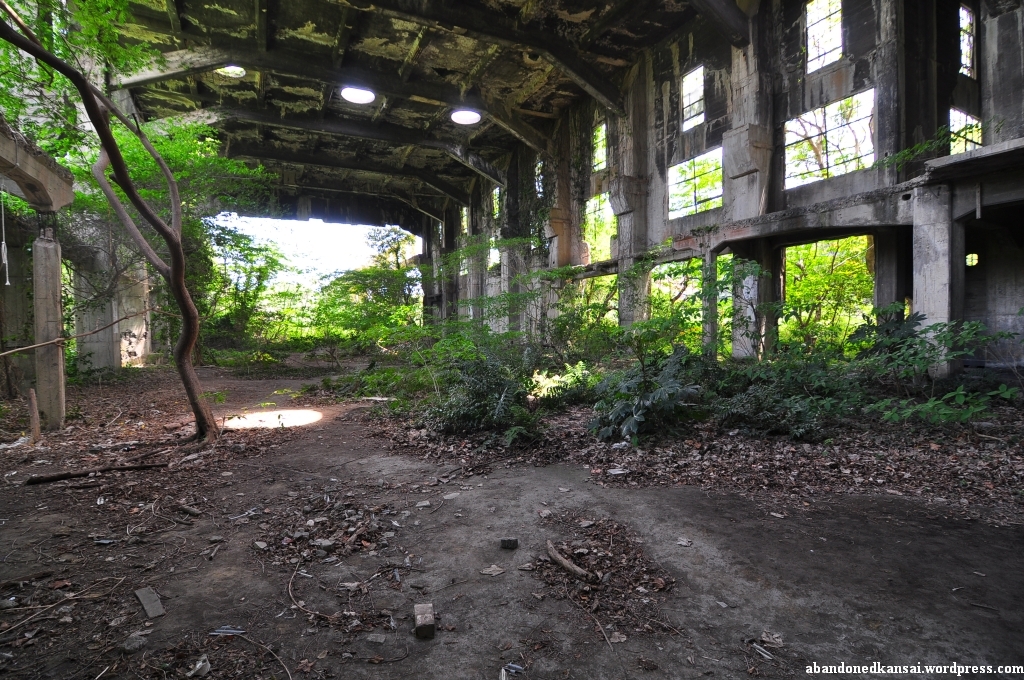
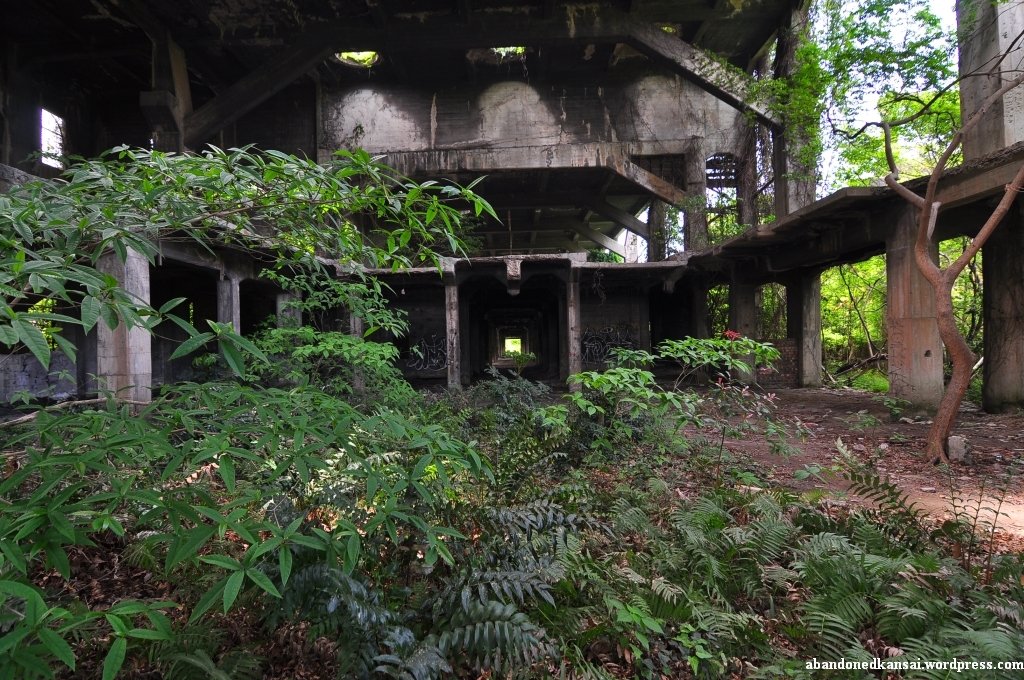
As for my day on Okunoshima: I did a full circle, starting at ferry terminal 2 and ending at ferry terminal 1, since I left on the second to last boat departing from the island; you can *have a look at GoogleMaps* as Okunoshima is a tourist attraction. And I refrained from renting a bike, because I wanted to take my time and enjoy the relaxing atmosphere on the island. The weather started out sunny and ended overcast, poison for photography, but surprisingly I didn’t mind. All of a sudden I didn’t care that much for the gas factory ruins. Many of them were fenced off by ridiculously low bars, but for once I did respect those barriers that were more symbolic than effective. After learning about the place’s history all those chunks of concrete blackened with soot weren’t that important anymore. Okunoshima’s history was just overwhelming. Why disrespect a place that saw and caused so much pain and suffering? When at the same time you can spend a relaxing day at the beach and play with cute little bunnies!
Going to Okunoshima was a wonderful experience and I kind of left with a heavy heart – I visited in spring on a warm day, probably still a little bit too cold to go swimming, and I had plans for the next day. But if you ever have the chance to go to Okunoshima from late spring to early autumn make sure to bring a loved one (as well as your kids, if you have some) and stay overnight at the hotel – just make sure to make a reservation months ahead as the hotel is very busy. Unless you are afraid of ghosts and fear that hordes of Chinese war victims, Japanese workers and laboratory rabbits will haunt you…
Oh, before I forget: A shortened German version of this article, “Die Insel der Versuchskaninchen / Okunoshima – Zwischen Giftgas und Kaninchen” (The Island of Guinea Pigs / Okunoshima – Between Poison Gas and Rabbits), was published on Spiegel Online / einestages on Monday – you can *read it here*.
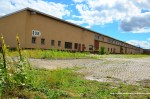
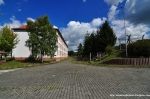
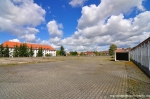
The Taylor Barracks in Mannheim-Vogelstang are one of those locations that are not really abandoned, but have the looks and feel of a deserted place. Cleared by the US Army on August 30th 2011 the Taylor Barracks are now under the administration of the BImA (Bundesanstalt für Immobilienaufgaben / Institute for Federal Real Estate), which has to decide what will happen to this former military base.
The Taylor Barracks, named after Private 1st Class Cecil V. Taylor who died in the last days of World War II and who posthumously received a Silver Star for courage in the face of the enemy, were built in 1939/40 by Nazi Germany’s Wehrmacht as Scheinwerfer-Kaserne (Searchlight Barracks) – most likely because it was home to the Flakscheinwerfer-Abteilung 299 (299th Anti-aircraft Searchlight Detachment) to defend Mannheim from bombings. From April 1948 on many, many US Army units were stationed at the Taylor Barracks; way too many to name them all. In the early years most of them were Ordnance Companies and Engineer Companies, later on a lot of supply and service battalions found their homes in Mannheim-Vogelstang.
(Fun fact: When I told my dad, a musician basically all of his life, that I had a look at the Taylor Barracks he told me that he played there on the opening night of a military club. When he asked for a whiskey coke the bartender handed him half a gallon of Jim Beam! The 70s must have been an interesting time…)
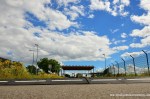
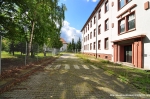
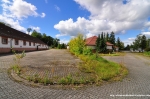
In the summer of 2012 the Taylor Barracks stood there waiting for a new purpose. Most of the buildings were in pristine condition, only some metal started to rust here and there. Also in pristine condition was the fence around the 46ha big premises – about 2.5 meters high and secured by barbed wire there was no way to enter the closed base. In areas considered a special security risk, like fence sections with streetlights, additional rolls of razor tape were installed on top of the fence and / or on the ground. And so the exploration I hoped for turned into nothing more than just quite a long walk…
Addendum 2013-09-09: It turns out that the good people at the BImA are great sports – instead of going after me for taking photos they link to Abandoned Kansai on their official page about the Taylor Barracks! 🙂 They also link to newspapers, the official homepage of the city of Mannheim and several others… but Abandoned Kansai is first! You can *have a look here*, but be aware that their website is in German…)
A couple of weeks before I went to Germany to visit family and friends last year I received an e-mail from Sebastian, a reader of this blog. He told me about exploring a rather recently closed US Army base in Darmstadt – half an hour away from where I was staying for my vacation. I really love abandoned military installations, so we continued talking via e-mail and agreed to meet up to have a look at the Cambrai-Fritsch-Kaserne (CFK) together.
The Cambrai-Fritsch-Kaserne (Cambrai-Fritsch Barracks) in Bessungen, now part of Darmstadt-Eberstadt, was built from 1936 to 1938 as two barracks next to each other – the southern part was known as Cambrai-Kaserne (named after the French city of Cambrai where Paul von Hindenburg had his headquarters during World War I and where the first tank battle in history took place in 1917), the northern part was called Freiherr-von-Fritsch-Kaserne (named after Generaloberst Werner von Fritsch, Nazi Germany’s Commander of the Army at the time). Most of the buildings on the premises were named after locations where famous WWI battles took place, like Verdun or Flandern.
The Fritsch-Kaserne opened on October 12th of 1938 and was home to the 1st Battalion of the 33rd Artillery Regiment, part of the 33rd Infantry Division. Later that month the 3rd Battalion moved into the Cambrai-Kaserne.
During the final days of World War II the US Army took over the Cambrai-Fritsch-Kaserne in March of 1945, making it the home of the 22nd Signal Brigade, the 233rd Base Support Battalion and the 440th Signal Battalion. Lots of service and recreational institutions were located at the CFK in the decades to come – AAFES Food Court, American Red Cross, Andrews Federal Credit Union, Darmstädter Catering Center, PX (post exchange), SATO Travel, Shopette, U.S. Post office, USO and standard facilities like a motor pool, a gym, a movie theater, a sports field and a bowling center.
When I met Sebastian on a warm, sunny summer day he told me right away that the CFK was closed, but not really abandoned. The high barbed wire fences were in exceptionally good condition 3 years after the Cambrai-Fritsch-Kaserne was shut down in 2008 – and Sebastian also mentioned that security guards were still patrolling the outskirts of the premises a couple of evenings per week. Well, we met in the morning, so what could happen, right? Let’s get this infiltration started! Like the *Federal Armed Forces Depot Pfeddersheim* the CFK is now the responsibility of the Institute for Federal Real Estate (Bundesanstalt für Immobilienaufgaben / BIMA) – they have to decide what to do with the 25 hectare (250.000 square meters or 2,7 million square feet) big area. Most likely it will be reconverted into housing for 2500 people, but German bureaucracy is slow and of course nothing has been decided yet. Not in summer of 2011 and AFAIK not in late spring of 2012. But while the BIMA obviously doesn’t care anymore about the depot in Pfeddersheim they seem to smell money when it comes to the CFK – housing for 2500 people, that’s serious real estate! And that’s why the keep the area in good shape by hiring gardeners and plumbers to take care of the premises. All the buildings we tried to enter were locked, hardly any of them were damaged by vandalism or graffiti.
It’s an absolutely mind-blowing experience to explore closed US army barracks, especially with a rather tight security system like this one. The weather was amazing that day and the video material I shot turned out to be nice, too. It was a perfect exploration until… well, we were less than 30 meters away from our top secret entrance / exit when it became clear that infiltration is for pros and neither of us was Solid Snake. I will spare you the details, but like running into security at *Nara Dreamland* this wasn’t exactly a fun experience. No legal consequences since we could convince the people involved that we were just harmless photographers, but this was pretty much the day I realized that urban exploration and urban infiltration are two different things – and I decided that I will limit myself to UE and abandon UI.
Sebastian and I were lucky that day, but entering the Cambrai-Fritsch-Kaserne without permission can have serious, serious consequences, so I highly recommend to stay away or to take photos through the fence.
To all the American (ex-)soldiers reading this article, most of them probably stationed at the Cambrai-Fritsch-Kaserne: When I was a pupil in the 80s my elementary school was way ahead of its time and had a friendship program with the Benjamin Franklin Village in Mannheim. I have nothing but pleasant associations with that exchange program and I consider this exploration a “Thank you!” for the kindness I experienced during that time (I think we went bowling as a big group and then had lunch at our exchange partner’s home, which is a pretty big thing when you are 8 or 9 years old and barely understand each other’s languages!) – I hope I was able to bring back some fond memories of your time in Germany!
Usually I don’t explore military ruins that were turned into tourist attractions. I went to Tomogashima off the coast of Wakayama about two years ago and deemed it so unspectacular that I haven’t even written about it yet. In Kanto a lot of urban explorers visit Sarushima (Monkey Island, like the game) in Tokyo Bay and write about it on their blogs. To me it doesn’t feel right. Those places are 100, 150 year old tourist attractions. Gutted and polished. With gardeners. Maybe it’s because I grew up in an area of Germany where you can hardly throw a stone without hitting a castle ruin. And no Greek would call the acropolis an abandoned place. Because those places aren’t. They are old buildings attracting tourists. Historical ruins, not modern ruins.
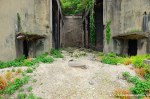
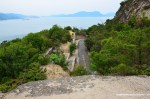
The Ganne Fortress on the other hand WAS a historical ruin that attracted tourists. After it was left behind by the Japanese military it was abandoned again as a tourist attraction and became a modern ruin. The peninsula housing the Ganne Fortress was of strategic importance for centuries to guard the sea route to Hiroshima. The current fortification was built in 1898 and retired in 1919 without having seen any action. It was equipped with four 270 millimeter canons as well as four 50 millimeter light artillery guns, supplied by four powder storages. In 1997 the Ganne Fortress was fixed up along with a couple of similar installations to create the Fortress Forest Park, teaching tourists and locals about the military history of that area. In 2004 the area experienced a major reorganization with cities merged and stuff like that, so I guess the new people in charge lost interest. Especially since they were now taking care of a real naval history museum, too. A small fortress on top of a mountain really off the beaten track with a rather steep narrow road that can become dangerously slippery leading to it? Nobody wants to be responsible for that!
While nature generally seems to do a pretty good job reclaiming territory given up by mankind it is especially fast in Japan. Just a couple of years after the Ganne Fortress was abandoned the whole thing is pretty much overgrown. The asphalt road leading to the installations is covered by needles and broken branches, trees are starting to reach over. Concrete handrails looking like wood are losing their color and cracking up, revealing their stone and metal innards. Smaller stairs, once used as shortcuts to the top and to reach one of the already mentioned former powder storages, are pretty much completely overgrown now, making it tough even in very early spring to pass through. The stainless steel chains, a decade ago preventing tourists from falling to their deaths, lost their purpose, but they are still flashing in the sunlight. Halfway up the mountain, in anonther one of the old powder storages, was a little museum – now completely smashed to pieces and hard to reach due to two other sets of overgrown stairs. The mountain top still offers a gorgeous view, although the uncontrolled growth of nature sometimes makes it hard to get a good look. Or to take interesting photos. The two short videos I took turned out to be so dull that I won’t even publish them.
My fellow explorer *Michael* didn’t seem to be impressed either so we called it a day pretty quickly and got *back on the road* again…
Spring time is long weekend trip time! While Kansai doesn’t have much of a winter it nevertheless can be quite cold, especially when having a hobby involving taking pictures in abandoned places, other places of Japan can be snowed in for months with meters of snow… So when the sun finally warms the hearts of Japan and causes the first sunburn of the young year it’s time to explore places beyond my beloved Kansai – whether it be *Kyushu with Enric* two years ago or Shikoku with Gianluigi last year (a series of articles yet to come…), it became kind of a tradition for me to go on an urbex spring trip with a friend of mine. This time *Michael Gakuran* and I teamed up for a road trip to the southern end of Honshu, Japan’s main island – Chugoku, to be exact, the area west of Kansai. A trip with such exciting places that I decided to start writing about it right away – the last pictures are barely 50 hours old…
At this point I don’t want to give away too much about the locations we visited or which order we visited them in. But there were 8 of them in 3 days. 3 long days I might add, with me getting up at 6.30 a.m. on a Sunday, at 6 a.m. on a vacation day and at 5 a.m. on a national holiday. As I mentioned before: I’m a morning grouch; and by “morning” I mean any point in time which is followed by “a.m.”…
But the trip wasn’t just exhausting, it was also exiting, fun, frustrating, satisfying, rich in variety, surprising, delicious (I finally ate Hiroshima Okonomiyaki in Hiroshima prefecture and bought the best local sweets outside of Kyoto – mikan dango) and insanely expensive.
Why insanely expensive? It’s because at the end of the first day a serious mishap happened to me. We were on our way to a hotel to stay for a night when we saw this huge, blue and white flame at a gigantic industrial plant – probably coke oven gas burning at a cokery. (Addendum 2012-06-11: I guess I was wrong about the gas – Gert from South Africa wrote me: “This couldn’t be coke oven gas burning, because coke gas got a very very hot orange (impurities) or yellow (cleaner) flame. But the flame in the video is actually blast-furnace or corex, midrex, finex gas flame (more methane content in gas).” Thanks a lot for pointing that out! I really appreciate it and changed the title of the video below, too.)
We decided to make a stop to take picture or two and when I got out of the car to marshal Michael I grabbed my bag and I don’t know how or why, but my beloved D90 camera flew through the air and crashed hard to the concrete ground. The body cracked open a couple of millimetres so I could see the insides. Parts of the electronics were still working (e.g. I could use the screen to look at the photos on the memory card), but since the lens mount was part of what cracked it was impossible to take pictures anymore. Mad props to Tokina BTW! The mounted 11-16mm lens survived without a scratch or any other damages as I found out with relief the next day.
Sunday evening past 7 p.m. – of course I was in shock at first, because going on a photo trip without a camera is pretty pointless. So we headed towards the flame to take some picture which I couldn’t do since my photo camera broke and Mike couldn’t do because of the lighting, lenses and passing traffic. So I took the video you can find below the article – it doesn’t fully capture the beauty of the flame, but it will always remind me of the death of my favourite camera so far (I also included the last JPG I ever took with it, even though it wasn’t related to urbex). Back at the car we decided to look for an electronics store, although it was almost 8 p.m. on a Sunday evening. After a couple of minutes we found a shopping mall, but it didn’t have a camera store. The staff at the mall was very nice, telling us where to find an electronics store – but it closed at 8. Michael, who did all the talking since his Japanese is WAY better than mine, wasn’t discouraged by that and asked for the phone number of the store. Although the store was closed Michael called and somebody picked up. He told them my tricky situation and they agreed to let us into the store if we hurry – so I got into a taxi and went straight to the store. There a guy with pretty decent English helped me at the camera department. I was hoping to replace the D90 with another one, but they didn’t have them in stock. A lower model was out of the question, so the only option was a D7000. Which they didn’t have in stock either. Just the display model – which they couldn’t sell me without the kit lens since it was a display model. After some deliberation and the certainty that not buying that display model would mean losing at least 5 hours the next morning looking for another camera (electronic stores in Japan usually open at 10 a.m.) I half voluntarily upgraded from a Nikon D90 to a Nikon D7000. With a bad feeling since I not only spent a huge chunk of money, but I also had to learn by doing how to handle a new camera. While I’m very pleased with how the photos of all locations turned out it was quite unnerving at times to get the shots I wanted to take.
Now just a few quick words about the locations we visited. The undisputed highlight of the tour was the abandoned Japanese Sex Museum. Both Michael and I had high expectations and we were not the slightest disappointed, shooting in almost complete darkness for the majority of the 4 hours we spent there. Another glorious highlight to me was the Kart Pista Hiroshima race track – why it was a highlight you’ll find out soon. Since theme parks are one of my favourite types of abandoned place we visited two of them and I loved them both. 4 world class haikyo in 3 days – plus 2 good ones (a Meiji Era army fortress and a quite tricky hotel) as well as 2 more we took pictures of because we went there and it would have been a waste not to cover them… a strip bar in an onsen town (euphemistically called “theater”) and a car camp site. To my knowledge all of these places never appeared on English speaking blogs, some of them are even unknown to the Japanese urbex crowd. So please enjoy the preview pictures and come back for much more information, photos and about one hour of video material!
Japan is one of only 25 countries in the world without military – at least by some people’s definition. Others see it a little bit different thanks to Japan’s Self-Defense Force (自衛隊, Jieitai) with active personnel of about 240,000 people – plus about 60,000 in reserve. Abandoned military institutions are nevertheless rare in Japan, usually places (partly) given up by the Americans, like the Tachikawa Air Base, the Fuchu Air Base or Camp Drake – all located in the Tokyo / Yokohama area.
So when I was back in my home country of Germany for vacation I was eager to explore a military basis of the Federal Armed Forces / Federal Defense Force / German armed forces – or just Bundeswehr (that’s what they are called in German). While the Jieitai are still going strong the Bundeswehr had to deal with several structural reforms over the past two decades, main reasons for that being the fall of the Iron Curtain and the German reunification in 1990. Back in the 1980s the Bundeswehr had about half a million employees (career soldiers and conscripts), in 2010 the number was down to 250,000 – with plans to reduce further to a little as 175,000 soldiers; about a quarter of what both German armies (Bundeswehr and NVA (Nationale Volksarmee – National People’s Army)) had combined in the late 1980s… Reducing personnel that seriously you can’t (and won’t…) maintain all the military bases. A lot of them were demolished, some got reconverted to housing projects and business parks – but a few slipped through the cracks and became abandoned; because nobody took proper care or because there were problems reusing the property.
The Federal Armed Forces Depot Pfeddersheim (Bundeswehr-Depot Pfeddersheim – officially “Wehrbereichsgerätelager IV”) is one of these cases where the infamous German bureaucracy took its toll; on a personal note: German bureaucracy actually isn’t that bad, especially when compared to other countries. Built to house Car Pool Company 621 (Fahrzeugpark-Kompanie 621 – and by company I mean the military unit, not the business…) in the early 1950s on the site of the the cannery Braun AG (Konservenfabrik Braun AG), a factory of international fame in business from 1871 till 1951, the depot was one of the main Bundeswehr storages in Germany for many decades. It was closed with effect from 2004-12-31 with the last employees leaving by 2005-03-31 – at that point only 14 people were working at the depot.
Of course early on local politicians were aware what was going to happen and they tried to make use of the location as smoothly as possible, even visiting the still active depot in late 2004. Since Pfeddersheim lost its indepence in 1969 and now is part of the venerable city of Worms a lot of people have a say in what’s going to happen – the Institute for Federal Real Estate (Bundesanstalt für Immobilienaufgaben / BIMA), a city planning officer from Worms, a municipal administrator from Pfeddersheim and of course the citizens of Pfeddersheim; just to name a few. And while everybody was debating whether the depot should be turned into a housing project with a supermarket or being used by established and new businesses the usual hordes of bored youth vandals trashed the place – seven years later the property is still for sale, one of the latest suggestions was to build a showcase project for climate protection housing.
Well at least the buildings were still standing when I paid them a visit in July of 2011 with my high school friend Ira. The main gate was wide open when we arrived and as we were about to enter a building we saw a guy on a bike coming towards us. Judging by his shirt he must have worked for the local public utility company and brought back one of the municipal vehicles. So I told him what I was doing (urbex, Japan, photos…) and if we could take some pictures – he didn’t seem to like the idea, but after some more explanation he said that the main gate actually isn’t locked sometimes; so I told him that we didn’t see him if he didn’t see us – and off he went, with a word of warning that his colleague will lock the gate in the near future. So while I was exploring the first building Ira got familiar with the area and had a look for the colleague to come. When we were about to enter the second building the other guy actually showed up in a car – he stopped next to us, so I told him what I was doing (urbex, Japan, photos…) and if it was okay to take some pictures. He said it was and drove away only to be back a couple of seconds later. “Why?” Well, to keep the memories about those places alive – it’s always nice to hear from people who have been to / worked at places that I visited in their abandoned state. He put up a “those young, crazy people – I’m going to have a beer now and do better things with my time” smile and drove away, this time for good. So Ira and I explored the second building, the open repair shop and strolled along the sealed warehouses and garages. When we were about to leave we found the main gate closed – and locked. The second guy forgot to mention that he would actually do that! Luckily we found an alternative way in and out of the depot while exploring the location – and now was the time to make use of that knowledge…
(If you don’t want to miss the latest article you can *follow Abandoned Kansai on Twitter* and *like this blog on Facebook* – and of course there is the*video channel on Youtube*…)
The now abandoned Sembach Air Base has quite a long history. The location was first used as an airfield after World War I by the French occupation troops in 1919 with 10 sheet-iron barracks and 26 wooden hangars. When France retreated from Germany in 1930 the air base was abandoned on June 15th and the land was returned to farmers who used it as a hay field. (The area around Sembach is very rural and agriculture is an important economic factor till this very day.)
In preparation of World War II the Nazi-German Luftwaffe deemed the area proper to build a fighter base and claimed the land in early 1940, but gave it back to the owners in June of 1940 after France was conquered in a blitzkrieg now known as the “Battle of France”.
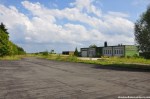
After the defeat of Nazi-Germany in May of 1945 Sembach was part of the French occupational zone. In April of 1951 German surveyors along with French officers were looking for suitable locations for air bases. The Cold War had begun a few years prior and both the NATO and the Warsaw Pact armed themselves at a remarkable speed. The NATO’s lack of air fields suitable for modern jets made it necessary to build new military airports – so the French authorities began with the construction of a hard surface airfield in June of 1951, much to the protest of local farmers, who demonstrated in Mainz, the capital of Rhineland-Palatinate, without much success. On September 1st the United States took over the construction site, naming it Sembach Air Auxiliary Field, and pushed hard to finish the base – completing the 8500 foot concrete runway by the end of the month working round the clock using nighttime illumination. The rest of the airfield (tower, hangars, repair shops, storages and other buildings) were built during the winter. Local protests rose again when plans for the construction of barracks and office buildings surfaced in April of 1952 – this time with a little bit more success: Instead of using valuable farm land the new buildings were constructed on a sandy area with little agricultural value about 1.5 kilometers away from the airfield (Heuberg). Everybody was happy and after another year of construction the American flag was finally raised at the base now known as Sembach Air Base on July 8th 1953, when a RB-26 Invader arrived from Shaw Air Force Base in South Carolina. It was part of the 66th Tactical Reconnaissance Wing, the first of many units to be stationed in Sembach.
40 years after Sembach Air Base was opened protests rose again – this time because the Americans announced plans that the base will only be used as a substation of Ramstein Air Base; a huge economical setback for the town and nearby cities, directly (German civilian employees at the base) and indirectly (soldiers spending money in the area). The airfield was returned to German control two years later on March 30th 1995, the installations in Heuberg were renamed Sembach Annex. In summer of 1998 the demolition of the base began, the runway being the first “victim” of this process. Since then most of the buildings on the former air base have been demolished – but not all of them, at least not by the time Gil and I arrived at the location.
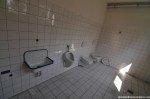
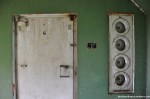
After the *Deportation Prison Birkhausen* and the *USAREUR Communication Facility Lohnsfeld* turned out to be quick stops we decided to tackle another big one and drove to Sembach to have a look at what was left of the air base. First we went to the western part and found some half-underground bunkers, inaccessible of course. Next was a small office building (?) that looked like it was made of corrugated cardboard. Quite interesting was the former Fire Station, part of the Fire and Emergency Service. I was rather surprised by the coloring of the toilets – white and pink. Seriously? The restrooms of the fire department on a US Air Force base were pink?
In the afternoon, when we left the fire station, the weather started to turn drastically. The sunshine was gone and dark grey clouds approached quickly. While we were making our way to the abandoned tower the wind sped up massively – to my favor as I should find out minutes later. I just finished shooting the tower building when a wall of rain came closer quickly and before I had the chance to take shelter it poured liked I was standing in the shower; a first class cloudburst. At that time I was close to the eastern wall of the tower, so I pressed myself against the high wall while the wind was blowing so hard that it actually blew the rain over my head. About 15 minutes I was standing there, hoping for the wind to continue and the rain to stop. When the heavy rain turned into light drizzling I started to look for Gil, who found shelter in a nearby building I assumed was inaccessible. That building was boarded up (almost) completely and its massive walls made me wonder right away what it was used for. Sadly it was pretty much empty, nevertheless we found some interesting items – a sleeping bag and other signs of a homeless person being there for a while, a perforated cardboard character and some documents with rather sensitive information; like special travel orders, granting individuals the permission to hand-carry a M16 rifle. I have no clue how those documents escaped the shredder, but I guess I better refrain from posting photos since each sheet of paper contained several names including ranks and addresses…
Going on an exploration trip with Gil was absolutely fantastic (thanks, man!). While the first two locations were quite disappointing from an urbex point of view Sembach Air Base made up for it big time. It was the first US military base I was able to explore (yes, I went to a second one, so stayed tuned!) and I had a blast – no pun intended. The locations in Germany differ quite a bit from the places I usually get to see in Japan, so I really enjoyed this refreshing experience!
Urbex in France? Urbex in Luxembourg? Urbex in Belgium? Or urbex in Germany? That was the big question after our visit to the *Deportation Prison Birkhausen* was a unexpectedly short one – where should we continue our urban exploration day trip? There were plenty of options, but since Kaiserslautern (a.k.a. K-Town, especially amongst American military) was rather close we decided to continue our explorations there. The next place to visit: The USAREUR Communication Facility Lohnsfeld.
Very little is know about this former US military installment. The Energy Engineering Analysis Programm (EEAP) from August 1986 prepared for the Department of the Army, European Division, Corps of Engineers described it as “Located at Lohnsfeld, the station consists of a barracks and receiver building”. The facility was open from at least 1953 and on 1998-09-03 the U.S. Department of Defense announced that the Lohnsfeld Communications Station will be returned to the host nation, in this case Germany. It seems like my home country didn’t have any use for it and left the comm fac in the middle of nowhere abandoned, until… it was demolished in October of 2007. Which I found out about after I went there with my old buddy Gil – after we drove through the middle of nowhere for maybe half an hour, including dirt roads along some fields and an airport for model aircrafts. So maybe urbex in France, urbex in Luxembourg or even urbex in Belgium would have been a better alternative. (The place I really wanted to go, Villa Viktoriastift, one of the few abandoned mansions in Germany, became inaccessible a week prior when the new owner of the place was fed up by geocachers swarming the place – so he informed the police, threatened to sue some people (including the person who put the cache there!) and hired security…) Luckily Lohnsfeld wasn’t our last stop on our trip to Palatinate – and the last location made up big time to the first two less successful ones…
Darn, me and my timing again… In my previous posting I referred to Gakuranman’s article about the Imari Kawaminami Shipyard – he mentioned a discussion in 2010 about demolishing the place; and I expressed how happy I was it didn’t happen between his visit and mine. Well, it seems like things are moving forward. The Japanese newspaper “Yomiuri” reported on June 24th (almost a week after I published my exploration experience) that the Yamashiro City Zoning Committee decided on June 9th that the Imari Kawaminami Shipyard is a safety hazard and not worth to be preserved as a historical landmark – they will demolish the place, only saving some of the pillars with the safety warnings (as seen on the photos below). And it took them only 50 years to realize that…
I guess the real reason for demolishing the place is the land reclamation project going on behind the seaside part of the shipyard which the dam mentioned in the previous posting is part of. Getting rid of the ruin will create a huge piece of land if both properties are combined – with access to both sea and the main road of the area.
I was quite shocked when I heard about the news today – it’s always a sad thing when abandoned buildings disappear, especially famous and unique ones like this. A place that grew on me a lot after I explored it, especially since there seemed to be a connection to the Katashima Suicide Training School.
Japan is quite weird when it comes to timing. Sometimes things drag forever and maybe the shipyard won’t be destroyed after all, although the committee made the decision to demolish the place. But sometimes things move extremely fast, so maybe the shipyard is already gone by the time I write these lines. Urbex is becoming more and more popular in Kyushu recently – if I hear any news I’ll make sure to keep you updated.
(To make this posting more colorful I chose six previously unpublished photos and uploaded them together with a video I forgot last time…)
Addendum 2012-1-30: The Imari Kawaminami Shipyard was demolished in late 2011 / early 2012. Now you can find its exact location on my *map of touristy and demolished ruins in Japan*.









































 Abandoned Kansai