Feeds:
Posts
Comments

Archive for the ‘Visited in 2011’ Category

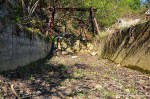
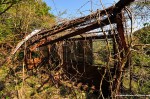
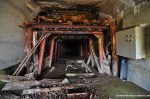
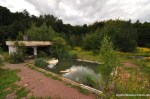
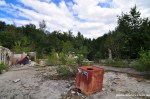
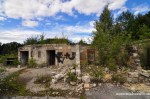
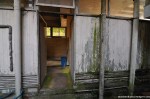
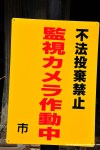
The Restaurant Kent, on Japanese haikyo blogs mostly known as the Good Omen Garden, is one of the staples of urban exploration in Japan. Located on quite a long country road connecting Osaka with Miyazu (home of the famous sandbar Amanohashidate, one of Japan’s three scenic views) the Restaurant Kent was one of the most popular local haikyo when I started doing urban exploration three years ago. Nowadays it lost quite a bit of its popularity, probably because it was photographed to death over the years – or maybe because there are a couple of signs announcing camera surveillance… which I totally respect if it’s true.
In this case the claim was complete bullshit, which annoys the heck out of me as it just cost me time and nerves. The signs looked rather new, so maybe they were put up before the local city administration set up the cameras (government involvement, even on the lowest level, is always a bad thing since it usually means serious business – private companies might hire some slackers, but you don’t want to mess with bureaucrats, especially in a country like Japan…), but when I visited the Restaurant Kent in March of 2011 there were no cameras or other forms of security; a topic I usually leave out, but if somebody lies to me blatantly I have to set the record straight!

Sadly there is not much else to report about the Restaurant Kent, since nobody seems to know a lot of facts about the place. I don’t even know if it was named after the county of Kent in South East England – or after the hugely popular cigarette brand “Kent”, which famously used carcinogenic blue asbestos in their filters from 1952 till 1956 (I guess at least British American Tobacco made cigarettes healthier after all…). The restaurant area itself seemed to be quite small, but neat. Previous explorers set up some tableware in front of a chair with armrests, but other than that there was not much to see.
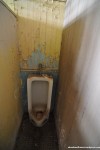
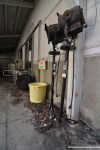
The Good Omen Garden seemed to be much bigger – one of those festivity locations Japan so desperately needs when you want to be loud and / or with some friends. My buddy Dan and I found several party rooms of various sizes (Western Style and Japanese style, i.e. either carpet floor and tables or tatami floor and furniture that is long gone now…) equipped with all kinds of electronics including laser disc karaoke machines, beamers, microphones (not for karaoke as they were installed to the ceiling…) and mountings for camera and / or additional lighting. One room even featured a disco ball, although it was quite severely damaged – and so was the fake wedding cake one floor down outside. At the first look the Good Omen Garden didn’t seem that big, but then it turned out that there was a second building behind the first one, connected by a kitchen on the upper floor. There were more rooms, including some guest rooms for overnight stays and the usual array of baths for men and women.
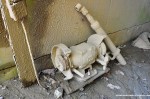
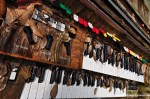
My favorite item though wasn’t in the building, it was outside in the backyard – a wooden electronic organ, beyond repair thanks to years of abuse from vandals and weather; nevertheless an unusual and strangely beautiful sight.

Since the Kent Restaurant / Good Omen Garden was along a busy road, but not within a city, town or even village, there were almost always cars parked outside. But nobody had the intention to bother us, I guess the camera warning signs outside worked. When Dan and I were about to leave though, a pickup-truck with a small crane parked next to the building. We “escaped” through the front entrance while two or three men entered the building through the restaurant. On official order or to loot? We’ll never find out. Dan and I were kind of in a hurry anyway, since on the way to the Kent Restaurant we spotted a location I’ve never seen anywhere else before. But that’s a story for another time. Probably Christmas time…

(If you don’t want to miss the latest article you can *follow Abandoned Kansai on Twitter* and *like this blog on Facebook* – and of course there is the *video channel on Youtube*…)
Read Full Post »

Momijigari (紅葉狩, red leaves / maple leaves hunting) is almost as popular in Japan as the worldwide way more famous hanami (花見, flower viewing). In spring even the biggest couch potato leaves the house to view first the plum and then the cherry blossoms, in autumn they go to different spots to have a look at the autumn leaves. Of course every bigger city has special spots for both, but some countryside towns are pretty much dead for 50 weeks a year and completely swamped on two or three weekends. In Kansai prime examples would be Yoshino (hanami) and Minoh (momijigari). Why? Because those two spots are considered the best – or at least amongst the best. Surprisingly many Japanese people pursue the best of everything – the best food, the best company as an employer, the best spots to view nature. Or at least they pursue what the majority considers the best. With the result that some food is insanely expensive, employers with famous names exploit their employees (because they can!) and the best spots to view nature are so overrun that it’s not really fun anymore going there – you stand in crowded trains for hours just to be pushed past gorgeous trees and through crowded streets with souvenir shops.
So while half of Kansai “enjoyed” autumn leaves in Minoh and Kyoto (just to put up photos on Mixi and Facebook to let everybody know where they went for momijigari…) I made my way to the Hyogo countryside in late November of 2011. My goal was to climb a small mountain with an abandoned temple on top. 15 months prior I was able to explore an abandoned shrine (*you can your all about it here*), so I guess it was only natural to follow an abandoned Shinto site with an abandoned Buddhist site. (I know that there are plenty of abandoned churches – but how about mosques? Has anybody ever heard of an abandoned mosque?)

The Shuuhen Temple popped up on two or three Japanese haikyo blogs before, but it was surprisingly hard to locate. Even more surprisingly since the place is still marked on GoogleMaps, and when you are rather close you can find guide signs – which left me rather puzzled for a couple of minutes about how abandoned the place really was. I guess now it’s more abandoned than ever, because in September of 2011 the street up the mountain was closed. Halfway up the mountain a landslide flushed away the small asphalt road on a length of about 5 or 6 meters – even tiny cars could barely pass here anymore safely.
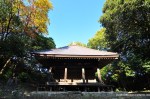
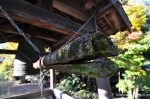
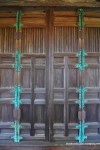
When I reached the mountain top I must have been one of the happiest people in all of Kansai: A stunning view, gorgeous autumn leaves and a temple all for myself. Sure, I couldn’t tweet “I’m in Arashiyama! (Be jealous!)”, but I wasn’t bothered by souvenir shops and crowded locations. Quite the opposite. When I was walking around I had to be careful not to run into one of many one square-meter large spider webs with a nasty middle finger long black and yellow spider in it. The abandoned temple itself was rather unspectacular. All buildings were closed, in rather good condition, and I didn’t even have a closer look if there was a way to open them. I’m not very religious myself, but I respect the beliefs of others and try to be respectful. (Which doesn’t keep me from making fun of them if it’s getting too ridiculous – you know, thetans, magic underwear and stuff like that…)

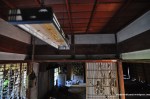
Open and rather interesting was the house of the monk that lived near the Shuuhen Temple. It’s hard to tell when it was abandoned. Some buildings in Japan fade away in no time, others withstand the ravages of time as if they couldn’t care less. It looked like it was built in the 60s or 70s, given the black and white photos of the bell and the belle; judging by the wiring maybe even earlier. The decay there was clearly natural, because thanks to the temple’s location the average bored youth vandal spares the place. Strangely enough the digital display of the power meter still worked…

The temple itself seems to have quite a long history. According to the homepage of the city it is located in, the Shuuhen Temple dated back to Emperor Kotoku’s days (596 – 654) and was first built in 651. In 1578 it was burnt to the ground and stayed a ruin for more than a century until 1682, when it was revived again. Not much information, but way more than one could get for most other temples and shrines in Japan… Now it is famous not so much amongst urban explorers, but more amongst Japanese fans of ghost spots (心霊スポット). I guess it makes sense to look for paranormal activity where people traditionally believe(d) in spirits.

Exploring the Shuuhen Temple was one of those nice, mellow urbex experiences. Sleeping in, taking some local trains, a nice and sunny autumn day, some hiking, some solitude, cold temperatures, but warm sun, beautiful countryside. A relaxed Japanese Indian Summer day…

(*Like Abandoned Kansai on Facebook* if you don’t want to miss the latest articles and exclusive content – and subscribe to the *video channel on Youtube* to receive a message right after a new video is online…)

Read Full Post »

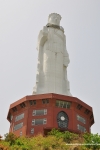
Ruins in Japan are often in such good condition that they are not recognizable as ruins at first sight. One example would be the World Peace Giant Kannon on Awaji Island, Hyogo prefecture – Kannon not being a spelling mistake, but the Japanese name for the bodhisattva associated with compassion, Guanyin. Other spellings include Kan’on, Kanzeon and Kwannon with the latter being the name giver for Canon, which was founded as Kwanon in 1934 and had the bodhisattva in its logo. I guess a World Peace Giant Cannon only exists in the minds of some really crazy people…

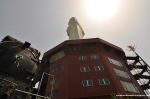
In 2010 I actually drove past the 80 meters tall World Peace Giant Kannon on its 20 meters tall socket building. Sure, it looked interesting, but the bright white statue seemed to be rather new in the warm sunlight of that day, so I didn’t even consider stopping. When I got back home and looked up what the statue really was I found out that most important of all it was abandoned… (It’s the 4th tallest statue in Japan and the 13th tallest in the world. Including the socket it ranks 3 and 10.)

The World Peace Giant Kannon is actually part of the Heiwa Kannon Temple (heiwa meaning peace…), which was founded and funded by Toyokichi Okunai, a realtor who became rich dealing with office buildings, private apartments and business hotels in Osaka. The basis is a 5 storey building, 20 meters tall. The first floor was home to all kinds of religious exhibits as well as well as information about the famous Shikoku Pilgrimage (consisting of 88 temples along a 1200 kilometers long hiking course which usually takes between 30 and 60 days to complete). The other floors were stuffed with Mr. Okunai’s private collections – transportation, watches, china, art, armors. The fourth floor was home to a sightseeing restaurant, a banquet hall and a souvenir shop. If you look up the 80 meters tall statue on top of the building you can see some kind of a “collar” right below the statue’s head – that turned out to be an observation platform.

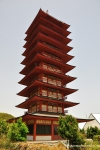
Although attracting up to 2000 visitors per day it seems like a lot of people were appalled by this mix of religion and commerce, some even accused Mr. Okunai of heresy. When Mr. Okunai died in 1988 his wife took over the management of the World Peace Giant Kannon until her death in February of 2006. After her death the Okunais’ real estate company closed the place right away and the Heiwa Kannon Temple started to fall in disrepair quickly, probably due to the lack of management of Mrs. Okunai during her final years. The Lehman Brothers took over, but they failed badly themselves at the time. Put to auction several times in 2007 and 2008 by the Kobe District Court nobody bid any money (which reminds me of the *Former Iranian Consulate* in Kobe…), so the temple was shifted to a separate company in September 2008. Since the World Peace Giant Kannon was liable to collapse (its exterior is molded of gypsum and resulted in the statue’s nickname Whiplash Kannon”) a committee was established in May 2009 by the local government, which took measures against the further deterioration of both the World Peace Giant Kannon and the nearby 10-storey pagoda in September of 2011. Just a couple of months after my buddy Gianluigi and I explored the place…

Walking up to the Heiwa Kannon Temple is actually quite impressive. The huge pagoda is right next to a parking lot and a closed restaurant. From there we had to walk up a hill to the back of the socket building. There we found all kinds of statues and items that didn’t go together very well, including a miniature version of the Statue of Liberty and an original Class D51 steam locomotive, the D51 828. We circled the socket building quickly and found an easy entry. The first floor was almost empty as most religious exhibits were gone. A quick look at the office on that floor didn’t give us much insight, so we headed up one of two staircases (one in the north, one in the south) that connected the floors. Some of them were locked, but we gained access to the restaurant on the fourth floor and the tatami room on the fifth floor. Approaching the fifth floor we heard voices, so we talked loudly to make ourselves heard. A minute or two later a young couple in their early 20s rushed past us, the guy holding a photo camera and the girl’s clothes not really being in order – your guess here is as good as mine…

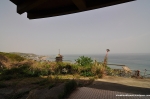
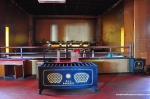
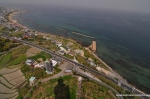
The tatami room once held the Mr. Okunai’s armor, but nowadays well armored soldiers of another kind were all over the floor: suzumebachi, Japanese Giant Hornets, 5 centimeters long killer machines. Luckily they were dead and it wasn’t summer yet, so Gian and I concentrated on the task at hand. In one of the hallways leading to the staircases we found an elevator – and nearby a mysterious claustrophobically narrow und pitch-black staircase that began to wind upwards. After spending a couple of minutes on the rooftop of the socket building admiring the beautiful gigantic Kannon statue we headed back inside and up the staircase. It was dark, the air was bad and some door-like openings revealed unpleasant views at the inside of the statue – even without knowing that people were discussing repairing the Kannon it was pretty clear that investments were necessary. After climbing stairs for about 10 minutes (it felt much longer…) we finally reached the observation platform, which offered both stunning and scary views. The location of the World Peace Giant Kannon between the coast of Awaji Island and the gentle hills was breathtaking – and so were the cracks in the gypsum everywhere. Buildings in Japan are barely constructed for eternity, but this one definitely has seen better days!

And so Gian and I walked down stairs for about 85 meters and left after spending surprisingly much time at this obviously quite popular abandoned statue – passing the also abandoned pagoda a group of about half a dozen Japanese twens was walking up the hill to have a look themselves. And I am sure they weren’t the last visitors as the maintenance work at the Heiwa Kannon Temple started not earlier than four months later…

(If you don’t want to miss the latest article you can *follow Abandoned Kansai on Twitter* and *like this blog on Facebook* – and of course there is the *video channel on Youtube*…)

Read Full Post »

The Shimizu Onsen Center was the last stop on a road trip to Shikoku my buddy Gianluigi and I did in the spring of 2011. Usually I write a short road trip summary in advance, but these days I’m a bit busy, so maybe I’ll make up leeway some day in the future – after all it was quite a busy road trip with six locations in two days.

Onsen is the Japanese term for hot spring, but usually it is more about the hotel / restaurant that is making use of the water. The Shimizu Onsen Center is one of those hidden gems of the beaten tracks deep in the mountains of Shikoku – and the name is just perfect, because shimizu actually means “pure water”. Pure water that won’t be soiled by many visitors, because the Shimizu Onsen Center closed a couple of years ago. If you try to find some information about it yourself, make sure to not confuse it with several other towns named Shimizu all over Japan (like in Fukui, Hokkaido, Kochi, Shizuoka, and Wakayama). You can imagine that the name is quite popular…

When Gian and I drove onto the already slightly overgrown parking lot we had no idea at all what expect – I had never seen photos of the Shimizu Onsen Center and I’ve never seen any since I’ve been there, so please consider it an original find that hasn’t appeared on any blog about Japanese ruins, neither in English nor in Japanese. As we got out of the car it just started to rain and we were pretty tired after a series of exciting but energy-sapping explorations. Nevertheless we closed in quickly, but carefully, just in case the low buildings nearby were home to some curious spectators. But we were lucky and able to enter the Shimizu Onsen Center without trouble of any kind. Not only that, but there was a note taped to the entry glass door of the spa, explaining a little bit about the place’s history. According to this it was opened in 1981 and operated for 14 years before it was sold to a new owner. Financial trouble began in 2003 and in late November of 2007 the place closed with 160 million Yen of debt – just three and a half years before Gian and I visited.

The Shimizu Onsen Center was fed by a sodium hydrogen carbonate spring with a temperature of 17 degrees Celsius, helpful to treat rheumatism, neuralgia, diabetes, and skin diseases. It targeted mainly day-trippers and tourists who booked accommodations nearby. Opening hours were from 9 a.m. till 9 p.m. (closed every 1st and 3rd Thursday of each month) and the entrance fee was 600 Yen. In the northern part I found a couple of Japanese style guest rooms with tatami mats and small TVs, but I’m not sure if they were used for overnight stays or just to relax between two baths.

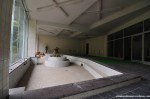
Gian and I entered through the normal entrance on the second floor and went straight downstairs to the first floor, where the baths were. Both the one for males as well as the ones for females were equipped with a sauna and featured several frog statues. The Japanese word for frog is “kaeru”, which can also mean “to return”, and that made them good luck charms / symbols for money and coming back safely. This floor also featured the already mentioned guest rooms, which could be reached through a very, very dark hallway. The whole floor and all the items there looked a bit old and run down (like the massage chairs in the hallway and vending machine for razors), but there were no signs of vandalism or theft.

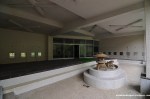
That also applied for the second floor with the front desk and a huge tatami room with a stage – a typical Japanese party room for long karaoke sessions with dozens of attendees. The tiny coop next to the stage even still had all the music equipment including countless tapes. No vandalism, no theft. In the entrance area we found a bin stuffed with umbrellas, slippers were still lined up and the front desk was neat and tidy.

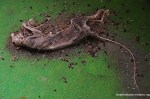
The rather small third floor was exciting and disappointing at the same time. On the one hand the former bar was removed and so were the arcade machines that one day must have been there. On the other hand I finally found some dead animals, in amazingly good condition actually. Two skeletonized birds and a rat with some of the skin left, surrounded and partly covered by dead maggots. One of the bird skeletons was on the stairs on the way up, but the other one was just a couple of centimeters away from the rat – it looked like hunter and prey died at the same time at the same place. And that rat was huge! Maybe 30 centimeters long, and by that I mean the body alone. Since it was grey outside and I had to bring my tripod for the interior shots anyway I set up my little equipment to a comfortable height and zoomed to get a decent picture, being the lazy photographer I am sometimes. I was aware that the exposure time was rather long (a quarter of a second), but I didn’t realize that I zoomed to a point where gravity took over and the lens continued to zoom on its own – and so I accidentally created one of my favorite photos ever, one that still makes me a bit dizzy to this very day. Excited by this new discovery (commonly known as radial blur) I took some additional similar shots with both the rat skeleton and the bird skeleton next to it before we finally ran out of time – we were in the middle of nowhere in Shikoku on a rainy day and had less than 3.5 hours to get the car back to the rental company. Which really reminded me of my *first trip to Shikoku*, but this time the car rental was in Osaka, not in Kobe – and due to Golden Week the roads were a lot busier…

(If you don’t want to miss the latest article you can *follow Abandoned Kansai on Twitter* and *like this blog on Facebook* – and of course there is the *video channel on Youtube*…)
Read Full Post »

After leaving the first location of the Kasuga Mine (*Kasuga Mine A*) *Damon*, Andrew and I continued to the second site – much easier to find, much easier to enter, much more popular on the internet. Not so much amongst foreign urban explorers in Japan, the more so amongst Japanese. Nevertheless hardly anybody is willing or able to share some hard data about the Kasuga Mine (not to be confused with the still active Kasuga Gold Mine in Kyushu!). One of the things I found out is that the Kasuga Mine was a dolomite mine. Dolomite is used in the production of magnesium (as a source of magnesium oxide) and as a concrete aggregate – sometimes it’s used as an ornamental stone, but its physical properties (hardness, cleavage) doesn’t make it very popular for that use; it was one of the materials though the *reactor at the Chernobyl Nuclear Power Plant* was filled up with after the catastrophe, so 25 years ago it probably saved mankind…

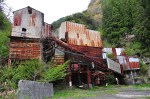
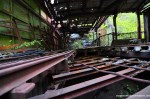
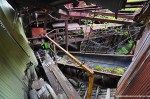
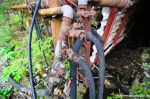
When we arrived at the second mine in Kasuga the sun was already pretty low and time was running out. The area was dominated by a huge complex made of steel and wood in rather questionable condition – this place was definitely abandoned. While I was cautiously taking photos Damon was fearlessly all over the place. At one point he was climbing through a collapsed building, not knowing if there was solid ground under the debris or not. He made it to the other side alive and found the entrance to a very old-style mine, so I was like “Screw it!” and followed him. Luckily I brought my flashlight, because it was dark in there – darker than a black steer’s tookus on a moonless prairie night. And luckily I was wearing hiking boots, because the water pipes in there were leaking. I know for sure, because I was able to take a photo of one of the leaks. Without a tripod. Modern digital cameras are wonderful!

What we found was indeed a very old style mine shaft. Surprisingly spacious as I was able to walk upright for most of the time, nevertheless claustrophobic, especially the parts where the wooden support logs were rotting away and already collapsed. If you liked the video I took at the *abandoned Japanese Sex Museum* you will love the one I took at the Kasuga Mine. It felt like straight out of a survival horror game. And since the mine could have collapsed at any time I guess it really was like straight out of a survival horror game – we actually saw dead ends where it already happened. The absolute highlight was… Well, if you really want to know then watch the video, I won’t spoil it for you here. But what I saw made the Kasuga Mine a very memorable exploration! (That’s the reason why the videos are first this time – the photos will spoil the third video…)

Nevertheless I was very happy to leave this abandoned mine shaft. It just didn’t feel right. Back at the main building we didn’t want to overuse our luck and it was almost dark already anyway. And this is how the exploration of three abandoned mines on a single day ended – on a high note!

Read Full Post »

I love abandoned mines. Love them. And I can’t even say why. Maybe it’s the combination of brittle wood and rusty iron. Maybe it’s because I first got really interested in urban exploration when I was a university student and participated in a seminar that took place every two weeks at the Zeche Zollverein (in English known as the Zollverein Coal Mine Industrial Complex), which became a UNESCO World Heritage Site in December 2001. It’s probably because most of them are in the middle of nowhere, so nobody cares about them anymore. Or maybe it’s because they put the exploration in urban exploration…

After *Damon*, Andrew and I explored the *Tsuchikura Mine* in spring last year we continued to drive on countryside roads to go to another mine way less known than the rather famous Tsuchikura Mine – the Kasuga Mine.

“Kasuga Mine” is actually a collective term for several mines in the immediate vicinity of the small town of Kasuga, a former village in Gifu hardly anybody has heard of. This cluster of small houses and huts was so countryside that most roads were wide enough for only one car and so remote that GoogleMaps was completely useless locating any of those mines – luckily I was able to locate two of them otherwise.

The first mine we went to, I call it “Kasuga Mine A” for the sake of distinguishing it from the other one, still seemed to be active in parts, although we didn’t know that when we started exploring it. We found a clearly abandoned loading terminal halfway up the mountain. A gigantic conveyor belt on a steep slope indicated that there was more further up the hill. We climbed the slope and found the belt being fed by a metal construction at a wall at least three or four meters high. Why I’m more the cautious type loaded with photography equipment Damon is a honey badger with a pocket camera. Before I was even able to suggest finding another way up that climbing the ladderless metal construction he had already climbed it, Andrew (quiet and without a camera) right behind him. Slightly frustrated being left behind I made my way down over the overgrown stone steps back to the terminal. From there I continued walking up the mountain and, after ignoring a warning sign about poisonous snakes, I found the upper part of the metal construction and the entrance to a dangerously decaying mine – my fellow explorers nowhere to be seen. While I was still taking photos of the area Damon and Andrew came back and told me that this entrance is connected to complex of tunnels most likely still in use. They heard noises and turned around to avoid being caught. Not eager to run into trouble myself we decided to return to the main street (“main street”… funny… more like “dangerously narrow road in decent condition”) and to follow it on foot for a while. After a couple of 100 meters the road split – to the right was a chained off tunnel clearly still in use, to the left the road continued after warning signs letting people know that only authorized personnel is permitted hereafter. And at that moment a mini truck passed by going up the mountain. So we called it a day at this location and decided to continue to the other one. The sun was going down already anyway and we were running out of time…

Read Full Post »

Quite a while ago I wrote about my experiences exploring the *lower terminus of the Yashima Cable Car* – and after I was done I took the bus up the mountain. Usually I would have taken the hiking trail up there (or would have walked along the abandoned track like I did several times at the *Mount Atago Cable Car*), but since I lost quite some time in the morning thanks to a Shinkansen standstill (thanks, JR – the extra fee for the bullet train was really worth the money… grumble…) I took the easy way up. It was also a good way to check out the cable car’s competition, which made me wonder if the bus was already running when the cable car was still operating. Sure, the trip took about 10 minutes instead of 5, but it ended right next to Yashima Shrine (not a kilometer away) and the price was ridiculously low in comparison: 100 Yen each way!
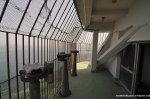
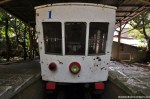
The upper terminus of the Yashima Cable Car (屋島山上駅, yashima sanjo eki, Yashima Mountaintop Station) was as locked up and untouched as the lower terminus – but the building itself was much more beautiful. Rather small, like most cable car stations, it totally reminded me of the *Maya Hotel* in Kobe. I think I’m a sucker for that art deco style of the 1920s and 30s. At the time of my visit the area was used by construction workers of the nearby Yashima Castle reconstruction site – there were parked cars everywhere and their container office almost blocked the access to the cable car track. Luckily none of the workers were in sight when I arrived, so I was able to sneak to the back and took some pictures: car #2 was already waiting for me as I expected, sadly slightly vandalized by some spray paint on the windows of the right side. Similar to the lower terminus the amount of decay was just perfect – the car, the handrails, the building itself. A perfect abandoned beauty, worthy the cover of a book or a magazine.

Read Full Post »

What do you do when you get thrown off your horse? You get right back on! And that’s what Sebastian and I did after we ran into some trouble at the *Cambrai-Fritsch-Kaserne*. Since Sebastian came up with the (almost) deserted US Army base it was my turn to select a place to explore – and I chose the Clubhotel Messel a.k.a. Clubhotel Sehr / Clubhotel Seher.

At the time of my visit the place was virtually unknown to the internet. It was obvious that plenty of vandals, arsonists and paintball players were there before me, but it was almost impossible to find any hard information about the place on the net – luckily that change earlier this year when the German urbex community, usually more interested in photos than the historical background of abandoned places, took care of that situation.

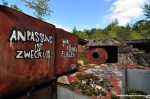
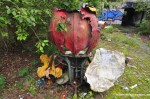
It seems like the Clubhotel Messel (named after the municipality of Messel near Darmstadt, usually known for the UNESCO World Heritage site Messel Pit where all kinds of fossils were found) was not only a single hotel, but a conglomerate of businesses, all part of the frivolous nightlife industry. The nightclub “Broadway-Bar” and the hotel “Je t’aime” were right next to the “Swimming Pool / Sauna Club d’Amour” and the “Nightclub d’Amour” – basically one big brothel complex, one of the biggest in the Rhine-Main area. Since all establishments were owned by a guy named Wolfgang Sehr the place was also called Clubhotel Sehr or, misspelled, Clubhotel Seher. The special attraction of the Clubhotel was a mini zoo including a pair of cheetahs – the cages are still in the forest! I’m not exactly sure when the place opened, but I guess it grew kind of organically and was in full bloom in the late 70s and throughout the 80s. In January of 1988 it was mentioned by leading news magazine Der Spiegel in an article about a scandal regarding nuclear waste. A company called Transnuklear Hanau (a subsidiary of Nukem – I’m not joking!) illegally imported 1942 barrels of nuclear waste from Belgium and of course there were bribery and other manipulations / irregularities involved – one of them was a bill to the amount of 14010 Mark (roughly 7000 Euros) after some managers of the nuclear industry had a fun night at the Clubhotel. (The article mentioned a nightclub called “Mon Bijou” and a fine dining restaurant named “La Chandelle“ – probably both part of the Clubhotel complex.

The Spiegel report was the beginning of the end of the Clubhotel, although the details are vague since everything happened before the age of the internet. It seems like the German State wasn’t very fond of the local sex businesses and started to shut them down one after another – either in the late 80s or early 90s. Some of the brothel owners went to jail for procurement and promotion of prostitution; and according to an article by the Frankfurter Allgemeine Zeitung (FAZ) in late 1994 Sehr was convicted of those crimes…

When the brothel complex was abandoned but still in good condition the Zeitung für Darmstadt (Newspaper for Darmstadt) reported in 1993 that the State of Hesse had plans to reconvert the place into a *deportation prison* for 250 illegal aliens. These considerations were terminated abruptly when parts of the club hotel complex burned down to the ground on January 25th of 1994 as the Zeitung für Darmstadt reported in early 1994. It seems like the then owner, most likely still Sehr, tried to commit insurance fraud to make up for the millions he lost when the place was shut down. (The guy definitely went to jail – I’m just not sure if it was for one or both of the alleged crimes.)

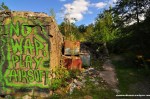
Later in the 90s the Clubhotel made the news when paintball players occupied the premises and actually started to do minor construction work. The rural district Darmstadt-Dieburg intervened and a court of law decided that the “Magic Boys Rhein Main” needed to find another location for their colorful war games… (The small building next to the big outdoor pool was their safe house and Gotcha related graffiti are still all over the place.)

For more than a decade all kinds of people came to the Clubhotel for all kinds of reasons. Some people played paintball, others airsoft. Some homeless people looked for shelter in one of the smaller buildings that weren’t affected by arson and of course photographers came to… well, do what photographers do. It seems like for a while artists lived on the premises and in summer of 2011 Sebastian and I had a quick look. Only to find a rather uninteresting burned out hotel and some vandalized smaller buildings. In the early 80s the Clubhotel must have been quite a sight – nowadays it’s just another unspectacular rotting place in the woods. Luckily it has a story worth telling. But maybe this patch of land in the middle of nowhere will find new beauty and glory soon. On March 26th of 2012 a public auction of the property by court order took place and on May 13th Echo-Online reported that the (new?) owner of the site is looking at plans to build a new hotel – probably for the whole family this time, not only for dads…

Read Full Post »

A couple of weeks before I went to Germany to visit family and friends last year I received an e-mail from Sebastian, a reader of this blog. He told me about exploring a rather recently closed US Army base in Darmstadt – half an hour away from where I was staying for my vacation. I really love abandoned military installations, so we continued talking via e-mail and agreed to meet up to have a look at the Cambrai-Fritsch-Kaserne (CFK) together.

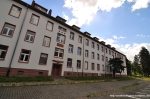
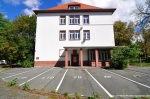
The Cambrai-Fritsch-Kaserne (Cambrai-Fritsch Barracks) in Bessungen, now part of Darmstadt-Eberstadt, was built from 1936 to 1938 as two barracks next to each other – the southern part was known as Cambrai-Kaserne (named after the French city of Cambrai where Paul von Hindenburg had his headquarters during World War I and where the first tank battle in history took place in 1917), the northern part was called Freiherr-von-Fritsch-Kaserne (named after Generaloberst Werner von Fritsch, Nazi Germany’s Commander of the Army at the time). Most of the buildings on the premises were named after locations where famous WWI battles took place, like Verdun or Flandern.
The Fritsch-Kaserne opened on October 12th of 1938 and was home to the 1st Battalion of the 33rd Artillery Regiment, part of the 33rd Infantry Division. Later that month the 3rd Battalion moved into the Cambrai-Kaserne.
During the final days of World War II the US Army took over the Cambrai-Fritsch-Kaserne in March of 1945, making it the home of the 22nd Signal Brigade, the 233rd Base Support Battalion and the 440th Signal Battalion. Lots of service and recreational institutions were located at the CFK in the decades to come – AAFES Food Court, American Red Cross, Andrews Federal Credit Union, Darmstädter Catering Center, PX (post exchange), SATO Travel, Shopette, U.S. Post office, USO and standard facilities like a motor pool, a gym, a movie theater, a sports field and a bowling center.

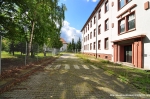
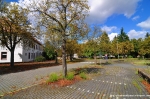
When I met Sebastian on a warm, sunny summer day he told me right away that the CFK was closed, but not really abandoned. The high barbed wire fences were in exceptionally good condition 3 years after the Cambrai-Fritsch-Kaserne was shut down in 2008 – and Sebastian also mentioned that security guards were still patrolling the outskirts of the premises a couple of evenings per week. Well, we met in the morning, so what could happen, right? Let’s get this infiltration started! Like the *Federal Armed Forces Depot Pfeddersheim* the CFK is now the responsibility of the Institute for Federal Real Estate (Bundesanstalt für Immobilienaufgaben / BIMA) – they have to decide what to do with the 25 hectare (250.000 square meters or 2,7 million square feet) big area. Most likely it will be reconverted into housing for 2500 people, but German bureaucracy is slow and of course nothing has been decided yet. Not in summer of 2011 and AFAIK not in late spring of 2012. But while the BIMA obviously doesn’t care anymore about the depot in Pfeddersheim they seem to smell money when it comes to the CFK – housing for 2500 people, that’s serious real estate! And that’s why the keep the area in good shape by hiring gardeners and plumbers to take care of the premises. All the buildings we tried to enter were locked, hardly any of them were damaged by vandalism or graffiti.
It’s an absolutely mind-blowing experience to explore closed US army barracks, especially with a rather tight security system like this one. The weather was amazing that day and the video material I shot turned out to be nice, too. It was a perfect exploration until… well, we were less than 30 meters away from our top secret entrance / exit when it became clear that infiltration is for pros and neither of us was Solid Snake. I will spare you the details, but like running into security at *Nara Dreamland* this wasn’t exactly a fun experience. No legal consequences since we could convince the people involved that we were just harmless photographers, but this was pretty much the day I realized that urban exploration and urban infiltration are two different things – and I decided that I will limit myself to UE and abandon UI.
Sebastian and I were lucky that day, but entering the Cambrai-Fritsch-Kaserne without permission can have serious, serious consequences, so I highly recommend to stay away or to take photos through the fence.

To all the American (ex-)soldiers reading this article, most of them probably stationed at the Cambrai-Fritsch-Kaserne: When I was a pupil in the 80s my elementary school was way ahead of its time and had a friendship program with the Benjamin Franklin Village in Mannheim. I have nothing but pleasant associations with that exchange program and I consider this exploration a “Thank you!” for the kindness I experienced during that time (I think we went bowling as a big group and then had lunch at our exchange partner’s home, which is a pretty big thing when you are 8 or 9 years old and barely understand each other’s languages!) – I hope I was able to bring back some fond memories of your time in Germany!

(If you don’t want to miss the latest article you can *follow Abandoned Kansai on Twitter* and *like this blog on Facebook* – and of course there is the *video channel on Youtube*…)

Read Full Post »

Being a mountainous country Japan has lots of cable cars and ropeways. And it seems like every single one of them was built in the late 1920s / early 1930s. A lot of them were demolished after just a couple of years in the 1940s to support the war efforts of Imperial Japan (every piece of metal counted…) – amongst others the *Mount Atago Cable Car* and the *Rokko Ropeway*. The Yashima Cable Car (YCC) had a bit more luck. Opened on April 21st 1929 it too was suspended as a nonessential line on February 11th 1944. But although some material was taken away (I’m not sure what exactly though…) it didn’t mean the end of the YCC: On April 16th 1950 the Yashima Cable Car opened again for business. And business was good thanks to the famous Yashima Shrine on top of Mount Yashima, about a kilometer away from the YCC terminal. I guess it got even better when some businessmen decided to make Mount Yashima a full-blown tourist attraction (*you can read all about it here*), but when the plan fell through the Yashima Cable Car was in trouble, too. On October 16th 2004 operations were suspended again, but it took almost a year (August 31st 2005) until the line was officially closed and abandoned.
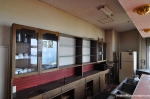
According to a tourist guide book first published in the 1980s the cable car ran from 7 a.m. to 7 p.m., charging 1160 Yen for the roundtrip. It seems like prices went up and service hours were cut down, so in 1999 the cable car ran every 20 minutes from 8 a.m. to 5.40 p.m., charging 700 Yen one way and 1300 Yen for a roundtrip.
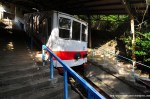
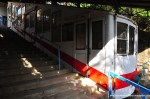
At the time of my visit the lower terminus of the Yashima Cable Car (屋島登山口駅, yashima tozanguchi eki – Yashima Trailhead Station) stood locked-up and abandoned on the foot of Mount Yashima near the trailhead up the mountain. The road leading there was almost as abandoned – I could vividly imagine how good business must have been 20, 30 years ago for the now closed restaurants and souvenir shops. Right next to the station were a taxi stand and a metalworking company, making some noise and keeping an eye on the inaccessible station building. The 858 meter long cable car track was accessible though, with car #1 parked right at the platform. And it was beautiful! On the one hand it was hard to believe that the place had been abandoned just six years ago, on the other hand there were no signs of vandalism and everything had just the right amount of decay – and the beautiful weather on the day of my visit didn’t hurt the atmosphere either…

Read Full Post »

« Newer Posts - Older Posts »