Feeds:
Posts
Comments

Archive for the ‘House’ Category

Urban exploration in Okinawa? Not exactly my first association when I think of the former kingdom of Ryukyu. For me it would be more like sun, beaches and… Karate Kid 2 – a movie I’ve never seen, or at least I can’t remember seeing it, but in Germany it had the tagline “Entscheidung in Okinawa” (something like “Decision in Okinawa”) and I guess that stuck with me ever since. Okinawa = Karate Kid – but I always thought it was the third one, not the second one…

When my haikyo buddy *Michael Gakuranman* and I went on a *road trip to southern Honshu* earlier this year we were talking about future expeditions. Michael mentioned that he went to Okinawa just a couple of months prior and that he explored a huge hotel he really wanted to re-visit. So he suggested a haikyo trip to Okinawa. And I was skeptical. Going to Okinawa to revisit a hotel? I knew right away which hotel Michael was talking about since it is one of the few famous abandoned places in Okinawa (Okinawa really isn’t famous for urban decay, not even amongst urban explorers), but him saying that he wants to stay a whole day there didn’t exactly seal the deal. But I am currently re-discovering Japan as a tourist (I travelled a lot in spring!) and the chances to go to Okinawa are limited, so what the heck. Let’s go to Okinawa and do some urbex! It would surely beat the beaten tracks of urbex in Kanto!

A couple of years ago the concept of budget airlines finally reached Japan and if you book early you can get really good deals. To make sure that we both arrive and departure at around the same time and we both would get reasonable rates Michael was kind enough to take care of the booking – 10.800 Yen for the roundtrip Osaka-Naha-Osaka; booyah! A Shinkansen train ticket Osaka to Hiroshima costs about the same – one way…

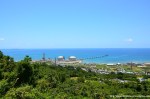
Late May isn’t exactly the best time to go to Okinawa since May and June are two out of three most rainy months down there, but again… why not? It’s Okinawa and I’ve never been there. The places we planned to explore sounded kind of okayish on paper, but I was more interested in Okinawa itself. The local atmosphere, the local architecture, the local food. Biggest surprise: shikuwasa (pronounced something like sheek-wasa), a Okinawan citrus fruit and the basis for all kinds of food and drinks – juice, cake, wine, mochi, sodas, chiffon cake, syrup (for kakigori), fruits chews, … In the humid pre-summer heat the most refreshing taste I ever had the pleasure to enjoy. Another popular local fruit is the pineapple. Close to the city of Nago are actually two pineapple theme parks close to each other – separated by the Okinawa Fruits Land. Michael and I visited the Nago Pineapple Park on one of the three days we spent in Okinawa. Not much of a park it features one of the tackiest rides possible – automatically driven carts through a pineapple field, telling you everything you (never) wanted to know about pineapples in horrendously pronounced English. And that was it for the park part – we basically paid 600 Yen to enter a gift shop. One of the most awesome gift shops ever though. Here you could buy (and sample!) all kinds of pineapple and (some) shikuwasa related products. Wine, cookies, chocolates, prize-winning cakes, dried fruits, different kinds of fresh pineapples, pineapple charcoal soap (!) and of course the usual gift shop stuff like plush dolls, key chains and whatnot. Awesome place, expensive though – I nevertheless loved it.

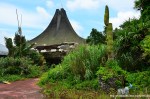
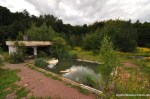
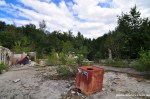
Over the course of our visit Michael and I managed to enjoy a good mix of urban exploration and tourist stuff, although Okinawa isn’t exactly famous for urban exploration. Luckily the urbex locations turned out to be way more interesting than they looked on paper, including an original find – one location freaked me out so much that I got fed up and left, one of the worst urbex experiences I ever had. So in the end we saw three abandoned hotels, two abandoned cactus parks and one abandoned restaurant island on the course of three days. As for touristy locations we visited the already mentioned Nago Pineapple Park, Shuri Castle (awesome!), Nakagusku Castle, the Underground Naval Headquarters of WW2 (overrated – it almost always makes me cringe a little seeing Japan presenting WW2…) and of course Kokusai Dori, the main tourist / night life street in Naha, Okinawa’s capital.

I didn’t plan to write about this trip so quickly, but last weekend opened up out of nothing and the East Asian rainy season (tsuyu) hitting Japan basically rendered it useless for outdoor activities – and overall I loved the trip, so it was the next best thing to get this series of articles started. The weather was constantly changing, but sunny most of the time. The food was awesome (I’m still not a fan of goya though…) and the places we visited were interesting. Life in Okinawa seems to be much more relaxed that in mainland Japan. For example: Taxi drivers in Osaka wear suits and white gloves, taxi drivers in Okinawa wear kariyushi – basically the Okinawan version of the Hawaiian shirt. And what’s not to love about an island that has strong reservations about Americans and Japanese alike? 😉

And finally here’s an alphabetical list of the upcoming articles about this haikyo trip to Okinawa:
Dolphin Restaurant Island
Himeyuri Park
Lequio Resort Hotel
Nakagusku Hotel Ruin – The Background Story
Nakagusku Hotel Ruin – The Exploration
Okinawa Cactus Park / Okinawa Seimeinooka Park
Sunset View Inn Shah Bay

(If you don’t want to miss the latest article you can *follow Abandoned Kansai on Twitter* and *like this blog on Facebook* – and of course there is the *video channel on Youtube*…)

Read Full Post »

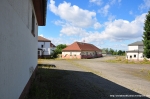
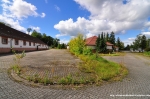
What do you do when you get thrown off your horse? You get right back on! And that’s what Sebastian and I did after we ran into some trouble at the *Cambrai-Fritsch-Kaserne*. Since Sebastian came up with the (almost) deserted US Army base it was my turn to select a place to explore – and I chose the Clubhotel Messel a.k.a. Clubhotel Sehr / Clubhotel Seher.

At the time of my visit the place was virtually unknown to the internet. It was obvious that plenty of vandals, arsonists and paintball players were there before me, but it was almost impossible to find any hard information about the place on the net – luckily that change earlier this year when the German urbex community, usually more interested in photos than the historical background of abandoned places, took care of that situation.

It seems like the Clubhotel Messel (named after the municipality of Messel near Darmstadt, usually known for the UNESCO World Heritage site Messel Pit where all kinds of fossils were found) was not only a single hotel, but a conglomerate of businesses, all part of the frivolous nightlife industry. The nightclub “Broadway-Bar” and the hotel “Je t’aime” were right next to the “Swimming Pool / Sauna Club d’Amour” and the “Nightclub d’Amour” – basically one big brothel complex, one of the biggest in the Rhine-Main area. Since all establishments were owned by a guy named Wolfgang Sehr the place was also called Clubhotel Sehr or, misspelled, Clubhotel Seher. The special attraction of the Clubhotel was a mini zoo including a pair of cheetahs – the cages are still in the forest! I’m not exactly sure when the place opened, but I guess it grew kind of organically and was in full bloom in the late 70s and throughout the 80s. In January of 1988 it was mentioned by leading news magazine Der Spiegel in an article about a scandal regarding nuclear waste. A company called Transnuklear Hanau (a subsidiary of Nukem – I’m not joking!) illegally imported 1942 barrels of nuclear waste from Belgium and of course there were bribery and other manipulations / irregularities involved – one of them was a bill to the amount of 14010 Mark (roughly 7000 Euros) after some managers of the nuclear industry had a fun night at the Clubhotel. (The article mentioned a nightclub called “Mon Bijou” and a fine dining restaurant named “La Chandelle“ – probably both part of the Clubhotel complex.

The Spiegel report was the beginning of the end of the Clubhotel, although the details are vague since everything happened before the age of the internet. It seems like the German State wasn’t very fond of the local sex businesses and started to shut them down one after another – either in the late 80s or early 90s. Some of the brothel owners went to jail for procurement and promotion of prostitution; and according to an article by the Frankfurter Allgemeine Zeitung (FAZ) in late 1994 Sehr was convicted of those crimes…

When the brothel complex was abandoned but still in good condition the Zeitung für Darmstadt (Newspaper for Darmstadt) reported in 1993 that the State of Hesse had plans to reconvert the place into a *deportation prison* for 250 illegal aliens. These considerations were terminated abruptly when parts of the club hotel complex burned down to the ground on January 25th of 1994 as the Zeitung für Darmstadt reported in early 1994. It seems like the then owner, most likely still Sehr, tried to commit insurance fraud to make up for the millions he lost when the place was shut down. (The guy definitely went to jail – I’m just not sure if it was for one or both of the alleged crimes.)

Later in the 90s the Clubhotel made the news when paintball players occupied the premises and actually started to do minor construction work. The rural district Darmstadt-Dieburg intervened and a court of law decided that the “Magic Boys Rhein Main” needed to find another location for their colorful war games… (The small building next to the big outdoor pool was their safe house and Gotcha related graffiti are still all over the place.)

For more than a decade all kinds of people came to the Clubhotel for all kinds of reasons. Some people played paintball, others airsoft. Some homeless people looked for shelter in one of the smaller buildings that weren’t affected by arson and of course photographers came to… well, do what photographers do. It seems like for a while artists lived on the premises and in summer of 2011 Sebastian and I had a quick look. Only to find a rather uninteresting burned out hotel and some vandalized smaller buildings. In the early 80s the Clubhotel must have been quite a sight – nowadays it’s just another unspectacular rotting place in the woods. Luckily it has a story worth telling. But maybe this patch of land in the middle of nowhere will find new beauty and glory soon. On March 26th of 2012 a public auction of the property by court order took place and on May 13th Echo-Online reported that the (new?) owner of the site is looking at plans to build a new hotel – probably for the whole family this time, not only for dads…

Read Full Post »

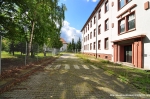
A couple of weeks before I went to Germany to visit family and friends last year I received an e-mail from Sebastian, a reader of this blog. He told me about exploring a rather recently closed US Army base in Darmstadt – half an hour away from where I was staying for my vacation. I really love abandoned military installations, so we continued talking via e-mail and agreed to meet up to have a look at the Cambrai-Fritsch-Kaserne (CFK) together.

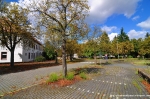
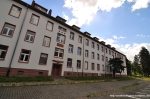
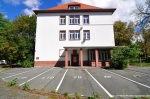
The Cambrai-Fritsch-Kaserne (Cambrai-Fritsch Barracks) in Bessungen, now part of Darmstadt-Eberstadt, was built from 1936 to 1938 as two barracks next to each other – the southern part was known as Cambrai-Kaserne (named after the French city of Cambrai where Paul von Hindenburg had his headquarters during World War I and where the first tank battle in history took place in 1917), the northern part was called Freiherr-von-Fritsch-Kaserne (named after Generaloberst Werner von Fritsch, Nazi Germany’s Commander of the Army at the time). Most of the buildings on the premises were named after locations where famous WWI battles took place, like Verdun or Flandern.
The Fritsch-Kaserne opened on October 12th of 1938 and was home to the 1st Battalion of the 33rd Artillery Regiment, part of the 33rd Infantry Division. Later that month the 3rd Battalion moved into the Cambrai-Kaserne.
During the final days of World War II the US Army took over the Cambrai-Fritsch-Kaserne in March of 1945, making it the home of the 22nd Signal Brigade, the 233rd Base Support Battalion and the 440th Signal Battalion. Lots of service and recreational institutions were located at the CFK in the decades to come – AAFES Food Court, American Red Cross, Andrews Federal Credit Union, Darmstädter Catering Center, PX (post exchange), SATO Travel, Shopette, U.S. Post office, USO and standard facilities like a motor pool, a gym, a movie theater, a sports field and a bowling center.

When I met Sebastian on a warm, sunny summer day he told me right away that the CFK was closed, but not really abandoned. The high barbed wire fences were in exceptionally good condition 3 years after the Cambrai-Fritsch-Kaserne was shut down in 2008 – and Sebastian also mentioned that security guards were still patrolling the outskirts of the premises a couple of evenings per week. Well, we met in the morning, so what could happen, right? Let’s get this infiltration started! Like the *Federal Armed Forces Depot Pfeddersheim* the CFK is now the responsibility of the Institute for Federal Real Estate (Bundesanstalt für Immobilienaufgaben / BIMA) – they have to decide what to do with the 25 hectare (250.000 square meters or 2,7 million square feet) big area. Most likely it will be reconverted into housing for 2500 people, but German bureaucracy is slow and of course nothing has been decided yet. Not in summer of 2011 and AFAIK not in late spring of 2012. But while the BIMA obviously doesn’t care anymore about the depot in Pfeddersheim they seem to smell money when it comes to the CFK – housing for 2500 people, that’s serious real estate! And that’s why the keep the area in good shape by hiring gardeners and plumbers to take care of the premises. All the buildings we tried to enter were locked, hardly any of them were damaged by vandalism or graffiti.
It’s an absolutely mind-blowing experience to explore closed US army barracks, especially with a rather tight security system like this one. The weather was amazing that day and the video material I shot turned out to be nice, too. It was a perfect exploration until… well, we were less than 30 meters away from our top secret entrance / exit when it became clear that infiltration is for pros and neither of us was Solid Snake. I will spare you the details, but like running into security at *Nara Dreamland* this wasn’t exactly a fun experience. No legal consequences since we could convince the people involved that we were just harmless photographers, but this was pretty much the day I realized that urban exploration and urban infiltration are two different things – and I decided that I will limit myself to UE and abandon UI.
Sebastian and I were lucky that day, but entering the Cambrai-Fritsch-Kaserne without permission can have serious, serious consequences, so I highly recommend to stay away or to take photos through the fence.

To all the American (ex-)soldiers reading this article, most of them probably stationed at the Cambrai-Fritsch-Kaserne: When I was a pupil in the 80s my elementary school was way ahead of its time and had a friendship program with the Benjamin Franklin Village in Mannheim. I have nothing but pleasant associations with that exchange program and I consider this exploration a “Thank you!” for the kindness I experienced during that time (I think we went bowling as a big group and then had lunch at our exchange partner’s home, which is a pretty big thing when you are 8 or 9 years old and barely understand each other’s languages!) – I hope I was able to bring back some fond memories of your time in Germany!

(If you don’t want to miss the latest article you can *follow Abandoned Kansai on Twitter* and *like this blog on Facebook* – and of course there is the *video channel on Youtube*…)

Read Full Post »

Onsen Town Theater

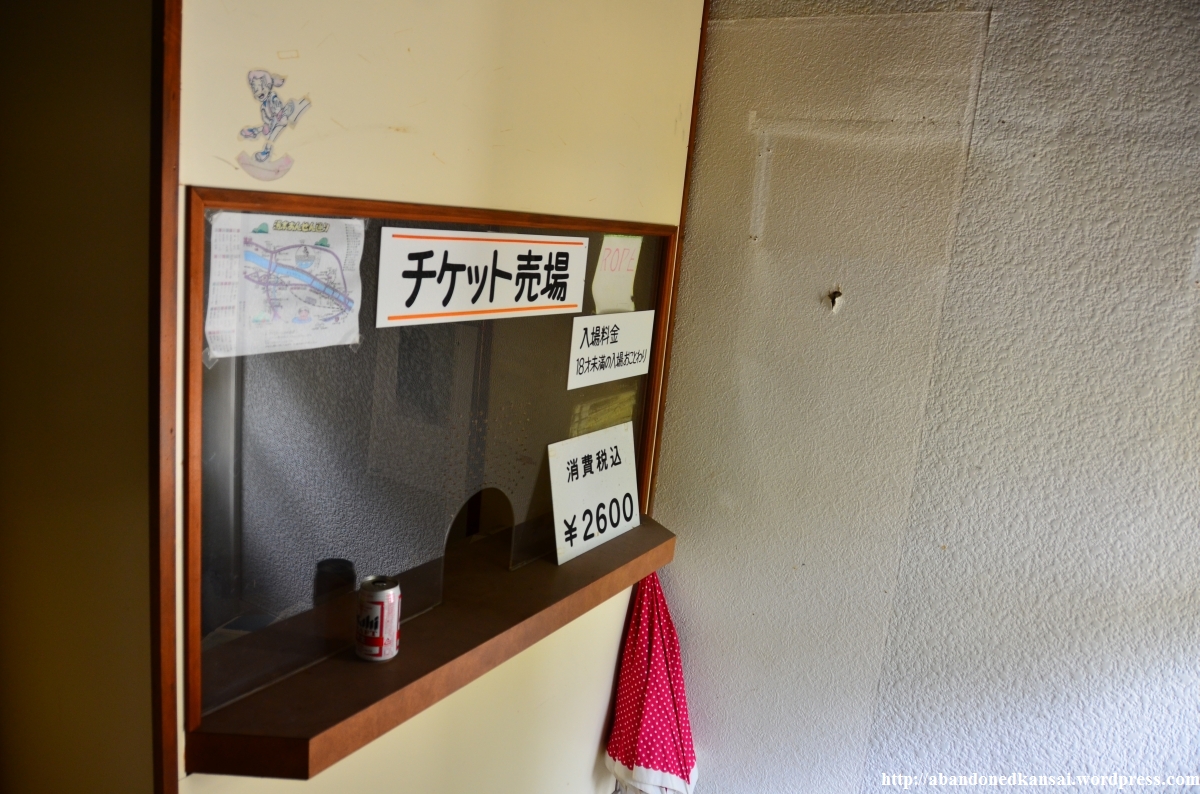
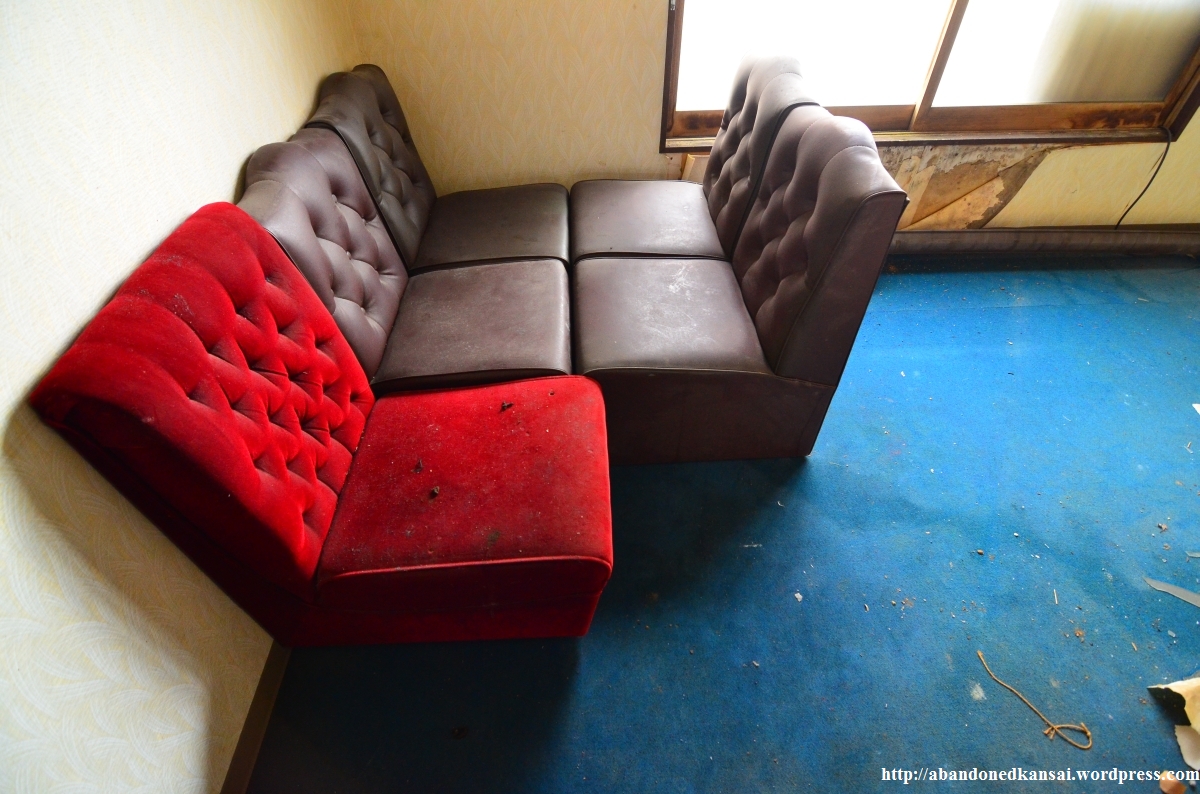
Hot Spring Theater – that’s what was written in four kanji (温泉劇場, onsen gekijo) at the front of the building. And this was clearly a euphemism in many ways. First of all: The small building didn’t look like a theater at all. Which isn’t a surprise, because “hot spring theater” is common code for a Japanese strip club in an onsen town. So the only play on the stage of this theater was happening between the hand of “actress” and the rest of her body… I guess what set the Onsen Town Theater apart from a classic strip club was the fact that the stage looked like a theater stage and didn’t extend into the audience. Full frontal! The seats by the way were gone, so basically all we had was a dark empty room and a dull stage in a rather inconspicuous building. If it wouldn’t have been for some signs stored in a room next to the entrance *Michael* and I might have missed the stage and therefore the purpose of the building. Smaller signs at the counter of the main entrance announced the rather steep admission charge of 2.600 Yen and the fact that you had to be 18 years old to enter. I’m still not sure though if the Onsen Town Theater really was a strip club or maybe rather a brothel – or both. The building had a second floor and up there were not only a couple of small rooms and a seedy looking waiting area. Right at the top of the stairs was another counter with a surprisingly low and small opening with curtains – and behind the counter I saw quite a few paper slips looking like receipts. Did the performing ladies live up here? Or did they offer extra services? I guess we’ll never know…

And with this little mystery my report about the *road trip to southern Kyushu* ends. Right on time, because tomorrow the Gakuranman and I will leave for another road trip. Urbex in Okinawa – here we come!

(If you don’t want to miss the latest article you can *follow Abandoned Kansai on Twitter* and *like this blog on Facebook* – and of course there is the *video channel on Youtube*…)

Read Full Post »

When you think of Japan which other country comes to mind?
Probably Korea since it’s a neighboring country and both countries share an inglorious common history. China, of course, a major influence for centuries – from city planning to food. Most likely the United States as no other country had more impact on Japan in the past 70 years. Maybe Germany due to 150 years of more or less intense friendship and a similar post-war history.
Japan and New Zealand? A rather odd combination. Surprisingly *Michael* and I visited not only one, but two New Zealand themed amusement parks while on a *road trip in southern Honshu*. A couple of weeks ago I wrote about the *Hiroshima New Zealand Farm*, a closed but not abandoned theme park in Hiroshima prefecture. This time I’ll present you the clearly abandoned Yamaguchi New Zealand Village – same concept, same company, but without the shadow of a doubt a “lost place”; BTW: I really dislike the term Lost Place, which is used for urban exploration locations in Germany – not as bad “Handy”, which is used for mobile phones (!), but nevertheless a term that makes me cringe.

Arriving at the huge deserted parking lot of the New Zealand Village, it was pretty clear that we wouldn’t run into gardeners or other caretakers. The wooden handrail leading up to the entrance area was getting brittle and all kinds of plants grew without any attempt to tame them. Opened in July of 1990 after spending 1.8 billion Yen (currently about 16.5 million Euros or 21.7 million Dollars) the park’s attendance figures peaked in 1991 at 428.000 – in the following years the numbers dropped to about one third of that per annum before Farm Co. Ltd. put an end to it in 2005 by closing the park. Initially the 30 ha (300,000 m2) large New Zealand Village was put on hiatus for up to three years with the intent of re-opening it again one day, but that never happened. I don’t know if somebody took care of it for a while like they do at the New Zealand Farm (which is in its fourth year of closing), but nowadays the New Zealand Village is clearly abandoned…
(Just for comparison: *Nara Dreamland* peaked at 1.6 million visitors a year and closed when the number was as low as 400.000 – Universal Studios Japan in Osaka welcomes about 8 million guests a year.)

Exploring the New Zealand Village couldn’t have been more relaxed. Located in the middle of nowhere Michael and I enjoyed a wonderful sunny day on the copious premises.
The entrance area was dominated by a gift shop called カンタベリー (Canterbury), vandalized, but still stocked with quite a few examples of fake food Japan is so famous for – in this case all kinds of sweets. We found replicas of mini cakes, both Western and Japanese (mochi), all made of plastic and therefore still nice to look at.
In close proximity was the Jersey Factory that produced and sold homemade bronzer… sorry… handmade butter! And pretty much next to this place with a name that has no connection to New Zealand was a huge building that had New Zealand all over the place: Restaurant Rotorua, Newzealand Farm, Kiwi Country. Why give it one name when you can give it three? Or four, since all to the left it said “Main Bazaar”.

This food dominated commercial zone of the New Zealand Village, which overall had way less of a village feeling than the New Zealand Farm, was followed by the wide, open landscape I knew from other versions of the nature themed parks. And I loved it! I usually don’t feel very comfortable in abandoned buildings, but open areas like mining towns and amusement parks I really enjoy (if they are really abandoned), especially on sunny spring days!

What made the New Zealand Village in Yamaguchi different from those in Hiroshima and Shikoku was the variety of strange pedal-powered vehicles. Cars, bikes and really unique constructions – they were scattered all over the park, a plethora of rental… thingies. I took photos of many of them and maybe one day in the future I will publish a special picture set about them.
Another thing that made this installment of the New Zealand parks special (but not in a good way!) was the already mentioned presence of vandalism. It wasn’t “ZOMGWTFBBQ!?” bad, but since vandalism is always uncalled for it was nevertheless sad to see. Call me old-fashioned and naïve, but I like my abandoned places easy to access and naturally decayed. Luckily the amount of vandalism decreased the further we got away from the entrance, so by the time we reached the stables and Sheep House with its museum of 19th century farm equipment and a couple of taxidermy items in the making, vandalism was nothing but a bad memory.

What really bugged me about exploring the Yamaguchi New Zealand Village was the time pressure. Like I already mentioned, this was part of a road trip to the south of Honshu and the schedule was kind of tight. A place like this deserves a whole day of exploring and taking pictures, probably with some hours after sunset for some special photos – a luxury not available to us. So when Michael and I left after 3 hours (which is generous for most places – *Sekigahara Menard Land* I left after about 20 minutes…) it was with a bittersweet aftertaste, amplified by a bunch of beatniks who entered the parking lots just before we left. Us driving away was accompanied by the sound of burnouts in the distance…

(If you don’t want to miss the latest article you can *like Abandoned Kansai on Facebook* – and of course there is the *video channel on Youtube*…)

Addendum 2014-07-11: According to a friend of mine all the buildings have been demolished – R.I.P.!

Read Full Post »

Expectations are one of the worst things in life. Especially when they are as high as mine were driving up to the top of Mount Noro in Hiroshima prefecture. What did I expect? A speedway abandoned in 1974 and a shuttered amusement park, also left behind in 1974. I didn’t see any photos in advance, but I read a slightly cryptical Japanese description and the satellite view on GoogleMaps was very promising. Sadly the location didn’t live up to the expectations, so *Michael* and I were about to face the first disappointment of our *road trip to southern Honshu*… which wasn’t as bad in retrospect.

Mount Noro (insert stupid joke about the Noro virus in Japan here) near Hiroshima is one of the city’s most popular recreational areas for hikers, mountain climbers, campers and flower lovers. It’s said that it offers a stunning view at both sunrise and sunset. Aside from the fact that Michael and I were way to too late for the first and way too early for the second we wouldn’t have been able to see either anyways – the 839 meters high mountain was covered by low hanging clouds from about its second half. Occasionally the visibility was only a couple of meters and it looked more like rain than clearing up. When we reached the entrance of what I hoped would be the abandoned Mount Noro Speed Park (a.k.a. Mount Noro Circuit) at an elevation of 830 meters (Japanese people like their race tracks high above sea level as we know from the *Hiroshima Kart Pista*) we realized that the place was reused at least once since we were welcomed by signs telling us that we found the Moriyama Auto Camp. Close, but no cigar…

It turned out that this location has quite a history. A history I only found out about after we visited the place – like I mentioned earlier: Before our visit I had only vague information about a racetrack and an amusement park. The Mount Noro Amusement Park was a typical mid-size theme park of the 60s with a couple of merry-go-rounds and a rollercoaster, and it opened in April of 1968. In close proximity the Mount Noro Speed Park followed with an opening ceremony in October 1969. The intent was to make Mount Noro more attractive for tourists. As we all know: Those hiking eco freaks that headed for the mountain until then weren’t spending much money while amusement parks were THE cash cows of 1960s Japan, where the tired workers of the East Asian Wirtschaftswunder (economic miracle) were looking to spend their hard earned bucks. Sadly the business people behind the big tourist plans didn’t expect two things to happen: The traditional nature lovers complained about the dramatically increased noise level on Mount Noro – and in 1973 / 1974 an oil crisis hit the world. The combination of those events forced both the amusement park as well as the speedway to close their doors for good in 1974. Which was incredibly sad in the case of the 932 meters long and technically quite demanding Mount Noro Speed Park as it was quickly used for races of national fame, including the “All Japan 200km Stock Car Race” which was held annually from May 1970 on.

Sad for Michael and I was the fact that the weather was bad and that the race track was in such horrible state we weren’t even sure we found the right place – especially with those Moriyama Auto Camp signs at the entrance. We entered the place (adults 500 Yen, children 200 Yen, cars 3500 Yen…) and were quite a bit confused about the routing along the slope, which seemed rather unusual for a speedway. And the empty pond with the garbage cans also didn’t really fit in. Down the road we reached a bifurcation – left: Moriyama Auto Camp; right: Moriyama Auto Camp. Well, that didn’t help much…

We continued to the left only to find a huge abandoned trailer advertising Fukutome Ham, the inside filled with some seats (no meats…), garbage and a seriously damaged suzumebachi nest. For those not aware of this danger for all urban explorers and hikers: suzumebachi are also know as Asian Giant Hornets (Vespa mandarinia), aggressive nasty beasts with a body length of 5 cm and a sting that injects large amounts of potent poison, potentially deadly for both other animals and humans.

We continued up the mountain along the seriously damaged asphalt road only to find half demolished bath rooms at what once was the pit lane of the speedway. The surrounding building was gone, making all the faucets, toilets and showers open air installations. 300 Yen for 5 minutes was written on the shower doors, the curtains behind moldy and nasty.

Further down the pit lane, a bit above the race track, we found a two-storey building. The lower floor once housed a restaurant and I guess it dated back to the speedway days. The upper floor once was the home of somebody. Quite an unspectacular house with the usual remains of an abandoned building.

On the way back to our car we saw a camping trailer next to the former race track. It looked way more modern than anything else on the premises, so I kept a safe distance while Michael had a closer look. Through the window he saw a calendar from 2012 and a working clock, so we wondered why somebody would rather live in a trailer than in the furnished room in the building three minutes away – and decided to leave as none of us were eager to ask the person who made this choice.

Right at the entrance we had a closer look at the attendant’s hut with the charming painting. I guess the previously mentioned empty pond once was an attraction of the Moriyama Auto Camp – rainbow trout fishing. The hut also revealed that the now abandoned area had a size of 71000 m2 and once offered 40 campfire places – just not right before it closed as this information was blacked out on the flyer. Reason for the leaflet was the opening of the place on July 1st of an undisclosed year. Leaving the hut my eyes caught one final item, the flyer of a Bihoku Auto Village, announcing its grand opening on June 26th 1999. I was confused. Same place, again a different name? Luckily not as it turned out later – just the flyer of a similar place elsewhere in Hiroshima prefecture… (And still in business!)

I never went camping in Japan and obviously I was disappointed that the expected abandoned race track turned out to be a converted one, but the rainy / foggy weather was a blessing in disguise. Walking along the seriously damaged speedway with that kind of weather created quite an eerie atmosphere I actually enjoyed more in retrospect than I was aware of at the time. But it took quite some effort to find out about and get to the Mount Noro Speed Park / Moriyama Auto Camp as to my knowledge it hasn’t appeared on any other urbex / haikyo blog yet… Would I spend that much time on it again? Probably not. Do I regret having it done? Definitely not! I especially enjoy exploring new kinds of abandoned locations, especially if they are in the middle of nowhere. And in that regard this haikyo was a great success – I’d always prefer my first abandoned auto camp over the 20th abandoned hotel!

(If you don’t want to miss the latest article you can *follow Abandoned Kansai on Twitter* and *like this blog on Facebook* – and of course there is the *video channel on Youtube*…)

Read Full Post »

Spring time is long weekend trip time! While Kansai doesn’t have much of a winter it nevertheless can be quite cold, especially when having a hobby involving taking pictures in abandoned places, other places of Japan can be snowed in for months with meters of snow… So when the sun finally warms the hearts of Japan and causes the first sunburn of the young year it’s time to explore places beyond my beloved Kansai – whether it be *Kyushu with Enric* two years ago or Shikoku with Gianluigi last year (a series of articles yet to come…), it became kind of a tradition for me to go on an urbex spring trip with a friend of mine. This time *Michael Gakuran* and I teamed up for a road trip to the southern end of Honshu, Japan’s main island – Chugoku, to be exact, the area west of Kansai. A trip with such exciting places that I decided to start writing about it right away – the last pictures are barely 50 hours old…

At this point I don’t want to give away too much about the locations we visited or which order we visited them in. But there were 8 of them in 3 days. 3 long days I might add, with me getting up at 6.30 a.m. on a Sunday, at 6 a.m. on a vacation day and at 5 a.m. on a national holiday. As I mentioned before: I’m a morning grouch; and by “morning” I mean any point in time which is followed by “a.m.”…

But the trip wasn’t just exhausting, it was also exiting, fun, frustrating, satisfying, rich in variety, surprising, delicious (I finally ate Hiroshima Okonomiyaki in Hiroshima prefecture and bought the best local sweets outside of Kyoto – mikan dango) and insanely expensive.

Why insanely expensive? It’s because at the end of the first day a serious mishap happened to me. We were on our way to a hotel to stay for a night when we saw this huge, blue and white flame at a gigantic industrial plant – probably coke oven gas burning at a cokery. (Addendum 2012-06-11: I guess I was wrong about the gas – Gert from South Africa wrote me: “This couldn’t be coke oven gas burning, because coke gas got a very very hot orange (impurities) or yellow (cleaner) flame. But the flame in the video is actually blast-furnace or corex, midrex, finex gas flame (more methane content in gas).” Thanks a lot for pointing that out! I really appreciate it and changed the title of the video below, too.)
We decided to make a stop to take picture or two and when I got out of the car to marshal Michael I grabbed my bag and I don’t know how or why, but my beloved D90 camera flew through the air and crashed hard to the concrete ground. The body cracked open a couple of millimetres so I could see the insides. Parts of the electronics were still working (e.g. I could use the screen to look at the photos on the memory card), but since the lens mount was part of what cracked it was impossible to take pictures anymore. Mad props to Tokina BTW! The mounted 11-16mm lens survived without a scratch or any other damages as I found out with relief the next day.
Sunday evening past 7 p.m. – of course I was in shock at first, because going on a photo trip without a camera is pretty pointless. So we headed towards the flame to take some picture which I couldn’t do since my photo camera broke and Mike couldn’t do because of the lighting, lenses and passing traffic. So I took the video you can find below the article – it doesn’t fully capture the beauty of the flame, but it will always remind me of the death of my favourite camera so far (I also included the last JPG I ever took with it, even though it wasn’t related to urbex). Back at the car we decided to look for an electronics store, although it was almost 8 p.m. on a Sunday evening. After a couple of minutes we found a shopping mall, but it didn’t have a camera store. The staff at the mall was very nice, telling us where to find an electronics store – but it closed at 8. Michael, who did all the talking since his Japanese is WAY better than mine, wasn’t discouraged by that and asked for the phone number of the store. Although the store was closed Michael called and somebody picked up. He told them my tricky situation and they agreed to let us into the store if we hurry – so I got into a taxi and went straight to the store. There a guy with pretty decent English helped me at the camera department. I was hoping to replace the D90 with another one, but they didn’t have them in stock. A lower model was out of the question, so the only option was a D7000. Which they didn’t have in stock either. Just the display model – which they couldn’t sell me without the kit lens since it was a display model. After some deliberation and the certainty that not buying that display model would mean losing at least 5 hours the next morning looking for another camera (electronic stores in Japan usually open at 10 a.m.) I half voluntarily upgraded from a Nikon D90 to a Nikon D7000. With a bad feeling since I not only spent a huge chunk of money, but I also had to learn by doing how to handle a new camera. While I’m very pleased with how the photos of all locations turned out it was quite unnerving at times to get the shots I wanted to take.

Now just a few quick words about the locations we visited. The undisputed highlight of the tour was the abandoned Japanese Sex Museum. Both Michael and I had high expectations and we were not the slightest disappointed, shooting in almost complete darkness for the majority of the 4 hours we spent there. Another glorious highlight to me was the Kart Pista Hiroshima race track – why it was a highlight you’ll find out soon. Since theme parks are one of my favourite types of abandoned place we visited two of them and I loved them both. 4 world class haikyo in 3 days – plus 2 good ones (a Meiji Era army fortress and a quite tricky hotel) as well as 2 more we took pictures of because we went there and it would have been a waste not to cover them… a strip bar in an onsen town (euphemistically called “theater”) and a car camp site. To my knowledge all of these places never appeared on English speaking blogs, some of them are even unknown to the Japanese urbex crowd. So please enjoy the preview pictures and come back for much more information, photos and about one hour of video material!

Here’s an alphabetical list of the upcoming locations:
Ganne Fortress
Hiroshima New Zealand Farm
Japanese Sex Museum
Kart Pista Hiroshima
Moriyama Auto Camp
Noga Hotel
Onsen Town Theater
Yamaguchi New Zealand Village

(If you don’t want to miss the latest article you can *follow Abandoned Kansai on Twitter* and *like this blog on Facebook* – and of course there is the*video channel on Youtube*…)

Read Full Post »

The Tohoku Earthquake of March 11th 2011 was a horrible, horrible event. I was on the 16th floor of an office building in Osaka at the time, almost 1,000 km away from the epicenter – but looking at the faces of my Japanese colleagues I could see that most of them remembered another horrible earthquake: the Great Hanshin Earthquake (a.k.a. Kobe Earthquake), January 17th 1995; the second worst earthquake in Japan of the 20th century with about 6,500 casualties. 200,000 buildings collapsed, the total damage was more than 100 billion US-dollars – with massive consequences for all of Kansai as many companies moved to Tokyo and other parts of Japan, closing subsidiaries in Kobe, Osaka and Kyoto out of fear of another earthquake; which is kind of strange since a major earthquake is overdue in Tokyo for quite a while now…

One of the buildings that were severely damaged in Kobe was the former Iranian general consulate or Persia House, as it was known in its later days. In the 19th century Kobe opened its ports quickly for oversea trade and became host of one of the biggest foreign communities in all of Japan. Especially an area now known as Kitano was the home of many, many merchants from all over the world. Nowadays a major tourist attraction Kitano is the home of small antique shops, fancy bakeries, lots of wedding halls and bridal gown boutiques as well as countless French bistros – or whatever Japanese people think French bistros should be like… And of course there are the old merchant houses. The Weathercock House (German style…), the Denmark House, the Original Holland House – and before the Great Hanshin Earthquake happened there was the already mentioned Persia House.

The Persia House was a 2 storey wooden building with a kiritsuma style roof. Until 1981 it was the home of the Iranian general consulate in Kobe, afterwards it was opened to the public as a tourist attraction, housing the Persian Art Museum which showcased pottery of the Persian Empire. In 1983 the Persia House received three sets of leaded glass windows from Roger Nachman Glassworks, making it even more beautiful than before.

Unlike the neighboring foreign residences the Persia House wasn’t rebuilt after the Great Hanshin Earthquake hit Kobe – nor was it demolished. It seems like the ruin was left alone for almost a decade until in 2004 city of Kobe seized the premises since the owner didn’t pay taxes for quite a while. Since from that point on the ruin was a problem of the city a green stockade was erected to keep people from hurting themselves; and to make it harder for the ruin to catch the innocent tourists’ attention. Hardly anybody likes an “eyesore” like that in a preppy area like Kitano, but it seems like nobody had the will or authority to get rid of it completely – and that assumption would have been dead wrong as the city in fact tries hard to get rid of the whole problem. So far the premises were up for public auction nine times, but there was never a taker, although the minimum bid was lowered in six steps from 159 million Yen to 95,4 million Yen. (1.5 million Euro / 1.9 million US$ to 0.88 million Euro / 1.56 million US$)

When I was visiting the Persia House it was kind of funny to watch dozens of tourists pass through the narrow street the former art museum is located at without even realizing that there was a ruin. But as soon as I took my camera to take some photos over the picket fence 80% of the people passing by did the same. After a while I left trying to take pictures from another angle – when I came back to the front again none of the passing tourists seemed to see the ruins…

I guess those tourists are basically the main reason why the location is one of the least photographed haikyo considering its exposed location in the heart of Kobe. Hopping the fence wouldn’t have been a problem, although a cable and a connected electronic device might have been some kind of alarm system. But even if you made it past the fence you could always be seen by people passing by. On the adjacent estate to the north is actually the Original Holland House (and with that I can as well mark the *location on the map*…) – looking down from its back porch you probably have a pretty good view at the side of the ruins of the Persia House. Sadly the teenager at the entrance wouldn’t let me take a couple of photos and I wasn’t willing to pay the 700 Yen entrance fee for 2 minutes of not entering the friggin house. I recently spent 15.000 Yen on a roundtrip train ticket expecting to see a demolished amusement park, so I don’t consider myself cheap, but come on! The Dutch being of German blood I would have expected a little bit more solidarity…

Anyway: board fence + uncontrolled plant growth + tourists + shooting in west direction in the afternoon = a picture set I’m not very proud of.

To end this article on a funny note, please have a look at the last photo of the set. I took this nearby at one of Kobe’s major tourist spots. It’s the map of a public restroom. Not a map showing public restrooms in the area – a map of ONE public restroom. If your sense of direction is below par you better study the map before you enter to avoid getting lost… unless you are a man. The gentlemen’s section is so small it really is your own fault if you get lost!

(Update 2013-01-05: The Persia House was demolished since I took the photos – I’ll write a RIP article as soon as possible…)

Read Full Post »

Japan is one of only 25 countries in the world without military – at least by some people’s definition. Others see it a little bit different thanks to Japan’s Self-Defense Force (自衛隊, Jieitai) with active personnel of about 240,000 people – plus about 60,000 in reserve. Abandoned military institutions are nevertheless rare in Japan, usually places (partly) given up by the Americans, like the Tachikawa Air Base, the Fuchu Air Base or Camp Drake – all located in the Tokyo / Yokohama area.
So when I was back in my home country of Germany for vacation I was eager to explore a military basis of the Federal Armed Forces / Federal Defense Force / German armed forces – or just Bundeswehr (that’s what they are called in German). While the Jieitai are still going strong the Bundeswehr had to deal with several structural reforms over the past two decades, main reasons for that being the fall of the Iron Curtain and the German reunification in 1990. Back in the 1980s the Bundeswehr had about half a million employees (career soldiers and conscripts), in 2010 the number was down to 250,000 – with plans to reduce further to a little as 175,000 soldiers; about a quarter of what both German armies (Bundeswehr and NVA (Nationale Volksarmee – National People’s Army)) had combined in the late 1980s… Reducing personnel that seriously you can’t (and won’t…) maintain all the military bases. A lot of them were demolished, some got reconverted to housing projects and business parks – but a few slipped through the cracks and became abandoned; because nobody took proper care or because there were problems reusing the property.
The Federal Armed Forces Depot Pfeddersheim (Bundeswehr-Depot Pfeddersheim – officially “Wehrbereichsgerätelager IV”) is one of these cases where the infamous German bureaucracy took its toll; on a personal note: German bureaucracy actually isn’t that bad, especially when compared to other countries. Built to house Car Pool Company 621 (Fahrzeugpark-Kompanie 621 – and by company I mean the military unit, not the business…) in the early 1950s on the site of the the cannery Braun AG (Konservenfabrik Braun AG), a factory of international fame in business from 1871 till 1951, the depot was one of the main Bundeswehr storages in Germany for many decades. It was closed with effect from 2004-12-31 with the last employees leaving by 2005-03-31 – at that point only 14 people were working at the depot.
Of course early on local politicians were aware what was going to happen and they tried to make use of the location as smoothly as possible, even visiting the still active depot in late 2004. Since Pfeddersheim lost its indepence in 1969 and now is part of the venerable city of Worms a lot of people have a say in what’s going to happen – the Institute for Federal Real Estate (Bundesanstalt für Immobilienaufgaben / BIMA), a city planning officer from Worms, a municipal administrator from Pfeddersheim and of course the citizens of Pfeddersheim; just to name a few. And while everybody was debating whether the depot should be turned into a housing project with a supermarket or being used by established and new businesses the usual hordes of bored youth vandals trashed the place – seven years later the property is still for sale, one of the latest suggestions was to build a showcase project for climate protection housing.
Well at least the buildings were still standing when I paid them a visit in July of 2011 with my high school friend Ira. The main gate was wide open when we arrived and as we were about to enter a building we saw a guy on a bike coming towards us. Judging by his shirt he must have worked for the local public utility company and brought back one of the municipal vehicles. So I told him what I was doing (urbex, Japan, photos…) and if we could take some pictures – he didn’t seem to like the idea, but after some more explanation he said that the main gate actually isn’t locked sometimes; so I told him that we didn’t see him if he didn’t see us – and off he went, with a word of warning that his colleague will lock the gate in the near future. So while I was exploring the first building Ira got familiar with the area and had a look for the colleague to come. When we were about to enter the second building the other guy actually showed up in a car – he stopped next to us, so I told him what I was doing (urbex, Japan, photos…) and if it was okay to take some pictures. He said it was and drove away only to be back a couple of seconds later. “Why?” Well, to keep the memories about those places alive – it’s always nice to hear from people who have been to / worked at places that I visited in their abandoned state. He put up a “those young, crazy people – I’m going to have a beer now and do better things with my time” smile and drove away, this time for good. So Ira and I explored the second building, the open repair shop and strolled along the sealed warehouses and garages. When we were about to leave we found the main gate closed – and locked. The second guy forgot to mention that he would actually do that! Luckily we found an alternative way in and out of the depot while exploring the location – and now was the time to make use of that knowledge…
(If you don’t want to miss the latest article you can *follow Abandoned Kansai on Twitter* and *like this blog on Facebook* – and of course there is the*video channel on Youtube*…)
Read Full Post »

Haikyo HDR photos or not… that was a big questions two years ago.
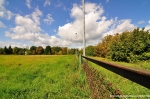
From the start I wanted to keep Abandoned Kansai simple. A blog instead of a homepage, photos directly out of the camera instead of massive post production – resize to 1024*680, URL in the lower right corner. That’s it. No cropping, not filters, no nothing. I actually shoot in JPG, for almost two years not even in the highest resolution. All the photos published on Abandoned Kansai are done that way. After some positive comments I started to take a few photos in NEF, just in case; maybe 2 or 3%, not one of them I ever opened. When I got a tripod, I started to use the bracket function of my D90 at maybe every fifth location – again just in case. After a while I played around with a freeware HDR program, just for fun. While I like the aesthetics of tone-mapped HDR photos I still consider them mostly a gimmick. Nevertheless I decided to publish some of my experiments – below are two samples, *for more haikyo HDR photos please click here*.
(Updates will be announced on *Twitter* and *Facebook*, not on the main page.)
Read Full Post »

« Newer Posts - Older Posts »